Fashion designer Ulla Johnson talks taste
The founder of the clothes brand loves Ruinart champagne, loathes minimalism and ‘lives for Christmas’
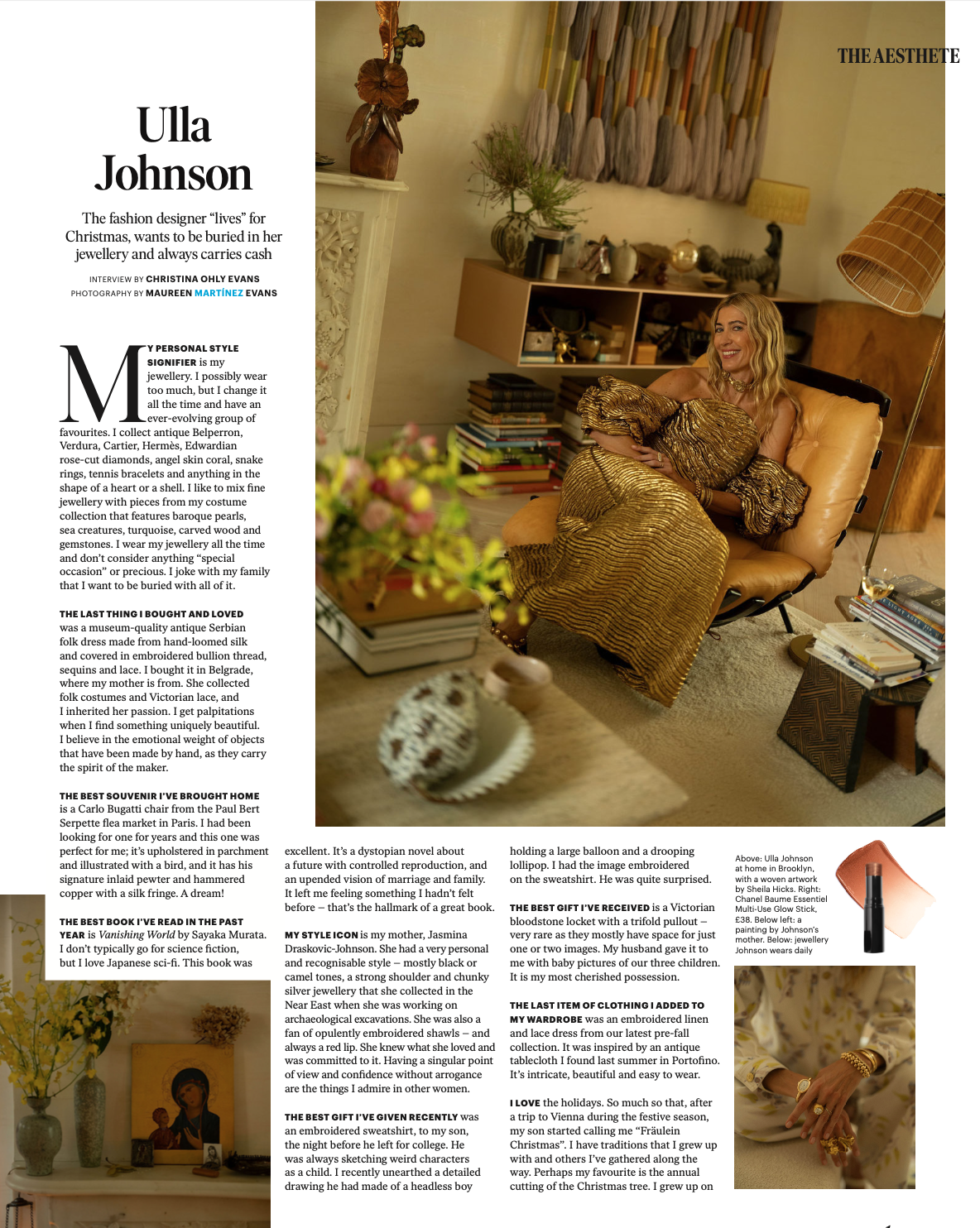
My personal style signifier is my jewellery. I possibly wear too much, but I change it all the time and have an ever-evolving group of favourites. I collect antique Belperron, Verdura, Cartier, Hermès, Edwardian rose-cut diamonds, angel skin coral, snake rings, tennis bracelets and anything in the shape of a heart or a shell. I like to mix fine jewellery with pieces from my costume collection that features baroque pearls, sea creatures, turquoise, carved wood and gemstones. I wear my jewellery all the time and don’t consider anything “special occasion” or precious. I joke with my family that I want to be buried with all of it.
The founder of the clothes brand loves Ruinart champagne, loathes minimalism and ‘lives for Christmas’
My personal style signifier is my jewellery. I possibly wear too much, but I change it all the time and have an ever-evolving group of favourites. I collect antique Belperron, Verdura, Cartier, Hermès, Edwardian rose-cut diamonds, angel skin coral, snake rings, tennis bracelets and anything in the shape of a heart or a shell. I like to mix fine jewellery with pieces from my costume collection that features baroque pearls, sea creatures, turquoise, carved wood and gemstones. I wear my jewellery all the time and don’t consider anything “special occasion” or precious. I joke with my family that I want to be buried with all of it.
The last thing I bought and loved was a museum-quality antique Serbian folk dress made from hand-loomed silk and covered in embroidered bullion thread, sequins and lace. I bought it in Belgrade, where my mother is from. She collected folk costumes and Victorian lace, and I inherited her passion. I get palpitations when I find something uniquely beautiful. I believe in the emotional weight of objects that have been made by hand, as they carry the spirit of the maker.
The best souvenir I’ve brought home is a Carlo Bugatti chair from the Paul Bert Serpette flea market in Paris. I had been looking for one for years and this one was perfect for me; it’s upholstered in parchment and illustrated with a bird, and it has his signature inlaid pewter and hammered copper with a silk fringe. A dream!
The best book I’ve read in the past year is Vanishing World by Sayaka Murata. I don’t typically go for science fiction, but I love Japanese sci-fi. This book was excellent. It’s a dystopian novel about a future with controlled reproduction, and an upended vision of marriage and family. It left me feeling something I hadn’t felt before – that’s the hallmark of a great book.
My style icon is my mother, Jasmina Draskovic-Johnson. She had a very personal and recognisable style – mostly black or camel tones, a strong shoulder and chunky silver jewellery that she collected in the Near East when she was working on archaeological excavations. She was also a fan of opulently embroidered shawls – and always a red lip. She knew what she loved and was committed to it. Having a singular point of view and confidence without arrogance are the things I admire in other women.
The best gift I’ve received is a Victorian bloodstone locket with a trifold pullout – very rare as they mostly have space for just one or two images. My husband gave it to me with baby pictures of our three children. It is my most cherished possession. The best gift I’ve given recently was an embroidered sweatshirt, to my son, the night before he left for college. He was always sketching weird characters as a child. I recently unearthed a detailed drawing he had made of a headless boy holding a large balloon and a drooping lollipop. I had the image embroidered on the sweatshirt. He was quite surprised.
Inside curator Demet Müftüoğlu-Eşeli’s party house in Istanbul
A former fisherman’s house with views over the Bosphorus has become a chic 1970s-inspired hub for creative exchange at an international level
A former fisherman’s house with views over the Bosphorus has become a chic 1970s-inspired hub for creative exchange at an international level
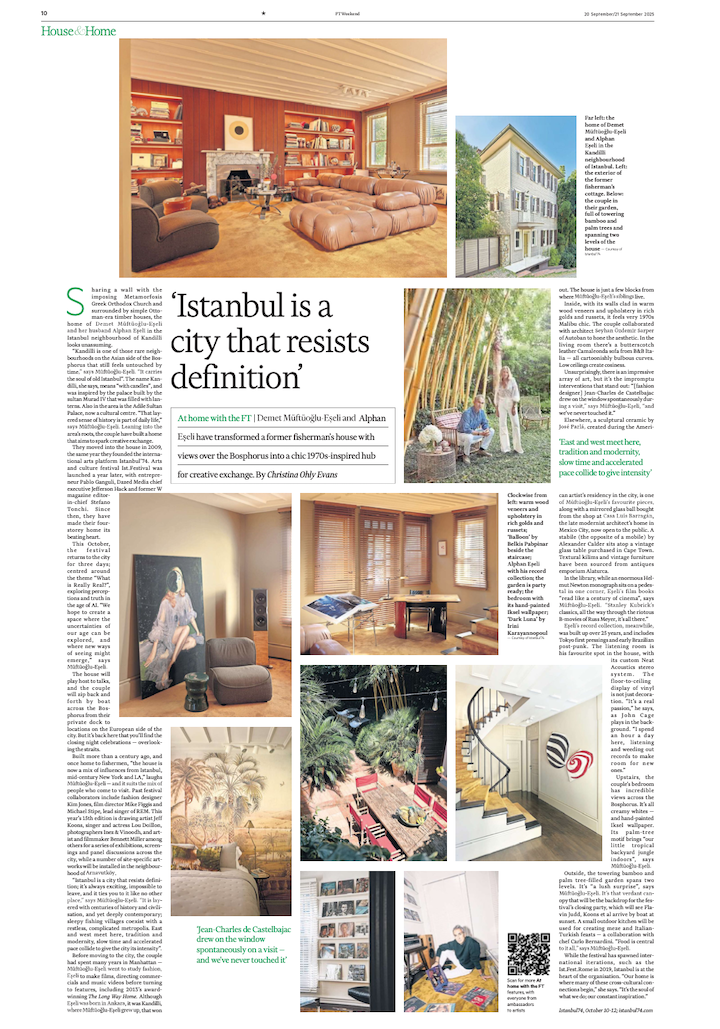
Sharing a wall with the imposing Metamorfosis Greek Orthodox Church and surrounded by simple Ottoman-era timber houses, the home of Demet Müftüoğlu-Eşeli and her husband Alphan Eşeli in the Istanbul neighbourhood of Kandilli looks unassuming. “Kandilli is one of those rare neighbourhoods on the Asian side of the Bosphorus that still feels untouched by time,” says Müftüoğlu-Eşeli. “It carries the soul of old Istanbul”. The name Kandilli, she says, means “with candles”, and was inspired by the palace built by the sultan Murad IV that was filled with lanterns. Also in the area is the Adile Sultan Palace, now a cultural centre. “That layered sense of history is part of daily life,” says Müftüoğlu-Eşeli. Leaning into the area’s roots, the couple have built a home that aims to spark creative exchange.
DOLOMITES in DEMAND
With the Milan-Cortina 2026 Winter Olympics right around the corner, the the time to plan your trip is now.
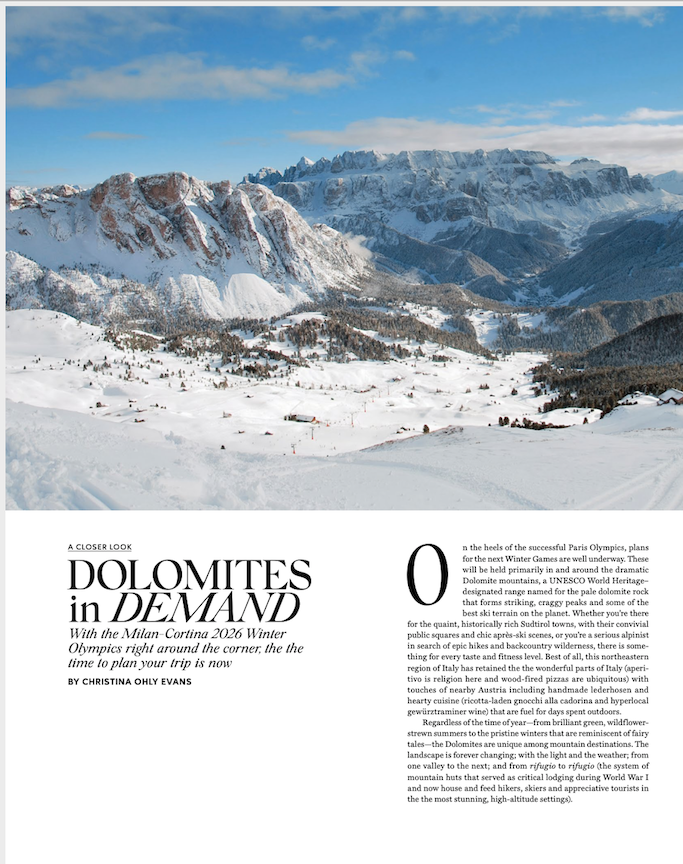
On the heels of the successful Paris Olympics, plans for the next Winter Games are well underway. These will be held primarily in and around the dramatic Dolomite mountains, a UNESCO World Heritage– designated range named for the pale dolomite rock that forms striking, craggy peaks and some of the best ski terrain on the planet.
With the Milan-Cortina 2026 Winter Olympics right around the corner, the the time to plan your trip is now.
By Christina Ohly Evans
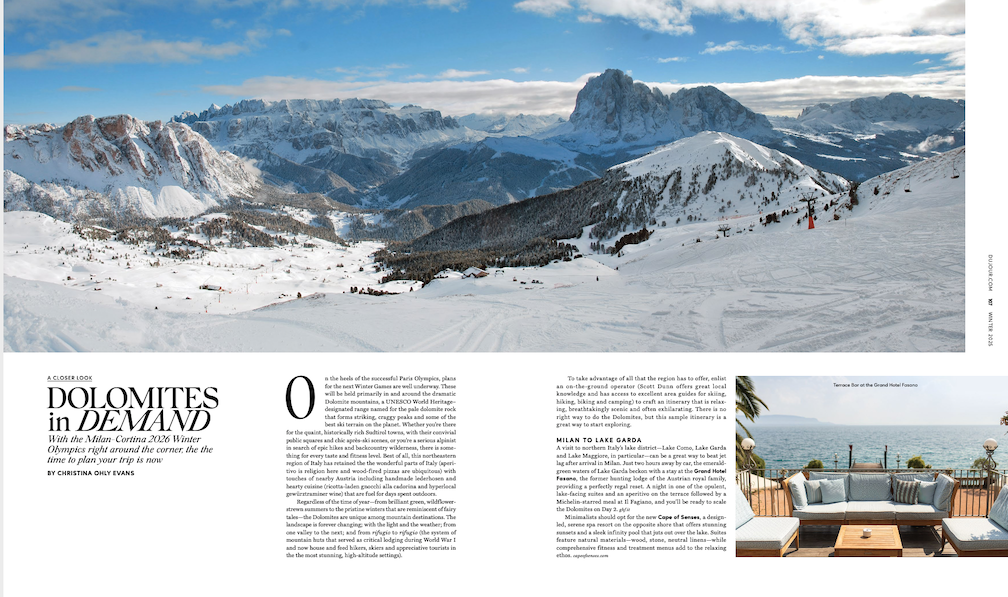
On the heels of the successful Paris Olympics, plans for the next Winter Games are well underway. These will be held primarily in and around the dramatic Dolomite mountains, a UNESCO World Heritage– designated range named for the pale dolomite rock that forms striking, craggy peaks and some of the best ski terrain on the planet. Whether you’re there for the quaint, historically rich Sudtirol towns, with their convivial public squares and chic après-ski scenes, or you’re a serious alpinist in search of epic hikes and backcountry wilderness, there is some- thing for every taste and fitness level. Best of all, this northeastern region of Italy has retained the the wonderful parts of Italy (aperi- tivo is religion here and wood-fired pizzas are ubiquitous) with touches of nearby Austria including handmade lederhosen and hearty cuisine (ricotta-laden gnocchi alla cadorina and hyperlocal gewürztraminer wine) that are fuel for days spent outdoors.
Regardless of the time of year—from brilliant green, wildflower- strewn summers to the pristine winters that are reminiscent of fairy tales—the Dolomites are unique among mountain destinations. The landscape is forever changing; with the light and the weather; from one valley to the next; and from rifugio to rifugio (the system of mountain huts that served as critical lodging during World War I and now house and feed hikers, skiers and appreciative tourists in the the most stunning, high-altitude settings).
To take advantage of all that the region has to offer, enlist an on-the-ground operator (Scott Dunn offers great local knowledge and has access to excellent area guides for skiing, hiking, biking and camping) to craft an itinerary that is relax- ing, breathtakingly scenic and often exhilarating. There is no right way to do the Dolomites, but this sample itinerary is a great way to start exploring.
MILAN TO LAKE GARDA
A visit to northern Italy’s lake district—Lake Como, Lake Garda and Lake Maggiore, in particular—can be a great way to beat jet lag after arrival in Milan. Just two hours away by car, the emerald- green waters of Lake Garda beckon with a stay at the Grand Hotel Fasano, the former hunting lodge of the Austrian royal family, providing a perfectly regal reset. A night in one of the opulent, lake-facing suites and an aperitivo on the terrace followed by a Michelin-starred meal at Il Fagiano, and you’ll be ready to scale the Dolomites on Day 2. ghf.it
Minimalists should opt for the new Cape of Senses, a design- led, serene spa resort on the opposite shore that offers stunning sunsets and a sleek infinity pool that juts out over the lake. Suites feature natural materials—wood, stone, neutral linens—while comprehensive fitness and treatment menus add to the relaxing ethos. capeofsenses.com
GATEWAY TO THE DOLOMITES
Surrounded by vineyards and fruit orchards, the small city of Bolzano is a relatively undiscovered gem. Here you’ll find medieval streets and arcades and the not-to-be-missed South Tyrol Museum of Archaeology, home to the remains of Ötzi, a man killed in the Alps about 5,300 years ago whose well-preserved body was discov- ered encased in ice in 1991 (be sure to book tickets in advance). Check in at the stunning Castel Hörtenberg, a 16th-century castle hidden behind gates on a tree-lined street that combines original elements, including imposing towers and lush gardens, with sleek Italian design. Original frescoes have been meticulously restored in the light-filled guest rooms and a soothing color palette of linen and beige recalls the style of Axel Vervoordt. Multiple dining spaces offer everything from a breakfast buffet to a South Tyrolean meal in a former wine cave. In summer, a sleek pool provides a respite from the heat, while the design-led spa specializes in sauna/ cold plunge combinations. castel-hoertenberg.com
ON TO ALTA BADIA
Start any ski adventure with a stay at the uber-charming Aman Rosa Alpina in the town of San Cassiano, with its onion-shaped belltower. Run by the third generation of the Pizzinini family and soon to be reopened with Aman Hotels & Resorts, this original hotel exudes traditional chalet warmth. The ski slopes of Alta Badia—some 80 miles of them—are within walking distance of the hotel and are equally popular in summer for hiking and climbing. Of special note here is the three Michelin-starred St. Hubertus, which is refined but never fussy. Helmed by chef Norbert Niederkofler, whose philosophy is “cook the mountain,” the restau- rant serves dishes infused with local ingredients in a serene, wel- coming space. The casual Wine Bar & Grill is the spot for pizzas and beer after a day on the slopes. aman.com
The Sky Pool Deluxe suite at Cape of Senses
VERY VAL GARDENA
From a luxurious base at the atmospheric Gardena Grödnerhof Hotel & Spa in the town of Ortisei, you can explore the alpine meadows of the magnificent Alpe di Siusi in summer, followed by lunch at the buzzing Sanon Hut, an authentic, on-mountain res- taurant where beef goulash and speck dumplings are the orders of the day (arrival by horse-drawn sleigh is another atmospheric option). Start any day here at the hotel’s enormous breakfast buffet full of fennel-infused breads, jams, cured meats, yogurt and eggs made to order, and either head for the mountains or explore nearby towns including Santa Cristina. The Grödnerhof offers a warm, familial atmosphere (larger suites with kitchens cater to groups)— no concierge request is too great, and bikes, dining reservations and extreme adventures can all be arranged. After days spent on- mountain, book in for restorative spa time: state-of-the-art ZeroBody Cryo therapies promise to soothe sore muscles, while massages incorporate aromatic Alpine herbs. Swimming, saunas and plunges and simply lounging in the chalet’s garden are equally beneficial. After all of this wellness, savor a gourmet extravaganza at the pine-paneled Anna Stuben, where cozy tables in rooms adorned with antlers and traditional Ladin stoves set the stage for multicourse Michelin-starred meals. gardena.it
CORVARA IS CALLING
Another great base is Corvara in Badia, where the Hotel La Perla offers a full-on chalet-style experience courtesy of the Costa fam- ily. Dirndl-clad staff—many of whom speak the Ladin language— serve Tyrolean cuisine in the charming Les Stües and La Stüa de Michil (half board is standard). In winter, you can ski straight from the hotel onto some of the most idyllic pistes in Europe, fol- lowed by a Turkish bath and sauna in the well-appointed spa. laperlacorvara.it
Alta Badia provides access to the ski runs around the Sella Massif, which makes it the perfect starting point for some of the most beautiful ski tours in the Alps, including the Sellaronda, the Great War Tour and the route to the Marmolada Glacier. The Sellaronda is perfect for intermediate skiers because of its wide breadth of lifts and terrain. The beauty here is that everything is connected: four Dolomite passes and five Ladin valleys (Val Gardena, Alta Badia, Val di Fassa, Cortina d’Ampezzo and Livinallongo) all meet. Staying in one of the slopeside rifugios in Val Gardena is a truly magical, old-world experience. In summer, opt for a hike on the Seceda plateau followed by lunch at Rifugio Firenze with views of the Sella Massif and the Puez-Geisler Nature Park. The free-roaming cows with their atmospheric bells add to the overall Tyrolean vibe.
A SKIING SAFARI
For anyone who really loves to ski—and doesn’t mind missing the après scene at the end of the day—a five-day ski safari offers the chance to ski from hut to hut, staying in family-run rifugios and quaint inns along the way. With 12 interconnected resorts to choose from and more than 745 miles of groomed trails (plus endless off-piste options), a knowledgeable guide and a Superski pass (the Ikon pass is also honored here), a safari is a wonderful way to experi- ence the mix of Italian, Austrian and Ladin cultures that meet in these mountains. There is something for every skill level; this isn’t heli-skiing, so even novice skiers can find suitable terrain, while guides can ensure that experts are challenged. dolomitemountains.com
Because these are luxury safaris, belongings are transferred from one place to the next each day. Trips typically end in Cortina d’Ampezzo, a chic town that played host to the Olympic Games once before, in 1956, as well as international competitions for skiing, snowboarding, curling and snow polo.
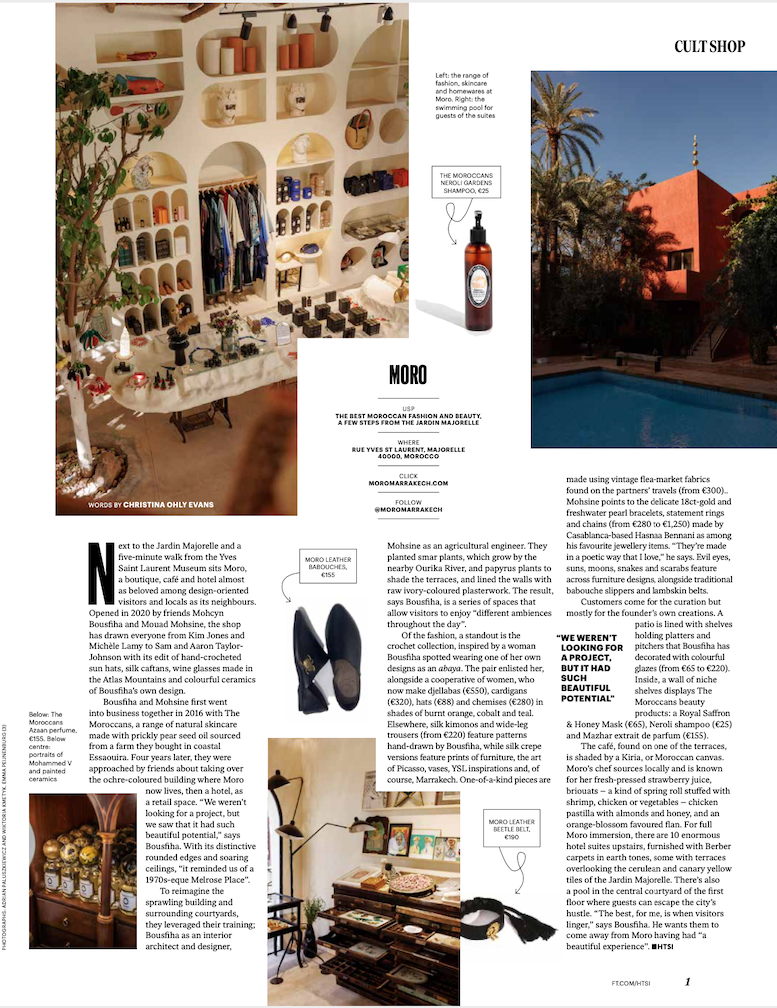
Moro, Morocco’s chicest boutique
Next to the Jardin Majorelle and a five-minute walk from the Yves Saint Laurent Museum sits Moro, a boutique, café and hotel almost as beloved among design-oriented visitors and locals as its neighbours. Opened in 2020 by friends Mohcyn Bousfiha and Mouad Mohsine, the shop has drawn everyone from fashion designers Kim Jones and Michèle Lamy to actor Aaron Taylor-Johnson with its edit of hand-crocheted sun hats, silk kaftans, wine glasses made in the Atlas Mountains and colourful ceramics of Bousfiha’s own design.
A Marrakech mecca, a few steps from the Jardin Majorelle
Next to the Jardin Majorelle and a five-minute walk from the Yves Saint Laurent Museum sits Moro, a boutique, café and hotel almost as beloved among design-oriented visitors and locals as its neighbours. Opened in 2020 by friends Mohcyn Bousfiha and Mouad Mohsine, the shop has drawn everyone from fashion designers Kim Jones and Michèle Lamy to actor Aaron Taylor-Johnson with its edit of hand-crocheted sun hats, silk kaftans, wine glasses made in the Atlas Mountains and colourful ceramics of Bousfiha’s own design.
Bousfiha and Mohsine first went into business together in 2016 with The Moroccans, a range of natural skincare made with prickly pear seed oil sourced from a farm they bought in coastal Essaouira. Four years later, they were approached by friends about taking over the ochre-coloured building where Moro now lives, then a hotel, as a retail space. “We weren’t looking for a project, but we saw that it had such beautiful potential,” says Bousfiha. With its distinctive rounded edges and soaring ceilings, “it reminded us of a 1970s-esque Melrose Place”.
To reimagine the sprawling building and surrounding courtyards, they leveraged their training; Bousfiha as an interior architect and designer, Mohsine as an agricultural engineer. They planted smar plants, which grow by the nearby Ourika river, and papyrus plants to shade the terraces, and lined the walls with raw ivory-coloured plasterwork. The result, says Bousfiha, is a series of spaces that allow visitors to enjoy “different ambiences throughout the day”.
Of the fashion, a standout is the crochet collection, inspired by a woman Bousfiha spotted wearing one of her own designs as an abaya. The pair enlisted her, alongside a cooperative of women, who make djellabas (€550), cardigans (€320), hats (€88) and chemises (€280) in shades of burnt orange, cobalt and teal. Elsewhere, silk kimonos and wide-leg trousers (from €220) feature patterns hand-drawn by Bousfiha, while silk crepe versions feature prints of furniture, the art of Picasso, vases, YSL inspirations and, of course, Marrakech. One-of-a-kind pieces are made using vintage flea-market fabrics found on the partners’ travels (from €300). Mohsine points to the delicate 18ct-gold and freshwater pearl bracelets, statement rings and chains (from €280 to €1,250) made by Casablanca-based Hasnaa Bennani as among his favourite jewellery items. “They’re made in a poetic way that I love,” he says. Evil eyes, suns, moons, snakes and scarabs feature across furniture designs, alongside traditional babouche slippers and lambskin belts.
Customers come for the curation but mostly for the founder’s own creations. A patio is lined with shelves holding platters and pitchers that Bousfiha has decorated with colourful glazes (from €65 to €220). Inside, a wall of niche shelves displays The Moroccans beauty products: a Royal Saffron & Honey Mask (€65), Neroli shampoo (€25) and Mazhar extrait de parfum (€155).
The café, found on one of the terraces, is shaded by a Kiria, or Moroccan canvas. Moro’s chef sources locally and is known for her fresh-pressed strawberry juice, briouats (a kind of spring roll stuffed with shrimp, chicken or vegetables), chicken pastilla with almonds and honey, and an orange-blossom favoured flan. For full Moro immersion, there are 10 enormous hotel suites upstairs, furnished with Berber carpets in earth tones, some with terraces overlooking the cerulean and canary yellow tiles of the Jardin Majorelle. There’s also a pool in the central courtyard of the first floor where guests can escape the city’s hustle. “The best, for me, is when visitors linger,” says Bousfiha. He wants them to come away from Moro having had “a beautiful experience”. Moro, Rue Yves St Laurent, Majorelle 40000, Morocco. moromarrakech.com
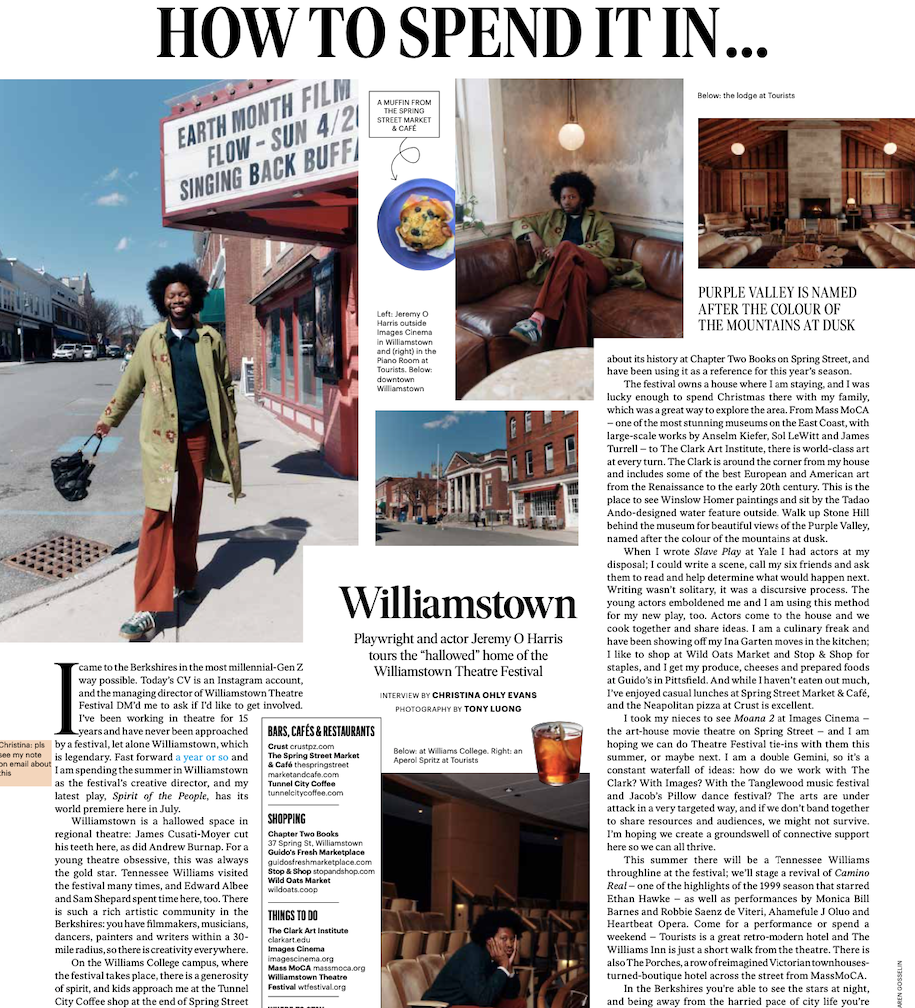
Jeremy O Harris’s guide to Williamstown Theatre Festival
I came to the Berkshires in the most millennial-Gen Z way possible. Today’s CV is an Instagram account, and the managing director of Williamstown Theatre Festival DM’d me to ask if I’d like to get involved. I’ve been working in theatre for 15 years and have never been approached by a festival, let alone Williamstown, which is legendary. Fast forward a year or so and I am spending the summer in Williamstown as the festival’s creative director, and my latest play, Spirit of the People, has its world premiere here in July.
The playwright and actor tours the event’s ‘hallowed’ Berkshires home
I came to the Berkshires in the most millennial-Gen Z way possible. Today’s CV is an Instagram account, and the managing director of Williamstown Theatre Festival DM’d me to ask if I’d like to get involved. I’ve been working in theatre for 15 years and have never been approached by a festival, let alone Williamstown, which is legendary. Fast forward a year or so and I am spending the summer in Williamstown as the festival’s creative director, and my latest play, Spirit of the People, has its world premiere here in July.
Williamstown is a hallowed space in regional theatre: James Cusati-Moyer cut his teeth here, as did Andrew Burnap. For a young theatre obsessive, this was always the gold star. Tennessee Williams visited the festival many times, and Edward Albee and Sam Shepard spent time here, too. There is such a rich artistic community in the Berkshires: you have filmmakers, musicians, dancers, painters and writers within a 30-mile radius, so there is creativity everywhere.

The great HTSI guide to luggage
Defining features These sleek brushed aluminium cases feature reinforced corners, three closures to keep contents secure, an ergonomic, four-height adjustable handle, speedy wheels and a quilted taffeta lining for extra luxe. Perfect for Chronic over-packers, and anyone who won’t mind inevitable scrapes and dings from the cargo hold. See also The North Face Base Camp Rolling Thunder bag (£360).
What bag to carry, wherever you’re going, whatever you’re doing
FOR THE LONG HAUL
Defining features These sleek brushed aluminium cases feature reinforced corners, three closures to keep contents secure, an ergonomic, four-height adjustable handle, speedy wheels and a quilted taffeta lining for extra luxe. Perfect for Chronic over-packers, and anyone who won’t mind inevitable scrapes and dings from the cargo hold. See also The North Face Base Camp Rolling Thunder bag (£360).
FOR WEEKEND GETAWAYS
Defining features Lightweight and durable, with a multi-wheel system that assures agility when running late. Perfect for Art-world heavyweights, C-suiters who don’t want to overthink it. See also The Vérité weekend bag by Métier (£3,850) in double-faced water-resistant linen has multiple pockets for SPF, books and a 16-inch laptop. See also the Bennett Winch Weekender (£975): waterproof cotton canvas, leather trim and brass finishes.
FOR THE BEACH
Defining features A soft structure as well as interior and exterior pockets make it ideal for organising drinks and towels. Each bag is made in a factory in the Philippines that’s committed to fair labour and environmentally sound practices. Perfect for Extroverts who enjoy a little virtue signalling. Bonus: the fabrics are del día – chosen from what’s available “of the day” – so every bag is one of a kind. See also Loewe Large Basket bag in palm leaf and calfskin (£495).
FOR BOATING
Defining features The ultimate dry bag for sailors and yachtspeople due to its airtight seams, a protective roll top and a removable shoulder strap. Perfect for Practical seafarers who care about protecting devices from salt air and prefer a streamlined aesthetic. See also LL Bean’s Boat and Tote (from £42) is a classic made of thick canvas, with a genius flat bottom that keeps everything upright – whether on deck or in the office.
FOR ALPINE ADVENTURES
Defining features A minimalist pack for summer hiking with an ultra-light frame, easy-access pockets, compression straps, trekking pole loops and a whistle. Perfect for Shorter treks – think rifugio to rifugio in the Dolomites as opposed to summiting Everest. See also Alpine Luddites, a one-man shop in Vermont with an 18-to-24-month waiting list, makes the ultimate colourful climbing packs and expedition luggage.
FOR THE FLEX
Defining features A rolling, old-school objet d’art, with bold colourways, hand-moulded corners and polished- chrome carbon-steel locks. Perfect for Anyone who appreciates fine craftsmanship. See also Berluti’s Formula 1005 Scritto rolling leather suitcase (£6,850) is Italian perfection, while the Louis Vuitton Horizon 55 suitcase (£3,300) by Marc Newson in Epi cowhide is the height of functional design.
FOR THE ECO CONSCIOUS
Defining features This carbon-neutral roller made of recycled materials is both fashionable and feelgood (the company offsets its emissions). The lining has multiple pockets and a laundry bag. Perfect for Hamptonites and the Hawaii-bound who favour the brand’s collabs with pro packers like Marie Kondo. See also Berlin-based Horizn Studios makes 97 per cent recycled hard shell luggage and accessories and offers a lifetime warranty (worth it for that alone).
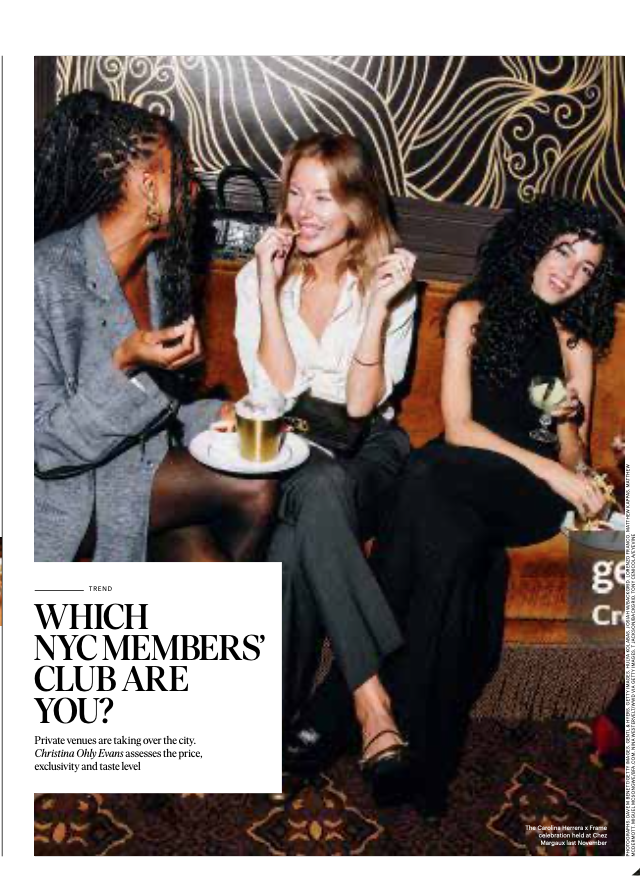
Which New York members’ club are you?
What: A scene-y club with a sexier atmosphere than its rivals. It is set in the former Spice Market space, and the decor is all 1930s Parisian glamour courtesy of designer Lauren Mishaan, the grand staircase welcoming members into subterranean splendour lined with crimson banquettes and gilded private nooks. Roam through the big-cat-themed Lounge; enjoy chef Jean-Georges Vongerichten’s inventive takes on sashimi. But Gaux Gaux – the caviar-and-cocktail bar/after-hours nightclub with its solid glass Sogni di Cristallo bar and chandeliers – is really the spot to see and be seen.
From cool co-working spots to ritzy rooftop bars, these are the best subscriptions in town
CHEZ MARGOT
What: A scene-y club with a sexier atmosphere than its rivals. It is set in the former Spice Market space, and the decor is all 1930s Parisian glamour courtesy of designer Lauren Mishaan, the grand staircase welcoming members into subterranean splendour lined with crimson banquettes and gilded private nooks. Roam through the big-cat-themed Lounge; enjoy chef Jean-Georges Vongerichten’s inventive takes on sashimi. But Gaux Gaux – the caviar-and-cocktail bar/after-hours nightclub with its solid glass Sogni di Cristallo bar and chandeliers – is really the spot to see and be seen. Where: Located at the intersection of West 13th and Greenwich Streets, it has a red-lacquered entrance reminiscent of a secret cabaret.
Who: A cool, creative and well-connected crowd that includes Taylor Swift and Zoë Kravitz. Come for the black pepper shrimp, and stay for the party that begins at 10pm at Gaux Gaux. The membership is largely downtown and young – as is reflected in the pricing (under-30s pay a $1,250 initiation fee, then a $3,000 annual fee; upwards of 30 is a $2,500 initiation, $4,000 annual fee). Khaite tailoring and Jessica McCormack diamonds abound.
Coco’s at Colette
The corporate raiders’ canteen
What: The city’s ritziest power-lunch scene, located within the co-working club dubbed “WeWork for the 0.01 per cent” by Bloomberg. Run by Edmond Safra, of the billionaire Safra banking family, and Juan Santa Cruz, of Casa Cruz restaurant empire fame, the stylish Gonçalo Alves wood-panelled space hums from breakfast through to dramatically lit dinner. The mirror-lined omakase sushi bar is perfect for discreet negotiations. Where: The 37th floor of Midtown’s imposing General Motors Building, at the sweet-spot intersection of Fifth Avenue, Midtown and the Upper East Side.
Who: CEOs, hedge-fund managers and beauty execs meet for efficient yet delicious meals: egg-white omelettes and green juices are in demand early, while the Rainbow salad (add protein) and the Dover sole served tableside are crowd favourites at lunch and dinner. Membership tiers are split between the restaurant Coco’s (membership, $5,000; then $4,000 annual dues) and the full club space, Colette (POA). The latter caters to the businessperson who wings into New York for the day and needs an office, catered conference room and gym. Members love the personal-box service (a posh version of a locker) where beauty products, supplements or photographs can be stashed for subsequent visits.
The Twenty Two New York
What: This offshoot of the popular Mayfair hotel and members’ club is already a magnet for New York’s bright young things. Reuben Brothers, which is backing Robin Birley’s uptown venture Maxime’s, is also involved here, with the club occupying the second floor of a landmarked brownstone that also houses a hotel and restaurant. The interiors by London-based Child Studio are cinematic, with leopard-print carpets and Calacatta-marble surfaces, along with rooftop dancefloors and excellent cocktails (order the white Negroni). Members love the all-female chef team also of local Mediterranean restaurant Raf’s and the Michelin-starred The Musket Room. Where: Uptown meets downtown in this former Vanderbilt-owned mansion in Union Square.
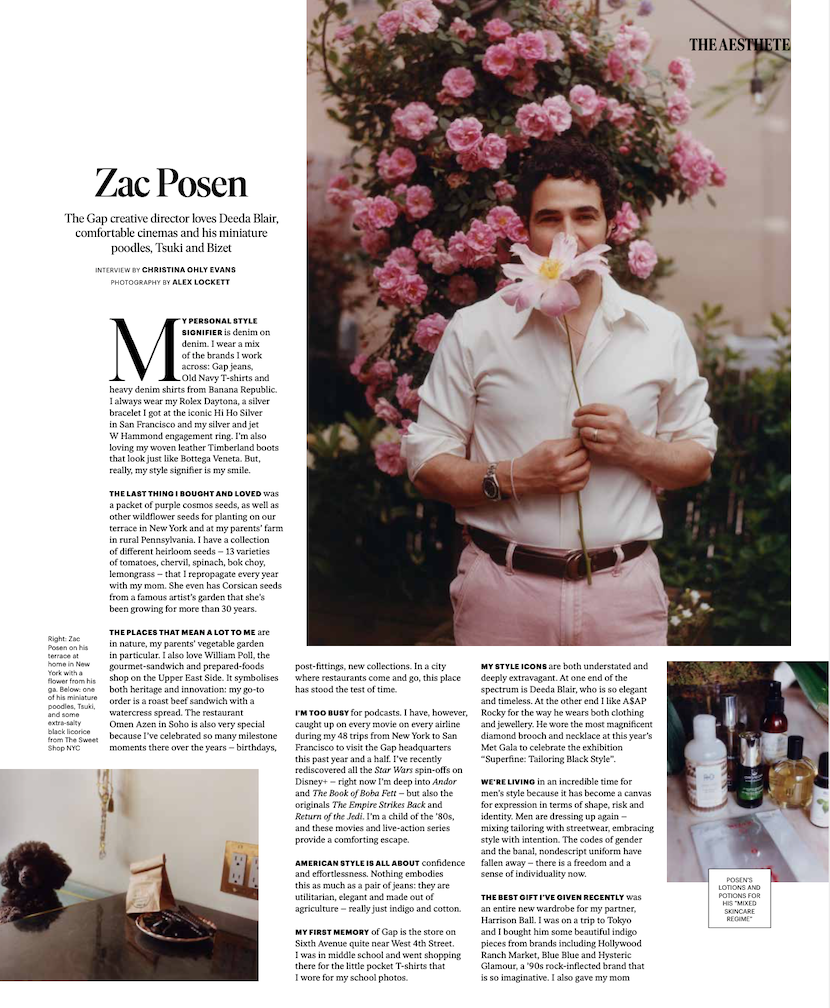
Zac Posen: ‘My style signifier is my smile’
My personal style signifier is denim on denim. I wear a mix of the brands I work across: Gap jeans, Old Navy T-shirts and heavy denim shirts from Banana Republic. I always wear my Rolex Daytona, a silver bracelet I got at the iconic Hi Ho Silver in San Francisco and my silver and jet W Hammond engagement ring. I’m also loving my woven leather Timberland boots that look just like Bottega Veneta. But, really, my style signifier is my smile.
The creative director of Gap Inc loves Deeda Blair, comfortable cinemas and his miniature poodles, Tsuki and Bizet
My personal style signifier is denim on denim. I wear a mix of the brands I work across: Gap jeans, Old Navy T-shirts and heavy denim shirts from Banana Republic. I always wear my Rolex Daytona, a silver bracelet I got at the iconic Hi Ho Silver in San Francisco and my silver and jet W Hammond engagement ring. I’m also loving my woven leather Timberland boots that look just like Bottega Veneta. But, really, my style signifier is my smile. The last thing I bought and loved was a packet of purple cosmos seeds, as well as other wildflower seeds for planting on our terrace in New York and at my parents’ farm in rural Pennsylvania. I have a collection of different heirloom seeds — 13 varieties of tomatoes, chervil, spinach, bok choy, lemongrass — that I repropagate every year with my mom. She even has Corsican seeds from a famous artist’s garden that she’s been growing for more than 30 years.
The places that mean a lot to me are in nature, my parents’ vegetable garden in particular. I also love William Poll, the gourmet-sandwich and prepared-foods shop on the Upper East Side. It symbolises both heritage and innovation: my go-to order is a roast beef sandwich with a watercress spread. The restaurant Omen Azen in SoHo is also very special because I’ve celebrated so many milestone moments there over the years — birthdays, post-fittings, new collections. In a city where restaurants come and go, this place has stood the test of time.
I’m too busy for podcasts. I have, however, caught up on every movie on every airline during my 48 trips from New York to San Francisco to visit the Gap headquarters this past year and a half. I’ve recently rediscovered all the Star Wars spin-offs on Disney+ — right now I’m deep into Andor and The Book of Boba Fett — but also the originals The Empire Strikes Back and Return of the Jedi. I’m a child of the ’80s, and these movies and live-action series provide a comforting escape. American style is all about confidence and effortlessness. Nothing embodies this as much as a pair of jeans: they are utilitarian, elegant and made out of agriculture — really just indigo and cotton. My first memory of Gap is the store on Sixth Avenue quite near West 4th Street. I was in middle school and went shopping there for the little pocket T-shirts that I wore for my school photos.
My style icons are both understated and deeply extravagant. At one end of the spectrum is Deeda Blair, who is so elegant and timeless. At the other end I like A$AP Rocky for the way he wears both clothing and jewellery. He wore the most magnificent diamond brooch and necklace at this year’s Met Gala to celebrate the exhibition “Superfine: Tailoring Black Style”. We’re living in an incredible time for men’s style because it has become a canvas for expression in terms of shape, risk and identity. Men are dressing up again — mixing tailoring with streetwear, embracing style with intention. The codes of gender and the banal, nondescript uniform have fallen away. There is a freedom and a sense of individuality now.
The best gift I’ve given recently was an entire new wardrobe for my partner, Harrison Ball. I was on a trip to Tokyo and I bought him some beautiful indigo pieces from brands including Hollywood Ranch Market, Blue Blue and Hysteric Glamour, a ’90s rock-inflected brand that is so imaginative. I also gave my mom the navy Gap shirtdress with polka dots — aka the “Anne Hathaway dress” — from my first collection for Gap, which made me very happy. And the best gift I’ve received is an enormous bouquet of yellow and orange tulips from my florist, Zeze. They were cut from his own garden and the blossoms were the size of teacups. We’re talking Victor Fleming Munchkinland size.
The last music I downloaded was Chan Marshall’s Cat Power Sings Dylan: The 1966 Royal Albert Hall Concert, a live recreation of Bob Dylan’s 1966 concert at the Manchester Free Trade Hall — mistakenly attributed to the Royal Albert Hall — that includes such classics as “Mr Tambourine Man” and “Like a Rolling Stone”. I also download a lot of the music that Harrison listens to for his work as a choreographer, including New Ancient Strings by Malian musicians Toumani Diabaté and Ballaké Sissoko, which is almost hypnotic.
The best way to spend $20 is to go to the movies by yourself, preferably one with comfortable seats. The Film Forum in Greenwich Village is always nostalgic, as is the Angelika Film Center for indie and foreign films. The Film Forum has a great Summer Double Feature series with pairings like The Big Lebowski and The Last Picture Show, and Open City with Voyage to Italy. I’m hoping to see one of these. In my fridge you’ll find everything: apple cider vinegar, eggs, clementines, apples, yoghurt, chicken stock, leeks, thyme, bay leaves, nuts, dashi, nori and sea moss. I’m a real cook, and live on soups made in a Breville pressure cooker.
I do not believe in life after death, but I do believe in a creative spirit taking other forms. This is a bigger conversation about the definition of life in the time of AI and supercomputers. I couldn’t do without my miniature poodles, Tsuki and Bizet, who travel with me from coast to coast and have a very good life. I’m also very attached to my Gingher Left-hand Knife-edge Dressmaker Shears, as well as my dress form and mannequin.
I am a lotions-and-potions person and have a mixed skincare regime that includes SkinCeuticals’ toner and an Orveda serum and face cream. I also like the body oil from my friend’s company, Monastery Made, and the Meder Masks I get from Knockout Beauty; they are incredibly moisturising. Meder Beauty Science Hydra-Fill Mask, $115 for a pack of five, knockoutbeauty.com. Monastery Made Lapiz body oil, $59. Orveda Vital Sap, £165, and Firm Brew Botanical Cream, £350. SkinCeuticals Equalizing Toner, £46 The works that changed everything for me were the clothes of Issey Miyake, Azzedine Alaïa and Yohji Yamamoto that I saw at Charivari Workshop as a kid growing up in SoHo. I later interned at The Costume Institute at The Metropolitan Museum of Art and saw the works of Madeleine Vionnet and Cristóbal Balenciaga — especially his gowns in taffeta — that totally changed my life.
My grooming gurus include Thom Priano, who cuts my hair on the East Coast, and Dennis Gots, who cuts it on the West. I get regular facials at Monastery in San Francisco and with Ludmila at Knockout Beauty in New York. I also take a lot of vitamins: black seed oil to reduce inflammation, CoQ10 for heart health, and NACs, which support the immune system.
In another life, I would have been a film or theatre director — anything that involves storytelling and costumes. I’ve done some of this in the past: with the costumes for Christopher Wheeldon’s Within the Golden Hour for the San Francisco Ballet, for the Broadway production Lady in the Dark and for Graham Moore’s film The Outfit. I love the research, character development and artistic collaboration. Never say never.
The best bit of advice I ever received was something that Stephen Sondheim said: “Opportunity is not a lengthy visitor.” Take advantage of things presented to you.
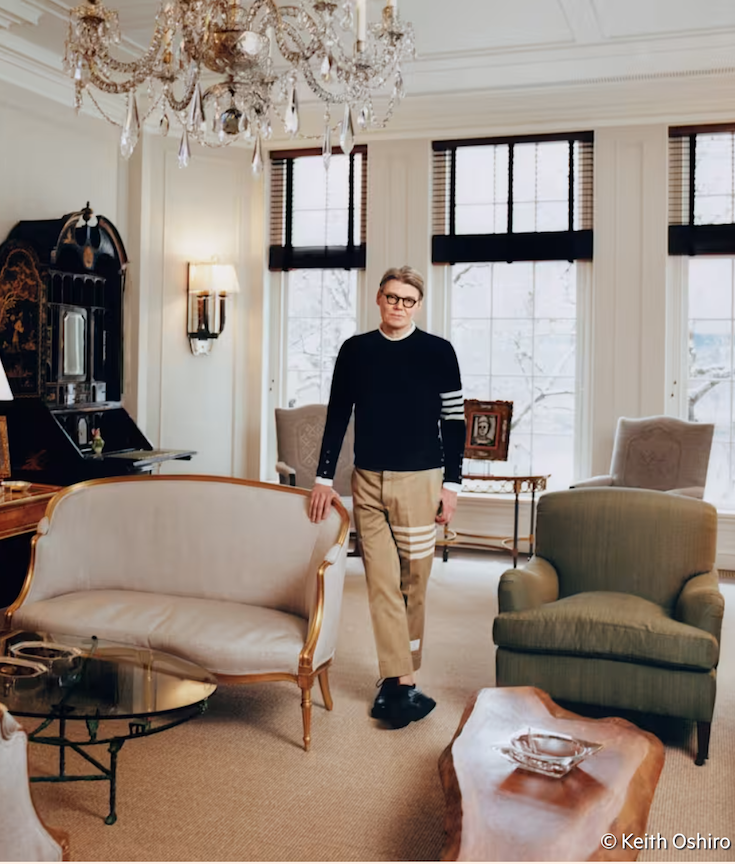
Met Gala maestro Andrew Bolton talks taste
The head curator of The Met’s Costume Institute loves dachshunds, The Vicar of Dibley and Villa d’Este
My personal style signifiers are pretty casual and consistent: my tortoiseshell glasses – I’ve worn various brands over the past 20 years – and a navy cashmere four-bar cardigan, chino trousers, white cotton Oxford shirts, a rep tie and classic wingtip brogues, all by my partner Thom Browne. The last thing I bought and loved was a painting by Ewa Juszkiewicz, the Surrealist Polish artist. She recreates paintings from the renaissance to the 19th century, but obscures their faces with fabrics or phantasmagoric wigs. Ours references the 17th-century portrait of Maria van Strijp by Dutch golden age artist Johannes Cornelisz Verspronck, which belongs to Amsterdam’s Rijksmuseum. We’d been looking for one of her paintings for a long time and were lucky to get it in a Sotheby’s evening auction.
The head curator of The Met’s Costume Institute loves dachshunds, The Vicar of Dibley and Villa d’Este
My personal style signifiers are pretty casual and consistent: my tortoiseshell glasses – I’ve worn various brands over the past 20 years – and a navy cashmere four-bar cardigan, chino trousers, white cotton Oxford shirts, a rep tie and classic wingtip brogues, all by my partner Thom Browne. The last thing I bought and loved was a painting by Ewa Juszkiewicz, the Surrealist Polish artist. She recreates paintings from the renaissance to the 19th century, but obscures their faces with fabrics or phantasmagoric wigs. Ours references the 17th-century portrait of Maria van Strijp by Dutch golden age artist Johannes Cornelisz Verspronck, which belongs to Amsterdam’s Rijksmuseum. We’d been looking for one of her paintings for a long time and were lucky to get it in a Sotheby’s evening auction.
The work of art that changed everything for me is Francis Bacon’s “screaming Pope”, after Diego Velázquez’s 17th-century Portrait of Pope Innocent X. It’s such a depiction of postwar existential angst and I tend to gravitate toward artists who reinterpret history in different ways. The best book I’ve read in the past year is Alan Hollinghurst’s Our Evenings, a social comedy about gay life in England from the 1960s to the pandemic. I’ve always loved his operatic writing style. It’s told through his lived experience, and I think it resonated with me because I was also reading Monica Miller’s Slaves to Fashion: Black Dandyism and the Styling of Black Diasporic Identity at the same time. Both examine issues of race, gender and sexuality and are rooted in history, and Miller’s book inspired our upcoming exhibition at The Met.
The place that means a lot to me is Villa d’Este in Lake Como. It was the first place Thom and I went on holiday together and we still go two or three times a year. It’s become a home from home. We tend to go right after the Met Gala in May, after the fashion shows in Milan and for three weeks at the end of August. Lake Como has such a microclimate: one day it’s sunny, one day it’s hailing, one day it’s snowy, so it’s a very biblical place in terms of the weather. We used to explore the lake more, but now we just stay put and catch up on reading.
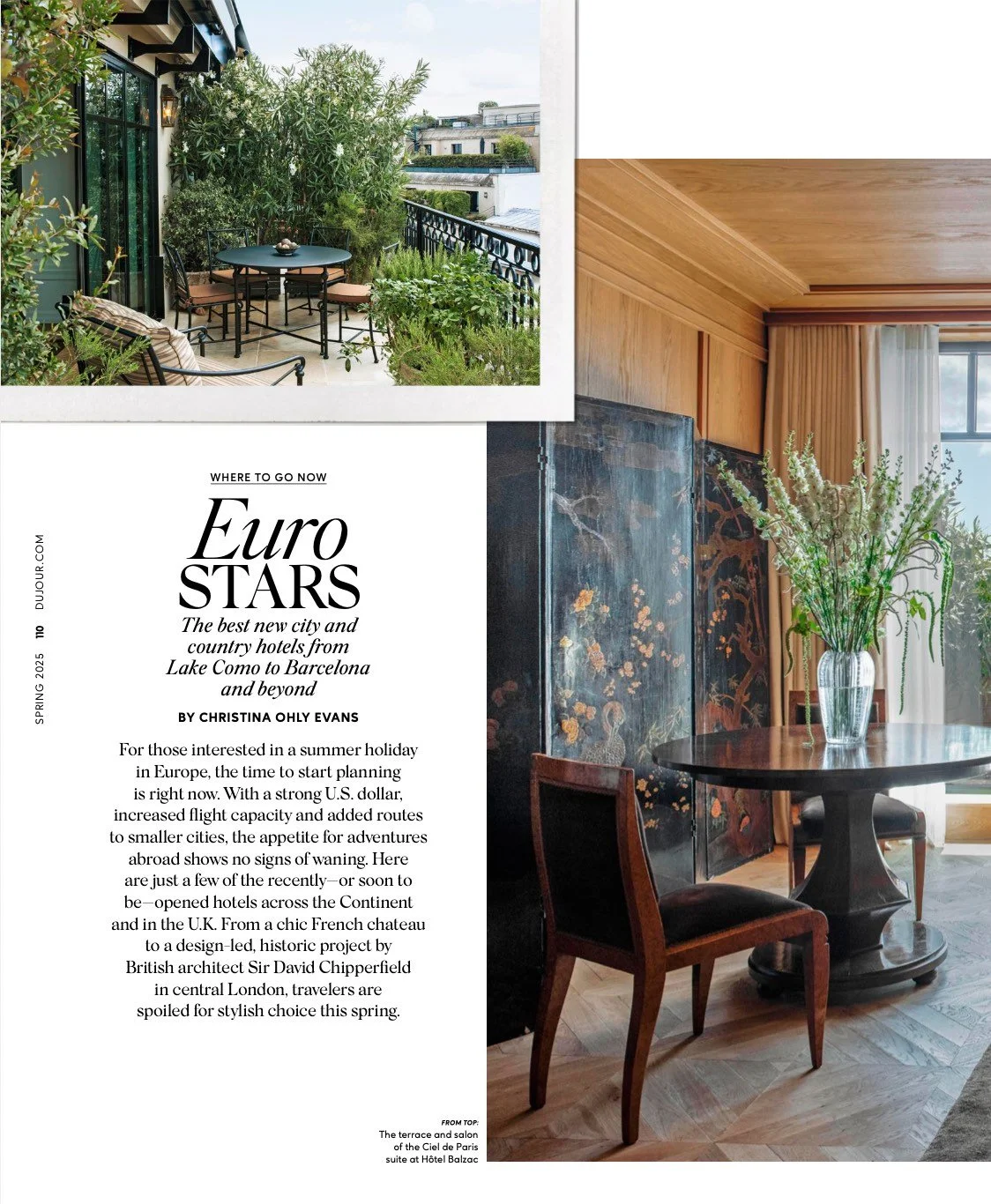
Euro STARS
For those interested in a summer holiday in Europe, the time to start planning is right now. With a strong U.S. dollar, increased flight capacity and added routes to smaller cities, the appetite for adventures abroad shows no signs of waning. Here are just a few of the recently—or soon to be—opened hotels across the Continent and in the U.K. From a chic French chateau to a design-led, historic project by British architect Sir David Chipperfield in central London, travelers are spoiled for stylish choice this spring.
BY CHRISTINA OHLY EVANS
For those interested in a summer holiday in Europe, the time to start planning is right now. With a strong U.S. dollar, increased flight capacity and added routes to smaller cities, the appetite for adventures abroad shows no signs of waning. Here are just a few of the recently—or soon to be—opened hotels across the Continent and in the U.K. From a chic French chateau to a design-led, historic project by British architect Sir David Chipperfield in central London, travelers are spoiled for stylish choice this spring.
FRANCE
HÔTEL BALZAC
Just off the Champs-Élysées in the 8th arrondissement, this 58-room hotel is a chic haven offering Eiffel Tower views and open-air terraces. With a recent re-do by Festen Architecture, the glass-roofed lobby lounge invites guests to linger, while the Japanese-inspired Spa Ikoi is a unique offering in the city’s well- ness space. Of special note is one of Paris’ chicest hotel bars (don’t miss the elevated take on a lobster roll) where travelers and locals alike meet for aperitifs. hotelbalzac.paris
CHÂTEAU DE FIAC
The lesser-known Occitania region in the South of France is now home to Château de Fiac, a 19th-century castle-cum-boutique hotel. Just 30 miles from Toulouse, the property’s 16 rooms and suites have been designed by Alexis Dupont and incorporate both historical and modern elements— with each enjoying expansive views of the surrounding lush gardens. A state-of-the- art Revivo spa (the first one for The Pavilions Hotels & Resorts brand in Europe) inspired by the original Balinese outpost is focused on the power of the ocean, from marine peels and spirulina- boosted facials to an Icelandic plunge pool, swimming pool and a hammam. Signature Retreats are also offered (a three-night minimum) to destress, detox and focus on nutrition and yoga technique. chateaudefiac.com
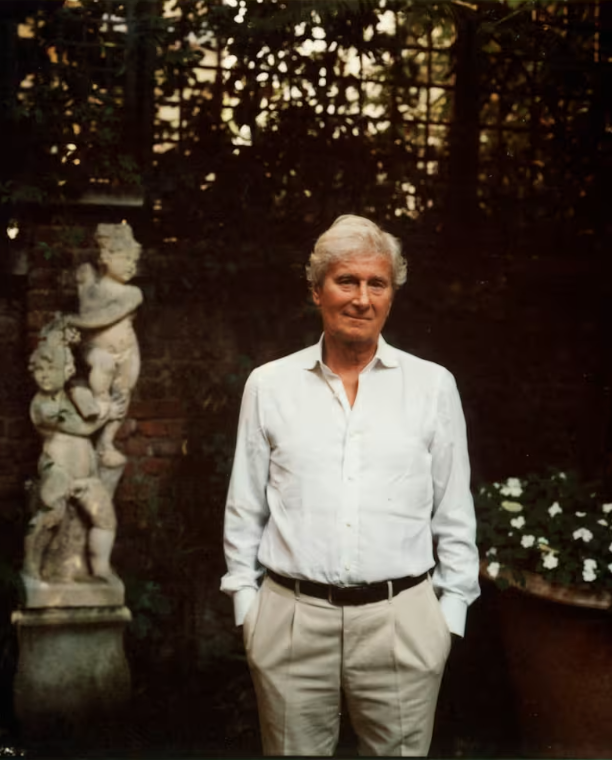
Kartell’s Claudio Luti on skis, sculpture and slim-cut suits
My personal style signifiers are custom Caraceni slim-cut suits – very English – in classic colours such as navy and grey. My shirts are custom E Marinella. I’m a typical Milanese man and I like to work so I’m very comfortable in a suit, though my style has changed over the years. In my previous career I worked with Gianni Versace as managing director to help build the brand, and I only wore his clothes. Today’s dress is more traditional.
The CEO of the Italian design company talks taste
My personal style signifiers are custom Caraceni slim-cut suits – very English – in classic colours such as navy and grey. My shirts are custom E Marinella. I’m a typical Milanese man and I like to work so I’m very comfortable in a suit, though my style has changed over the years. In my previous career I worked with Gianni Versace as managing director to help build the brand, and I only wore his clothes. Today’s dress is more traditional. The last thing I bought and loved was a light-blue hand-knit cashmere sweater at the weekend market in Forte dei Marmi, a seaside town in Tuscany. It’s an excellent spot for high-quality shopping because it caters largely to tourists. It’s nice walking there – there are beautiful flowers and excellent vendors selling everything from ceramics to local leather goods.
The place that means a lot to me is the Mediterranean Sea, aboard my 80ft Wally sailboat. It was built in 1999 and stays in Genoa during the winter. From May until September, though, it’s easy to explore the islands of Italy and Greece. I especially love Bolza and Capri and the Aeolian Islands in July, and the island of Symi – just off Turkey – in August when Italy is crowded. There are so many beautiful bays and places to anchor in this part of the world. The waters off Rhodes are very special too.
The best book I’ve read in the past year is The Count of Virtue: Giangaleazzo Visconti, Duke of Milan by ER Chamberlin. It’s a biography of a fascinating man who took Milan to the pinnacle of power in terms of politics and culture at the beginning of the Renaissance. It is also a story of a despot who ultimately succumbed to the plague that decimated so many at the time. And the best souvenir I’ve brought home is a warrior sculpture from a recent sailing trip through the Solomon Islands in the South Pacific. Local people arrived by canoe to sell us crafts and trinkets, and I bought this sculpture in black wood. He resides in my living room in Forte dei Marmi.
My style icon is Beppe Modenese, the former honorary president of the Camera Nazionale della Moda Italiana, a non-profit that helps promote the Italian fashion industry. When I worked in fashion as a young man out of university, I thought he was the epitome of elegance, good manners and good taste. He was known as “The Gentleman” and “Italy’s Prime Minister of Fashion”, and his suits, ties, pocket squares – everything – were perfection. The best gifts I’ve given recently were 20 Christmas presents to my wife last year. It’s a family tradition and I pick them out with my children and grandchildren. From jewellery and clothing to art books, there are gifts from every category, at all prices. One of the best was a gold floral necklace; I went to the store to buy a small necklace for my granddaughter and ended up getting a much grander version for my wife. Another favourite was a sculpture by the Calabrian artist Pino Deodato, inspired by Giorgio de Chirico’s Mysterious Baths sculpture.
The best way to spend €20 is on a stack of newspapers – preferably to read first thing in the morning. I still like to touch the paper versions. And the best gift I’ve received is a “patino” rowing boat from my wife. It is a simple, traditional boat that is typical in Forte dei Marmi and I love it for casual paddling. It says “Claudio & Maria” on the side and was the perfect present. I have a collection of skis and also tennis rackets. I started doing both of these sports when I was very young. Back then, we had really long skis, so those are like antiques now. I also have short skis that turn much more easily, and a rotating selection of newer, high-performance demo skis that I trial, all for downhill skiing, not Nordic, where the terrain is flat. They are all different colours and brands, but my favourites are Atomic. It’s the same for my rackets; I love to play and I always like to try new models.
A way to make me laugh is my golden retriever, Jack. He is always amusing. He goes everywhere with me – to the office, to Forte dei Marmi in summer, to St Moritz in the winter – everywhere but the boat. In my fridge you’ll always find fresh pasta and ragù, some type of fish, herbs, cheeses, aubergine, all kinds of berries and freshly squeezed orange juice. I also have tea and brioche, but not in the fridge, of course. To be honest, I don’t do much cooking.
I’ve recently discovered Laos. I spent my last vacation there and found it to be so beautiful and different from other countries in that part of the world. The people were so kind and well educated, and the trip was full of culture. Amantaka is a spectacular hotel in the Unesco-protected town of Luang Prabang. Being near the Mekong River, the Buddhist temples and the famous night market made for an incredible visit. I don’t know if I believe in life after death because I went to Catholic school and Catholic university, where I studied ethics. It’s difficult to say, so I’ll go with maybe.
The last items of clothing I added to my wardrobe were several ski jackets – a grey Moncler one and two from the Norwegian brand Kjus. They are in brighter colours – cherry red and blue – and I keep them at my home in St Moritz. I choose a jacket according to the weather. An object I would never part with is a vintage blue Porsche Cabriolet that my wife gave me 24 years ago. I’m too old for this car, but it’s such a dream – and it’s special because she purchased it with her own money. It lives in our garage here in Milan and no one else is allowed to drive it. My other cars, yes, fine. But this one? Never.
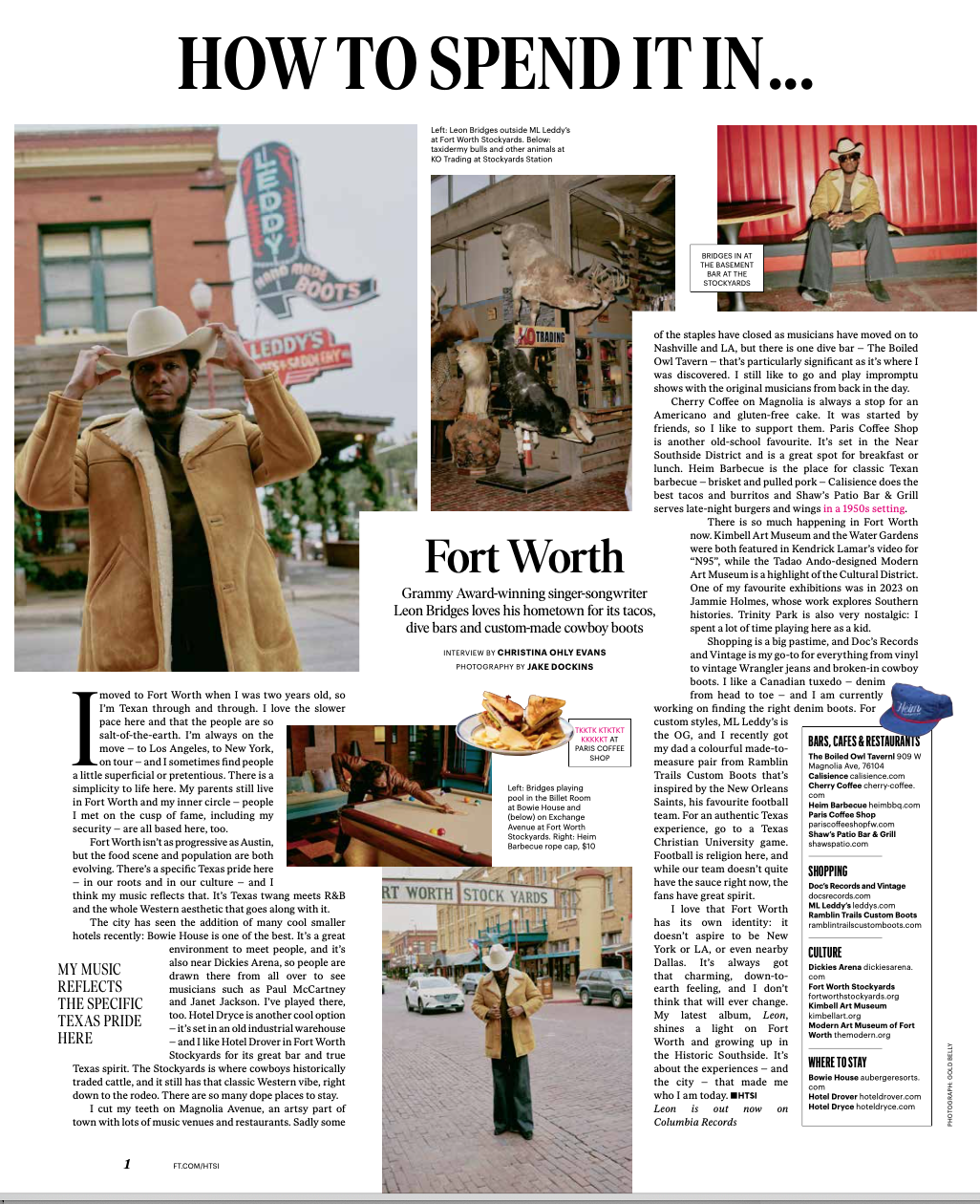
Musician Leon Bridges: ‘There’s a specific Texas pride in Fort Worth’
I moved to Fort Worth when I was two years old, so I’m Texan through and through. I love the slower pace here and that the people are so salt-of-the-earth. I’m always on the move – to Los Angeles, to New York, on tour – and I sometimes find people a little superficial or pretentious. There is a simplicity to life here. My parents still live in Fort Worth and my inner circle – people I met on the cusp of fame, including my security – are all based here too.
The Grammy Award winner loves his hometown for its tacos, dive bars and custom-made cowboy boots
I moved to Fort Worth when I was two years old, so I’m Texan through and through. I love the slower pace here and that the people are so salt-of-the-earth. I’m always on the move – to Los Angeles, to New York, on tour – and I sometimes find people a little superficial or pretentious. There is a simplicity to life here. My parents still live in Fort Worth and my inner circle – people I met on the cusp of fame, including my security – are all based here too.
Fort Worth isn’t as progressive as Austin, but the food scene and population are both evolving. There’s a specific Texas pride here – in our roots and in our culture – and I think my music reflects that. It’s Texas twang meets R&B and the whole Western aesthetic that goes along with it.
The city has seen the addition of many cool smaller hotels recently: Bowie House is one of the best. It’s a great environment to meet people, and it’s also near Dickies Arena, so people are drawn there from all over to see musicians such as Paul McCartney and Janet Jackson. I’ve played there, too. Hotel Dryce is another cool option – it’s set in an old industrial warehouse – and I like Hotel Drover in Fort Worth Stockyards for its great bar and true Texas spirit. The Stockyards is where cowboys historically traded cattle, and it still has that classic Western vibe, right down to the rodeo. There are so many dope places to stay.
I cut my teeth on Magnolia Avenue, an artsy part of town with lots of music venues and restaurants. Sadly some of the staples have closed as musicians have moved on to Nashville and LA, but there is one dive bar – The Boiled Owl Tavern – that’s particularly significant as it’s where I was discovered. I still like to go and play impromptu shows with the original musicians from back in the day.
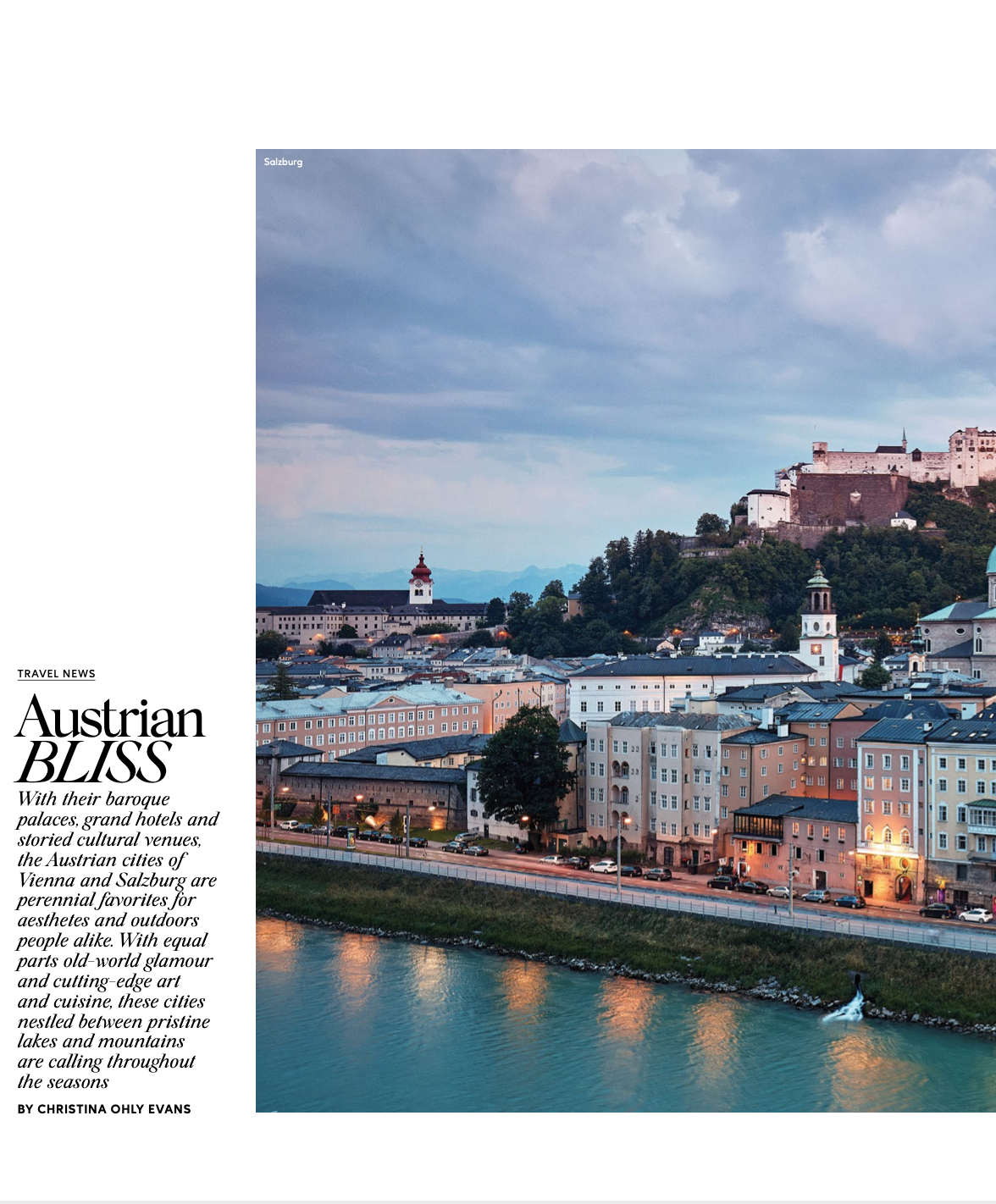
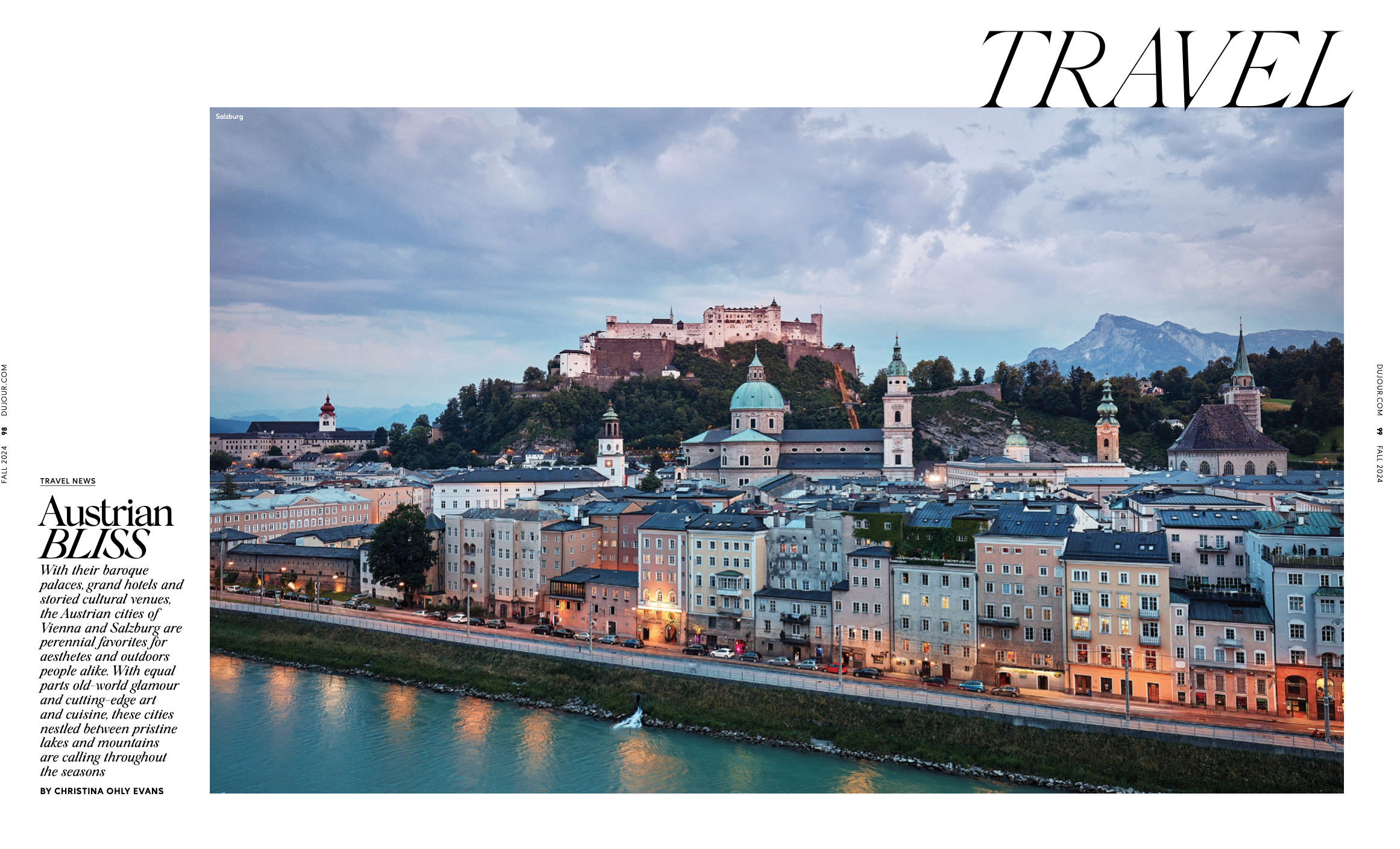
Austrian BLISS
With their baroque palaces, grand hotels and storied cultural venues, the Austrian cities of Vienna and Salzburg are perennial favorites for aesthetes and outdoors people alike. With equal parts old-world glamour and cutting-edge art and cuisine, these cities nestled between pristine lakes and mountains
are calling throughout the seasons.
By Christina Ohly Evans
With their baroque palaces, grand hotels and storied cultural venues, the Austrian cities of Vienna and Salzburg are perennial favorites for aesthetes and outdoors people alike. With equal parts old-world glamour and cutting-edge art and cuisine, these cities nestled between pristine lakes and mountains
are calling throughout the seasons.
VIENNA
From St. Stephen’s Square to the iconic Schönbrunn Palace to the charming city trams and bustling cafés, the Austrian capital on
the Danube has stayed true to its elegant European roots but is also dynamic, with art galleries and design-led hotels vying for visitors’ attention. Ever a musical mecca— Beethoven, Brahms, Bruckner, Haydn,
Mahler, Mozart, Schoenberg, Schubert, Johann Strauss I and Johann Strauss II all called Vienna home—the arts continue to flourish here in all forms, at the world-renowned State Opera and at the Leopold Museum, with its collection of paintings by Egon Schiele and Gustav Klimt. But it is the chance to stroll the city’s endless lush gardens and savor a slice
of Sacher torte—a rich chocolate and apricot jam cake that is a Viennese hallmark—that makes a visit here feel like a step back in time. The pace is just a bit slower here, so linger over a decadent Wiener schnitzel with a glass of local grüner veltliner at one of the city’s Michelin-starred temples of gastronomy or opt for a simple street dog (or bratwurst). When it comes to exploring this magical, verdant city, there is no going wrong.
There is no shortage of sumptuous palace hotels here, so it’s the perfect place to make like a Habsburg and be enveloped in an expansive room brimming with gold and jewel-toned velvets. If it’s a more minimalist vibe you’re after, there are plenty of properties that fit that bill as well. In short, Vienna is a hotel town, and this is only a small handful of the very best.
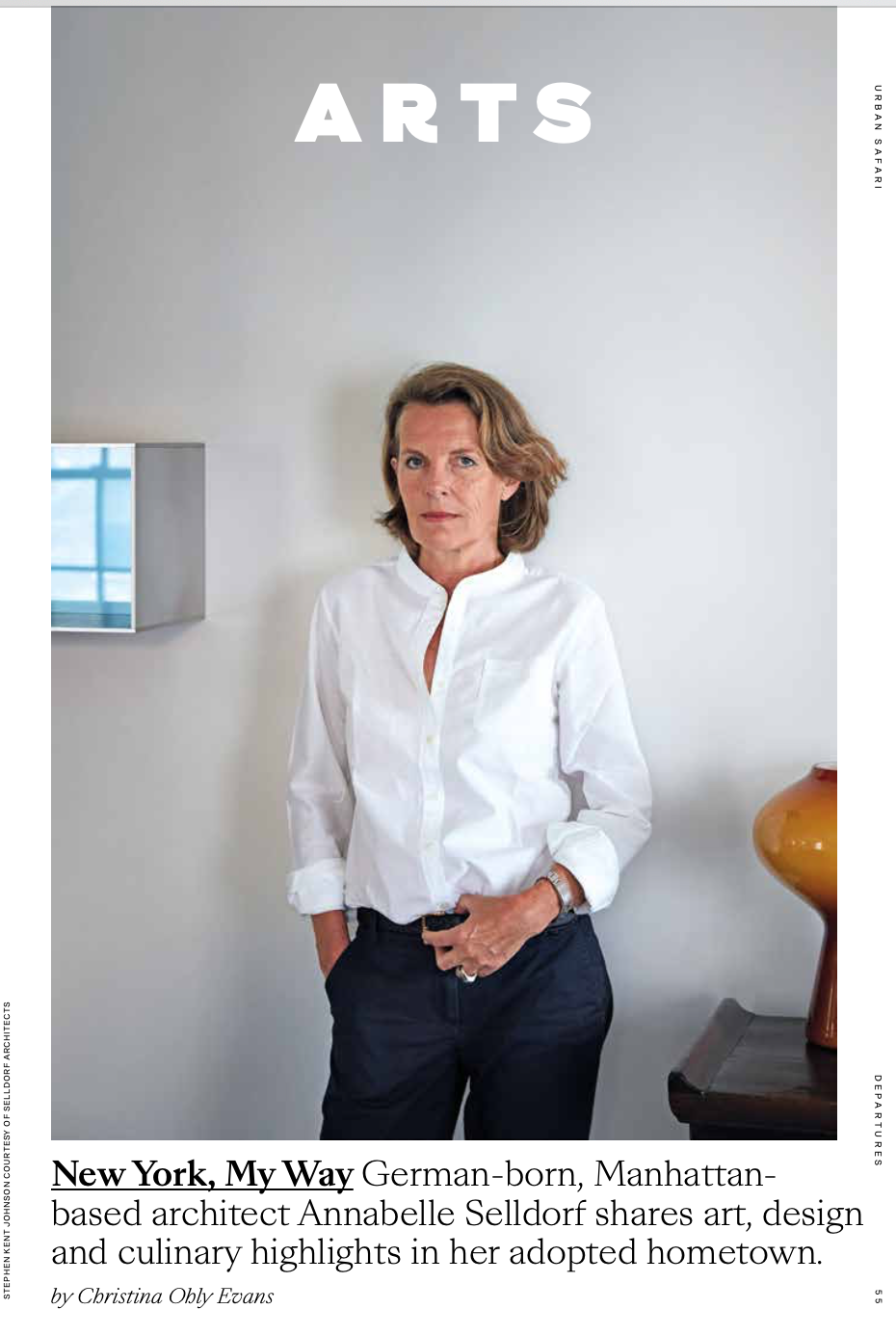
Annabelle Selldorf, New York, My Way
German-born, Manhattan-based architect Annabelle Selldorf shares art, design and culinary highlights in her adopted hometown.
It was an initial visit to New York City at the age of 18 that sealed the deal for a young Annabelle Selldorf. Taken by the “electrifying atmosphere that felt like a massive infusion of oxygen”, the future university student packed her bags in her native Cologne and headed for Brooklyn’s Pratt Institute to study architecture. That was the 1980s and she has called the city – uptown, downtown, SoHo, NoHo – home ever since. “It’s very different from other major European cities such as Paris and London,” explains Selldorf of the city that sometimes gets an abrasive rap. “There’s an openness and a jovial embrace that New Yorkers provide that is like nowhere else.”
German-born, Manhattan-based architect Annabelle Selldorf shares art, design and culinary highlights in her adopted hometown
It was an initial visit to New York City at the age of 18 that sealed the deal for a young Annabelle Selldorf. Taken by the “electrifying atmosphere that felt like a massive infusion of oxygen”, the future university student packed her bags in her native Cologne and headed for Brooklyn’s Pratt Institute to study architecture. That was the 1980s and she has called the city – uptown, downtown, SoHo, NoHo – home ever since. “It’s very different from other major European cities such as Paris and London,” explains Selldorf of the city that sometimes gets an abrasive rap. “There’s an openness and a jovial embrace that New Yorkers provide that is like nowhere else.”
Fuelled by the vibrant gallery scene of the day, Selldorf initially gravitated toward SoHo and Tribeca – “places full of artists and culture”, she says of the cast-iron buildings, endless exhibitions and vibrant parties that drew an eclectic mix of characters. And while she moved around the city – from the Upper West Side to a loft in SoHo to a former undertaker’s flat – it was always driven by the community and surrounding street life. “Being close to a park or nature didn’t matter to me at all; I was a total urbanite,” she says of her early cosmopolitan existence.
Fast-forward 40 years, and Selldorf is still enthralled by the city’s history, energy and boundless creativity – all of which guide her work as one of the art world’s pre-eminent architects. Her eponymous firm (Selldorf Architects, which she founded in 1988) has long been focused on bringing people to art in all its forms. From galleries and exhibition spaces for David Zwirner, Gagosian and Hauser & Wirth, to Maja Hoffmann’s sprawling cultural centre, LUMA Arles, to cultural institutions including the Neue Galerie New York and the Museum of Contemporary Art San Diego, she is sought after for her exquisite restraint – a pared-down design aesthetic that is at once elegant, sensitive to the surroundings and, above all, highly functional.
Upcoming high-profile museum projects – including the expansion of New York’s storied Frick Collection and the forthcoming redesign of the British National Gallery’s Sainsbury Wing, as well as the revitalisation of the Smithsonian American Art Museum – are all keeping her busy, but strolling the city streets continues to awe and inspire her. In the following pages, Selldorf offers a glimpse into her New York.
Perfect Weekends
Weekends in New York are all about walking; from the quiet West Village to the East Village and Tompkins Square Park and up to NoHo, the area north of Houston Street. This landmarked area is full of loft buildings built during the late-19th and early-20th centuries. They’re made of cast iron and brick and are so stout – and they’re juxtaposed against contemporary residential structures by Herzog & de Meuron and our own 10 Bond Street. I think this building anchors the neighbourhood a bit. The streets are wide here, and the buildings are low so you can see the sky, and the restaurants are great, too.
The Art March
I always make a list of galleries in Chelsea that I want to visit, with a mix of new and young artists and more established names as well. From Chelsea, I might head to The Whitney, or go uptown to visit the Met [Metropolitan Museum of Art], Neue Galerie and Guggenheim. This provides a structure to my day, a checklist of culture. In terms of music and theatre, Lincoln Center – and the concerts at David Geffen Hall in particular – have so much to offer. The arts programming at the Park Avenue Armory is another highlight.
Great Heights
New York is a city of skyscrapers that are in dialogue with each other. From the iconic Empire State Building to the late-1920s Art Deco Chrysler Building, to the newer 432 Park Avenue by the late Rafael Viñoly, which makes a striking figure because of its proportions, they all add to the unique mix. I do think with all the buildings popping up everywhere, more regulation might be helpful. We’re working on our first skyscraper project, One Domino Square, which is twin residential towers in Williamsburg, Brooklyn. It’s influenced by the entire city – the nearby Williamsburg Bridge, the sky, the weather. The project features a ceramic façade that’s slightly iridescent and reflects the beautiful light from white to sky blue depending on the season and time of day.
Culinary Gems
My tastes are simple – I like food that is like the buildings that I design. I’ve been a longtime regular at [Japanese restaurant] Omen Azen [Thompson Street] in SoHo where I like both the setting and the cuisine. It’s all about the balance. I love King [King Street] for the same reasons – the atmosphere and the food. It’s like the River Café in London, which makes sense because two of the women owners/chefs trained there. Via Carota [Grove Street] and I Sodi [Bleecker Street] are other favourites; everything is so freshly cooked and so simple.
Green Spaces
People crave parks and public spaces – particularly in New York City. The Hudson River Park, which runs along the Hudson River downtown, is particularly important, as is Washington Square Park near my home; it’s always crowded. Madison Square Park is a little forbidding because the green zones are fenced in, but it’s a nice counterbalance to the urban surroundings. I am a huge fan of both Union Square Park and the Union Square Greenmarket. I buy everything here – my greens, fruit, farm-fresh eggs, milk. New Yorkers love not only the produce and the variety, but the sense of community. I love to observe vendors and locals interacting and experiencing the seasons.
The Cultural Horizon
I’m incredibly excited about The Frick, which has been seven years in the making. The galleries and spaces are finished and are being acclimatised to welcome the art back over the next few months. We designed the entire thing and added 27,000 square feet to the original 1914 building by Thomas Hastings and later, by John Russell Pope. The original garden by Russell Page is now a focal point, as is a beautifully proportioned reception hall, and we restored the art and research library on East 70th Street. In addition, we replaced skylights, changed entry sequences, education spaces, an auditorium and added a light-filled cafe. The way the museum welcomes people is much different and much more inclusive now. As an architect, you must always articulate how a building contributes and why it matters. You need to listen to why people want continuity, but you also need to understand how life and society change. I hope this building transitions seamlessly between the old Beaux-Arts architecture and the new – in terms of spaces and materials – and that everyone feels welcome. If we can change that threshold of anxiety for people who aren’t in the habit of going to museums just a little bit, then I think that’s culturally significant.
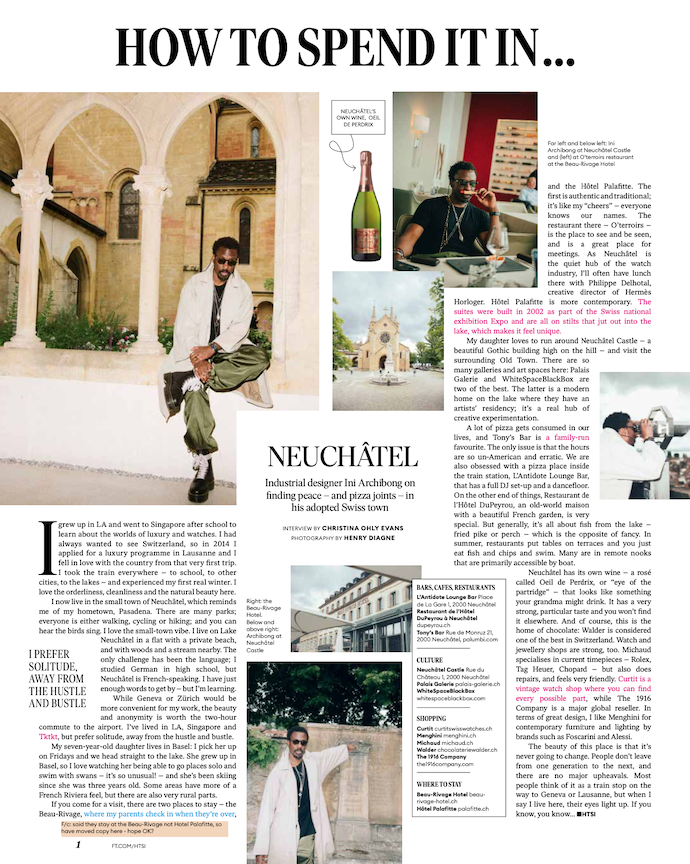
Ini Archibong’s guide to the quiet cool of Neuchâtel
The industrial designer on finding peace – and pizza – in his adopted home.
I grew up in LA and went to Singapore after school to learn about the worlds of luxury and watches. I had always wanted to see Switzerland, so in 2014 I applied for a luxury programme in Lausanne and I fell in love with the country from that very first trip. I took the train everywhere – to school, to other cities, to the lakes – and experienced my first real winter. I love the orderliness, cleanliness and the natural beauty here.
The industrial designer on finding peace – and pizza – in his adopted home
By Christina Ohly Evans
I grew up in LA and went to Singapore after school to learn about the worlds of luxury and watches. I had always wanted to see Switzerland, so in 2014 I applied for a luxury programme in Lausanne and I fell in love with the country from that very first trip. I took the train everywhere – to school, to other cities, to the lakes – and experienced my first real winter. I love the orderliness, cleanliness and the natural beauty here. I now live in the small town of Neuchâtel, which reminds me of my hometown, Pasadena.
There are many parks; everyone is either walking, cycling or hiking; and you can hear the birds sing. I love the small-town vibe. I live on Lake Neuchâtel in a flat with a private beach, and with woods and a stream nearby. The only challenge has been the language; I studied German in high school, but Neuchâtel is French-speaking. I have just enough words to get by – but I’m learning.
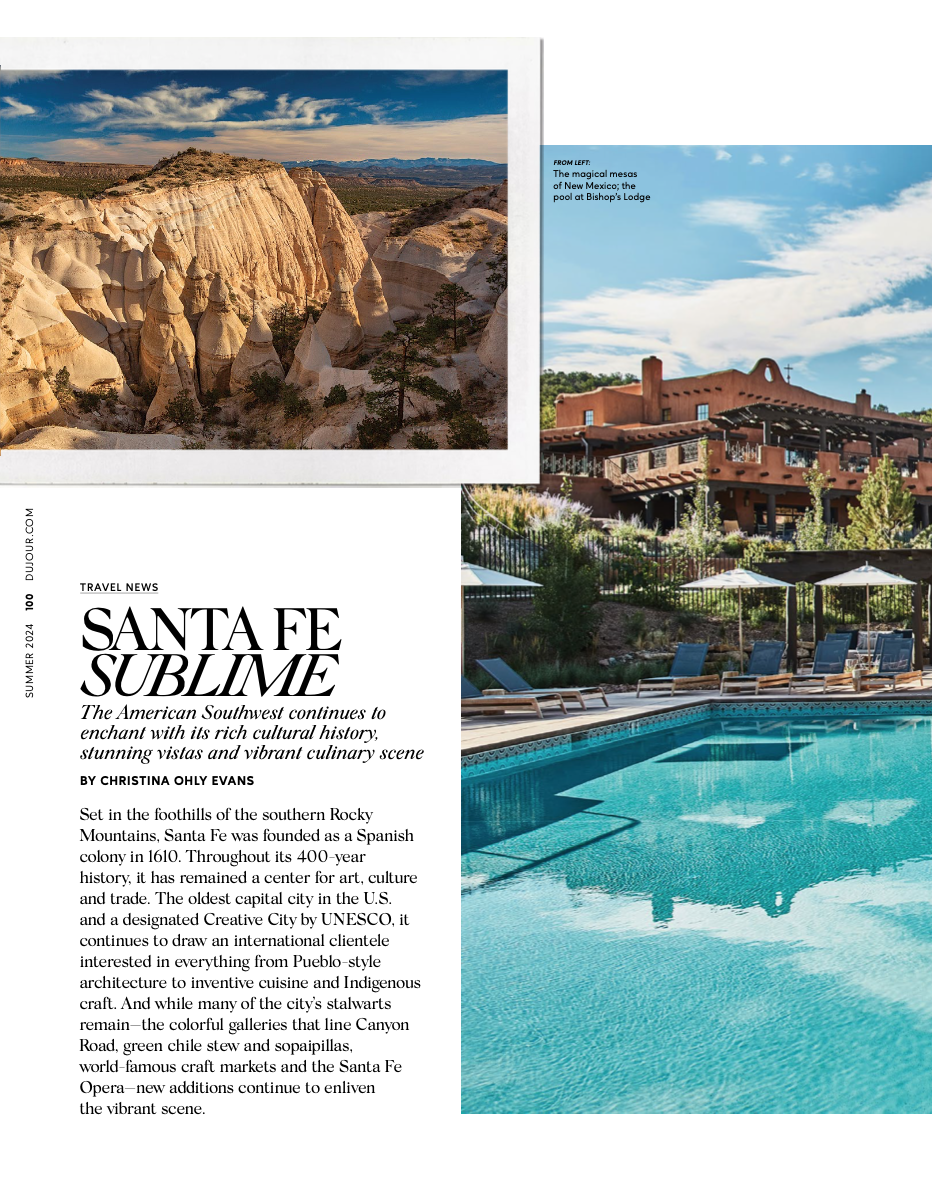
Santa Fe Sublime
Set in the foothills of the southern Rocky Mountains, Santa Fe was founded as a Spanish colony in 1610. Throughout its 400-year history, it has remained a center for art, culture and trade. The oldest capital city in the U.S. and a designated Creative City by UNESCO, it continues to draw an international clientele interested in everything from Pueblo-style architecture to inventive cuisine and Indigenous craft. And while many of the city’s stalwarts remain—the colorful galleries that line Canyon Road, green chile stew and sopaipillas, world-famous craft markets and the Santa Fe Opera—new additions continue to enliven the vibrant scene.
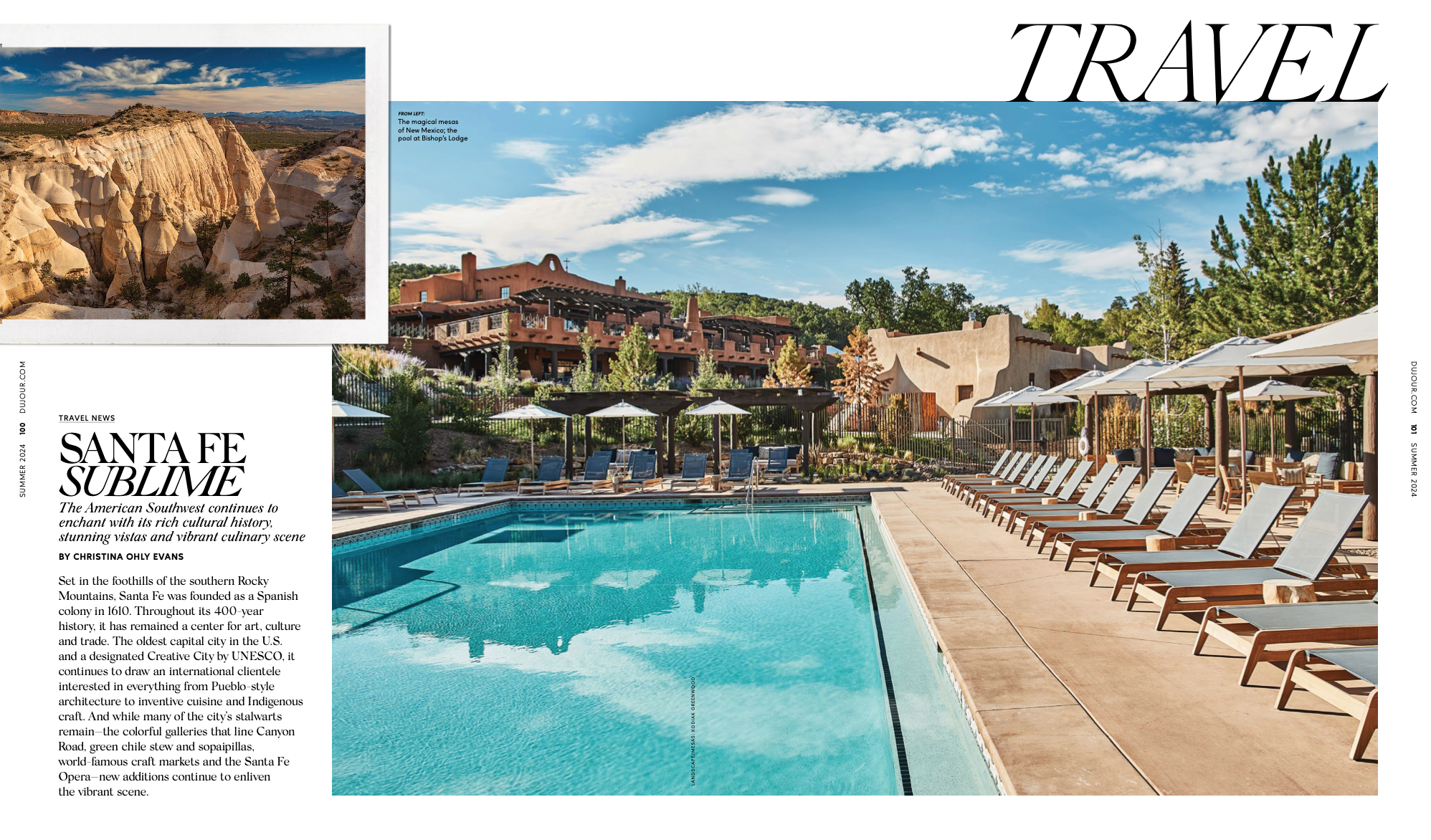
The American Southwest continues to enchant with its rich cultural history, stunning vistas and vibrant culinary scene.
By Christina Ohly Evans
Set in the foothills of the southern Rocky Mountains, Santa Fe was founded as a Spanish colony in 1610. Throughout its 400-year history, it has remained a center for art, culture and trade. The oldest capital city in the U.S. and a designated Creative City by UNESCO, it continues to draw an international clientele interested in everything from Pueblo-style architecture to inventive cuisine and Indigenous craft. And while many of the city’s stalwarts remain—the colorful galleries that line Canyon Road, green chile stew and sopaipillas, world-famous craft markets and the Santa Fe Opera—new additions continue to enliven
the vibrant scene.
HOTELS
From five-star properties to an authentic dude ranch, these hotels are perfect for stays with a sense of place
BISHOP’S LODGE, AUBERGE RESORTS COLLECTION
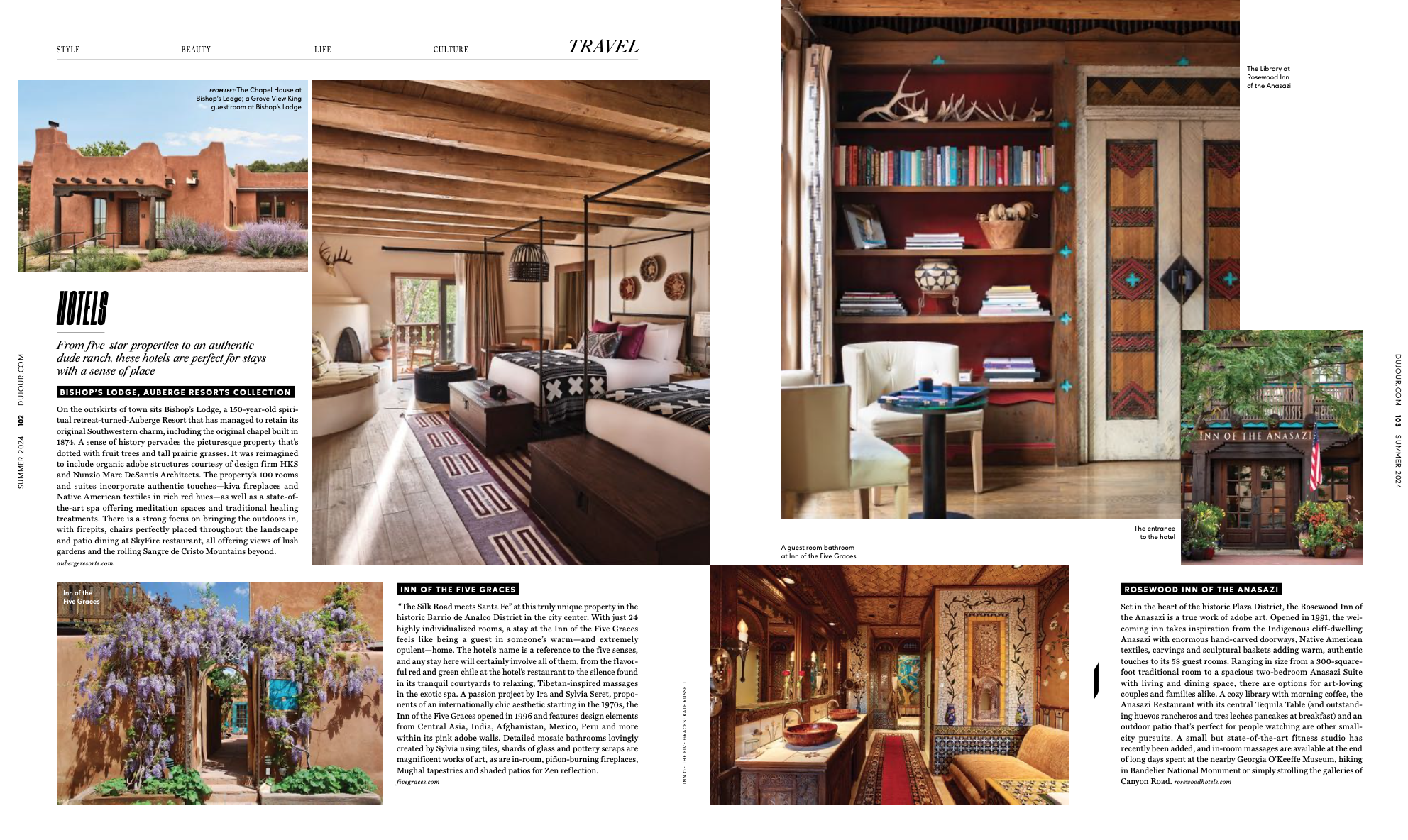
On the outskirts of town sits Bishop’s Lodge, a 150-year-old spiri- tual retreat-turned-Auberge Resort that has managed to retain its original Southwestern charm, including the original chapel built in 1874. A sense of history pervades the picturesque property that’s dotted with fruit trees and tall prairie grasses. It was reimagined to include organic adobe structures courtesy of design firm HKS and Nunzio Marc DeSantis Architects. The property’s 100 rooms and suites incorporate authentic touches—kiva fireplaces and Native American textiles in rich red hues—as well as a state-of- the-art spa offering meditation spaces and traditional healing treatments. There is a strong focus on bringing the outdoors in, with firepits, chairs perfectly placed throughout the landscape and patio dining at SkyFire restaurant, all offering views of lush gardens and the rolling Sangre de Cristo Mountains beyond.
INN OF THE FIVE GRACES
“The Silk Road meets Santa Fe” at this truly unique property in the historic Barrio de Analco District in the city center. With just 24 highly individualized rooms, a stay at the Inn of the Five Graces feels like being a guest in someone’s warm—and extremely opulent—home. The hotel’s name is a reference to the five senses, and any stay here will certainly involve all of them, from the flavor- ful red and green chile at the hotel’s restaurant to the silence found in its tranquil courtyards to relaxing, Tibetan-inspired massages in the exotic spa. A passion project by Ira and Sylvia Seret, propo- nents of an internationally chic aesthetic starting in the 1970s, the Inn of the Five Graces opened in 1996 and features design elements from Central Asia, India, Afghanistan, Mexico, Peru and more within its pink adobe walls. Detailed mosaic bathrooms lovingly created by Sylvia using tiles, shards of glass and pottery scraps are magnificent works of art, as are in-room, piñon-burning fireplaces, Mughal tapestries and shaded patios for Zen reflection. fivegraces.com
INN OF THE FIVE GRACES
“The Silk Road meets Santa Fe” at this truly unique property in the historic Barrio de Analco District in the city center. With just 24 highly individualized rooms, a stay at the Inn of the Five Graces feels like being a guest in someone’s warm—and extremely opulent—home. The hotel’s name is a reference to the five senses, and any stay here will certainly involve all of them, from the flavor- ful red and green chile at the hotel’s restaurant to the silence found in its tranquil courtyards to relaxing, Tibetan-inspired massages in the exotic spa. A passion project by Ira and Sylvia Seret, propo- nents of an internationally chic aesthetic starting in the 1970s, the Inn of the Five Graces opened in 1996 and features design elements from Central Asia, India, Afghanistan, Mexico, Peru and more within its pink adobe walls. Detailed mosaic bathrooms lovingly created by Sylvia using tiles, shards of glass and pottery scraps are magnificent works of art, as are in-room, piñon-burning fireplaces, Mughal tapestries and shaded patios for Zen reflection. fivegraces.com
ROSEWOOD INN OF THE ANASAZI
Set in the heart of the historic Plaza District, the Rosewood Inn of the Anasazi is a true work of adobe art. Opened in 1991, the wel- coming inn takes inspiration from the Indigenous cliff-dwelling Anasazi with enormous hand-carved doorways, Native American textiles, carvings and sculptural baskets adding warm, authentic touches to its 58 guest rooms. Ranging in size from a 300-square- foot traditional room to a spacious two-bedroom Anasazi Suite with living and dining space, there are options for art-loving couples and families alike. A cozy library with morning coffee, the Anasazi Restaurant with its central Tequila Table (and outstand- ing huevos rancheros and tres leches pancakes at breakfast) and an outdoor patio that’s perfect for people watching are other small- city pursuits. A small but state-of-the-art fitness studio has recently been added, and in-room massages are available at the end of long days spent at the nearby Georgia O’Keeffe Museum, hiking in Bandelier National Monument or simply strolling the galleries of Canyon Road. rosewoodhotels.com
FOUR SEASONS RESORT RANCHO ENCANTADO
A 57-acre former dude ranch that’s 10 miles from the center of Santa Fe, Four Seasons Resort Rancho Encantado offers a full immersion in nature with the Rio Grande River Valley and the Sangre de Cristo and Jemez mountains in full view. The property’s 65 spacious casi- tas have been refreshed and skew toward minimalist Southwestern chic; neutral cement floors, adobe fireplaces, soothing textiles, horsehair pottery by artist Linda Concho and local baskets all add to the serene atmosphere. A sleek, dark cement pool offers a welcome respite after long days spent hiking and biking, as does the spa—one where juniper sage smudging ceremonies meet nutrient- rich adobe clay treatments and end with chakra balancing massages. For authentic northern New Mexico cuisine with inven- tive twists, the restaurant, Terra, offers spice-infused dishes such as an aguachile rojo hamachi ceviche and a roasted poblano with calabacitas, quinoa pilaf, Mexican crema, yellow mole, crispy chicos and avocado. Be sure to save room for the legendary churros, served here with ancho reyes poblano cream. fourseasons.com
SPAS
Immerse yourself in the healing waters of New Mexico
OJO CALIENTE
It’s worth the hour drive out of town to soak in the healing waters of one of the country’s oldest health spas, Ojo Caliente. These hot springs feature nutrient-rich, healing minerals including lithia, iron and soda, each with properties that aid in digestion, promote relaxation and much more. In addition to eight communal tubs and private pools, there are hydrotherapy treatments and massages to suit every taste (or ailment). A Satva Botanicals massage incorpo- rates CBD oil to reduce stress, while the Rio Grande Hot Stone massage uses basalt rocks to eliminate stagnant energy from the body and mind. The tranquil Yoga Yurt is the place for small group classes—nidra, hatha and more—and group retreats are also an option. For those who prefer a total getaway, book in at the hotel with its homey Pueblo-style suites or in one of the North Cottages, the four-bedroom Adobe House or even an old-school Vintage Trailer for a true glamping experience. Dine on the patio at Artesian in summer, where hearty breakfasts—blue corn piñon pancakes and tacos stuffed with eggs, pinto beans and salsa—pro- vide fuel for days spent outdoors. ojosparesorts.com
The dining room at Geronimo
GERONIMO
Step inside Geronimo, a restaurant housed in a 250-year-old restored adobe building on Canyon Road, and you’ll feel trans- ported to the world of Georgia O’Keeffe. Whitewashed walls, beamed ceilings and intimate rooms lit by antler chandeliers and crackling kiva fireplaces all create a relaxed ambience. Among the many standouts are jumbo lump crab cakes with sweet corn puree, a vegetarian tasting menu with wine pairing and mains of Telicherry-rubbed elk tenderloin and New Mexico Four Corners grilled rack of lamb with fresh pea puree and parmesan yellow corn polenta. Be sure to book in for a cocktail on the Canyon Road patio to people-watch with an unmatched margarita in hand. geronimorestaurant.com
TOMASITA’S
At 50 years old, Tomasita’s is a Santa Fe institution serving straightforward New Mexican cuisine and some of the best mar- garitas in town. Enchiladas, chiles rellenos, chalupas topped with refried beans and cheese and pork tamales with red chile
are all favorites, as are classic SWIRL margaritas made with primo tequila. tomasitas.com
The queens of NYC philanthropy
For years women have given time and money to create non-profit organisations, promote social and legislative changes, build communities, educate and support a variety of arts institutions all over the world. Nowhere is this more felt than in New York City – a cultural, diplomatic, financial and scientific hub of 7.8 million people, where shortfalls in government spending have long prompted the city’s most powerful women to rally others. And while the tuxedos and taffeta that marked the 1980s heyday of New York’s gala scene have given way to more modest events, the city’s philanthropic zeal is unlike any other.
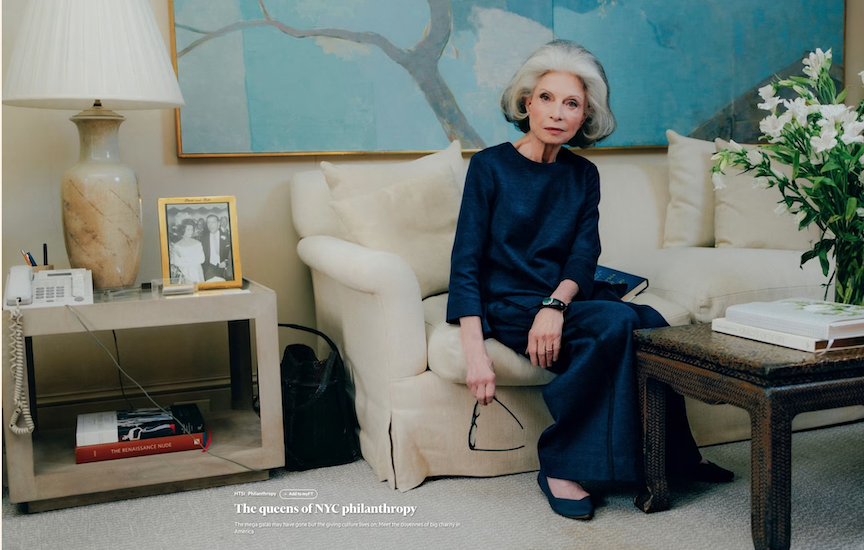
Deeda Blair
The mega galas may have gone but the giving culture lives on. Meet the doyennes of big charity in America
For years women have given time and money to create non-profit organisations, promote social and legislative changes, build communities, educate and support a variety of arts institutions all over the world. Nowhere is this more felt than in New York City – a cultural, diplomatic, financial and scientific hub of 7.8 million people, where shortfalls in government spending have long prompted the city’s most powerful women to rally others. And while the tuxedos and taffeta that marked the 1980s heyday of New York’s gala scene have given way to more modest events, the city’s philanthropic zeal is unlike any other. “New York has the most active cultural, educational and charitable sector in America,” says Darren Walker, president of the Ford Foundation, a $16bn international social-justice charity. “No other city comes close. Philanthropists here provide the time, talent and treasure.” The scene began in the 1700s as aid focused on underserved women and children and has since grown to encompass everything from protecting the environment (The Central Park Conservancy raises around $7mn a year from events) to criminal justice reform (Agnes Gund’s Art for Justice fund has awarded $125mn to address wrongful incarceration) and raising funds for the Metropolitan Museum of Art’s Costume Institute (last year’s Met Gala raked in $17.4mn).
“Historically, women have been drawn to the idea of being generous – with their time, money and social capital,” says Jeannie Infante Sager, director of the Women’s Philanthropy Institute at Indiana University. “They tend to give holistically – often collectively – with empathy being the biggest driver. They’re less motivated by tax advantages and naming opportunities.” “What makes American philanthropy different is the concept of doing more,” adds Sager. “[19th-century French thinker] Alexis de Tocqueville noted this exceptionalism and our ability to unite and form associations to ‘give fêtes, to found seminaries, to build inns, to raise churches, to distribute books, to send missionaries to the Antipodes’. It’s equality in action here; we have made it a part of life and incentivised it as the norm.”
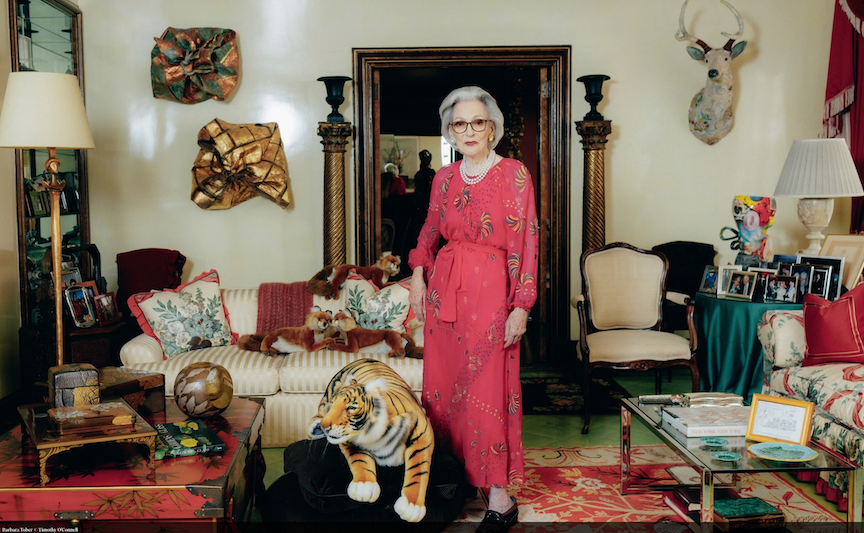
Barbara Tober
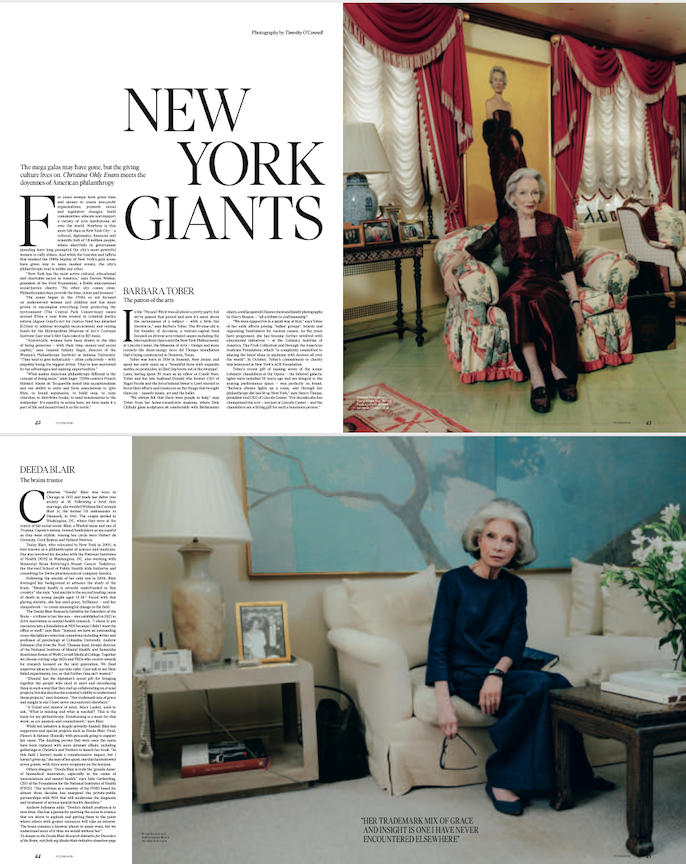
BARBARA TOBER
“In the ’70s and ’80s it was all about a pretty party, but we’ve passed that period and now it’s more about the seriousness of a subject – with a little fun thrown in,” says Barbara Tober. The 89-year-old is the founder of Acronym, a venture-capital fund focused on diverse arts-related causes including the Metropolitan Opera and the New York Philharmonic at Lincoln Center, the Museum of Arts + Design and more recently the clean-energy Arco del Tiempo installation that’s being constructed in Houston, Texas. Tober was born in 1934 in Summit, New Jersey, and spent her early years on a “beautiful farm with exquisite moths, no pesticides, in [her] hip boots out in the swamps”. Later, having spent 30 years as an editor at Condé Nast, Tober and her late husband Donald (the former CEO of Sugar Foods and the force behind Sweet’n Low) started to focus their efforts and resources on the things that brought them joy – namely music, art and the ballet. “We always felt that there were people to help,” says Tober from her home-turned-arts museum, where Dale Chihuly glass sculptures sit comfortably with Biedermeier chairs, a red lacquered Chinese chest and family photographs by Harry Benson – “all a tribute to craftsmanship”.
“We were supportive in a small way at first,” says Tober of her early efforts joining “ladies’ groups”, boards and organising fundraisers for various causes. As the years have progressed, she has become further involved with educational initiatives – at the Culinary Institute of America, The Frick Collection and through the American Austrian Foundation, which “is completely committed to sharing the latest ideas in medicine with doctors all over the world”. In October, Tober’s commitment to charity was honoured at New York’s ACE Foundation.
Tober’s recent gift of naming seven of the iconic Lobmeyr chandeliers at the Opera – the beloved galactic lights were installed 50 years ago and are integral to the soaring performance space – was perfectly on brand. “Barbara always lights up a room, and through her philanthropy she has lit up New York,” says Henry Timms, president and CEO of Lincoln Center. “For decades she has championed the arts – not just at Lincoln Center – and the chandeliers are a fitting gift for such a luminous person.”
DEEDA BLAIR
Catherine “Deeda” Blair was born in Chicago in 1931 and made her debut into society at 18. Following a brief first marriage, she wedded William McCormick Blair Jr, the former US ambassador to Denmark, in 1961. The couple settled in Washington, DC, where they were at the centre of the social scene. Blair, a Warhol muse and one of Truman Capote’s swans, hosted fundraisers as successful as they were stylish. Among her circle were Hubert de Givenchy, Cecil Beaton and Helmut Newton. Today Blair, who relocated to New York in 2005, is best known as a philanthropist of science and medicine. She was involved for decades with the National Institutes of Health (NIH) in Washington, DC, also working with the Breast Cancer Taskforce at the National Cancer Institute of the NIH, the Harvard School of Public Health Aids Initiative and consulting for Swiss pharmaceutical company Sandoz. Following the suicide of her only son in 2004, Blair leveraged her background to advance the study of the brain. “Mental health is severely underfunded in this country,” she says, “and suicide is the second leading cause of death in young people aged 15-34.” Faced with this glaring statistic, she has used grace, brilliance – and her chequebook – to create meaningful change in the field.
The Deeda Blair Research Initiative for Disorders of the Brain – a tribute to her late son – was established in 2021 to drive innovation in mental-health research. “I chose to put resources into the Foundation for the National Institutes of Health [FNIH] because I didn’t want the office or staff,” says Blair. “Instead, we have an outstanding cross-disciplinary selection committee including writer and professor of psychology at Columbia University, Andrew Solomon (Far from the Tree); Thomas Insel, former director of the National Institute of Mental Health; and Samantha Boardman Rosen of Weill Cornell Medical College. Together we choose cutting-edge MDs and PhDs who receive awards for research focused on the next generation. We fund unproven ideas so they can take risks. I just ask to see their failed experiments, too, so that further time isn’t wasted.”
“[Deeda] has the diplomat’s social gift for bringing together the people who need to meet and introducing them in such a way that they end up collaborating on crucial projects; but she also has the scientist’s ability to understand those projects,” says Solomon. “Her trademark mix of grace and insight is one I have never encountered elsewhere.”
“A friend and mentor of mine, Mary Lasker, used to ask, ‘What is missing and what is needed?’ This is the basis for my philanthropy. Fundraising is a must for this work, as are passion and commitment,” says Blair. While her initiative is largely privately funded, Blair has supporters and special projects such as Deeda Blair: Food, Flowers & Fantasy (Rizzoli), with proceeds going to support her cause. The dazzling parties that were once the norm have been replaced with more intimate affairs, including gatherings at Christie’s and Verdura to launch her book. “In this field I haven’t made a transformative impact, but I haven’t given up,” she says of her quest, one that has bestowed seven grants, with three more recipients on the horizon.
Others disagree. “Deeda Blair is truly the ‘grande dame’ of biomedical innovation, especially in the realm of neurosciences and mental health,” says Julie Gerberding, CEO of the FNIH. “Her activism as a member of the FNIH board for almost three decades has energised the private-public partnerships with NIH that will modernise the diagnosis and treatment of serious mental-health disorders.” Andrew Solomon adds: “Deeda’s default position is to save lives. She has a genius for spotting the areas in science that are about to explode and getting them to the point where others with greater resources will take an interest. The brain remains a faraway planet in many ways, but we understand more of it than we would without her.” To donate to the Deeda Blair Research Initiative for Disorders of the Brain, visit fnih.org/deeda-blair-initiative-donation-page
SUSAN FALES-HILL
The lady of the dance
Italian-born Susan Fales-Hill is an author, television writer and producer (she is currently a consulting writer/producer of Max’s And Just Like That...). She’s also an International Best Dressed List Hall of Famer and an ardent advocate for the arts and education. Fales-Hill’s passions are many, including St Paul’s School in New Hampshire,
Harvard College and the American Ballet Theatre (ABT), in particular its diversity effort ABT Rise. “There’s nothing like the communal, ephemeral experience of dance,” says Fales-Hill. “I grew up going to the ballet, so it’s in my heart and blood.” Understanding that “ballet has traditionally not been by or for people of colour”, she has been on a “crusade for the inclusion of marginalised people – dancers, teachers and choreographers – so that the ballet is accessible to a wider audience”. Every year she brings 10-20 African-American women to the ballet – this year to Christopher Wheeldon’s Like Water for Chocolate. “It’s important for the dancers to see diversity, too,” she says.
As co-chair of ABT’s trustees emeriti, Fales-Hill is involved with decision-making around fundraising and expenditures, and has previously worked on the glamorous Spring and Fall Galas. Events like these raise approximately seven per cent of ABT’s annual budget, and are among the organisation’s most important – not to mention some of the city’s most festive.
Her efforts are paying off. “Susan is a master networker, organiser and connector – this is her superpower,” says Darren Walker, president of the Ford Foundation. “She uses her boundless energy to benefit the cultural landscape of New York City, particularly at American Ballet Theatre, where she’s had a material impact on the diversity of the organisation. She mentors dancers and is a compelling proselytiser for the cause.”
Together with other New Yorkers – socialites Muffie Potter Aston and Blaine Trump, and film producer Sarah Arison among them – Fales-Hill is committed to adding “kids of colour to the school, as well as dancers of colour to the corps and as principals”, she says.
“IT’S IMPORTANT FOR THE DANCERS TO SEE DIVERSITY, TOO”
MARIFÉ HERNÁNDEZ
The grande dame of music
Long a staple of the New York charity circuit, Marifé Hernández has worked for the arts, voter rights, New York Presbyterian Hospital and countless other civic organisations for more than 40 years.
A Puerto Rican-born only child, she was raised in Argentina and France, with summers spent in Salzburg and Vienna, where she was steeped in classical music. Hernández has always been impressed by “the exceptional level of doing in the United States”, a trait she attributes to the fact that everyone is a transplant in one way or another. “In other countries – South America, Asia – families care for families, but here we take care of one another. It’s just ingrained in the American psyche,” she says. This is especially heightened in New York, which serves as a hub for finance, immigration,entrepreneurship, the United Nations and more.
After years as a television producer and on-air personality for WPIX in New York, as well as in marketing and, later, politics (she was the chief of protocol at the State Department during the Carter administration, where she entertained Margaret Thatcher and Pierre Trudeau), Hernández has devoted her life to giving back to the city she loves. A particular passion project is the Vienna Philharmonic. The orchestra performs at Carnegie Hall every year and has an academy for young musicians in Austria that she has helped to support financially, as well as through gilded parties andconcerts on both sides of the Atlantic. “She is the face of the Vienna Philharmonic Society in America,” explains Daniel Froschauer, the orchestra’s chairman and first violinist. “It’s more than just money – it’s a personal relationship with the orchestra, our musicians and our academists. She’s widening our audience, bringing groups and significant individuals to hear our concerts both in New York and in Europe. She’s explained to us the stratagem for enlarging our presence abroad including hosting press lunches for us at Carnegie Hall. Her commitment to the Vienna Philharmonic is rivalled only by her enthusiasm for music and arts. Marifé is ensuring a future for the unique sound of the Vienna Philharmonic.”
“I believe in the importance of art for children,” says Hernández. When music education was cut in the 1970s, she started to fill the void through work with the Opera Lafayette and the National Symphony Orchestra, among other institutions. “I learned early on – at Wellesley College – about the power of committees and women’s ability to raise money,” she says. She applies her well- honed skills to a fundraiser she hosts annually at a private club on Manhattan’s Upper East Side that benefits the Vienna Philharmonic Society. “We can only fit 150 people, but that makes it a smaller, more intimate party,” she says of the black-tie affair. “It’s not lavish, but personal. When it comes to lavish: been there, done that.”
ELIZABETH KURPIS
As the founder of her eponymous fashion-focused legal practice – Kurpis Legal – Elizabeth Kurpis is accustomed to balancing clients including Loeffler Randall, Tenoverten nails and influencer Stephanie Hill (aka The Style Bungalow). But it’s her work on behalf of The Frick Collection and Memorial Sloan Kettering Cancer Center (MSK) that is closest to her heart. “I’ve been involved with the Young Fellows Ball at The Frick over the years – curating guest lists, working with fashion and spirits sponsors – and it’s one of the few black-tie galas left,” says the 41-year-old lawyer and mother of two from her home in Saddle River, New Jersey. “I miss being in gowns; everything has got more and more casual,” adds Kurpis, who is dressed in a vintage Gucci skirt, cashmere turtleneck and over-the-knee Manolo Blahnik boots. In addition to the Young Fellows Ball being a glittery affair, the annual party provides “essential support for the Frick’s Art Reference Library and education department, which serves students from New York City public schools as well as digital audiences around the world”, explains Rowan Moody, head of individual giving at The Frick Collection. The museum raised more than $30mn during its 2022 fiscal year alone, and recently announced it has received $235mn in private donations for its renovation.
Other causes are more personal. “My mother was treated for leukaemia [at MSK] and received best-in-class care,” she says of her work on behalf of the hospital. “They handled everything so graciously.” She joined the Associates Committee shortly after her mother’s death and has remained involved with everything from the Winter Luncheon held at the iconic Rainbow Room at the top of Rockefeller Center to the Fall Party at The Plaza (“that one is cocktail attire”, she says). In between these, she works on Halloween parties and paediatric proms, physician talks and the annual family-friendly favourite, the Bunny Hop, a children’s day party that benefits cancer research and patient care programs at MSK Kids.
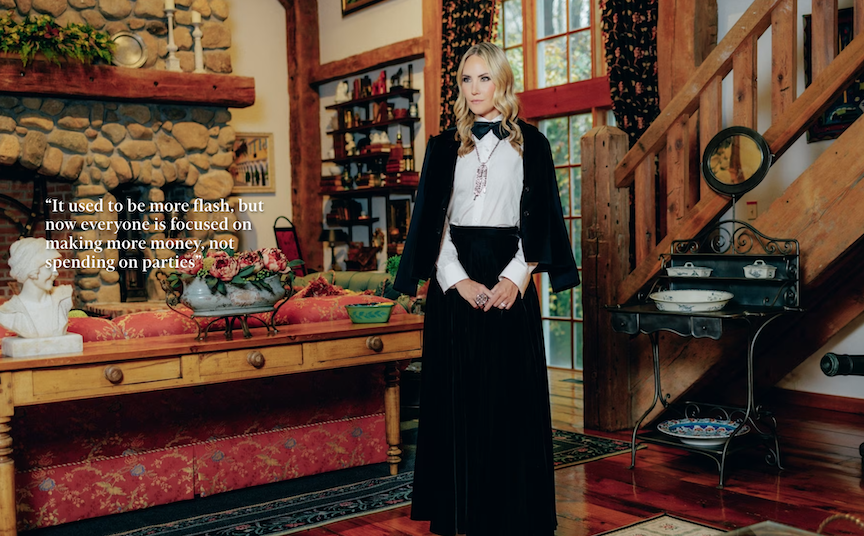
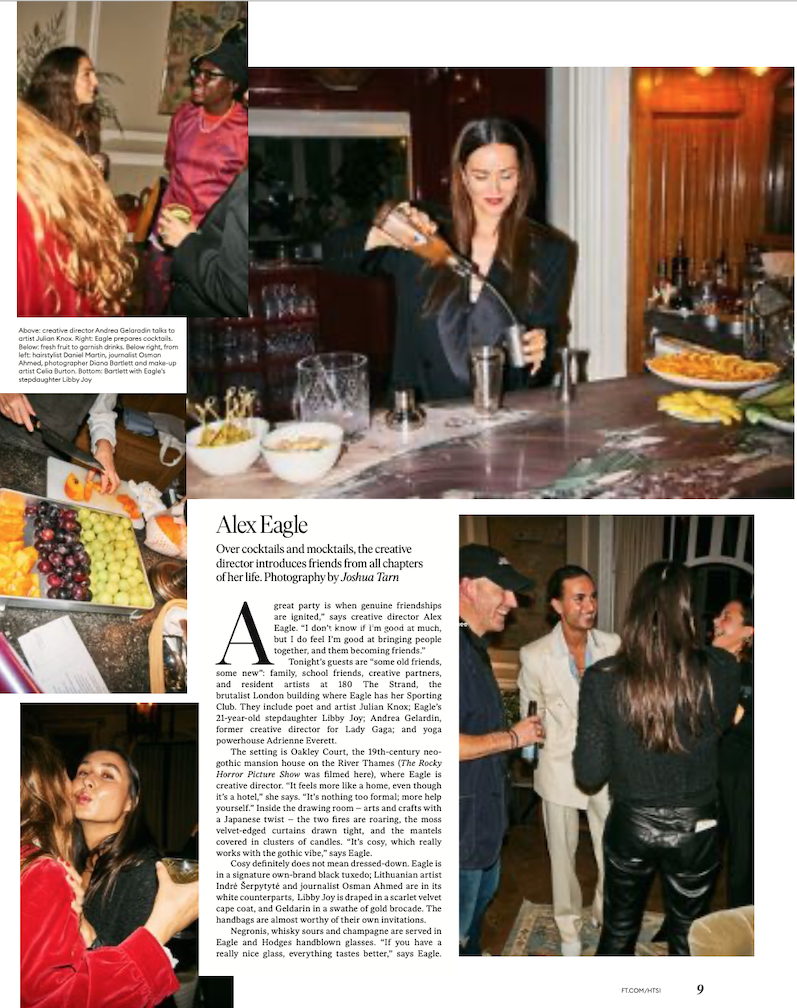
Alex Eagle: ‘It’s cosy, which really works with the gothic vibe’
“A great party is when genuine friendships are ignited,” says creative director Alex Eagle. “I don’t know if I’m good at much, but I do feel I’m good at bringing people together, and them becoming friends.”
The creative director opens the stately Oakley Court to a wide circle of friends
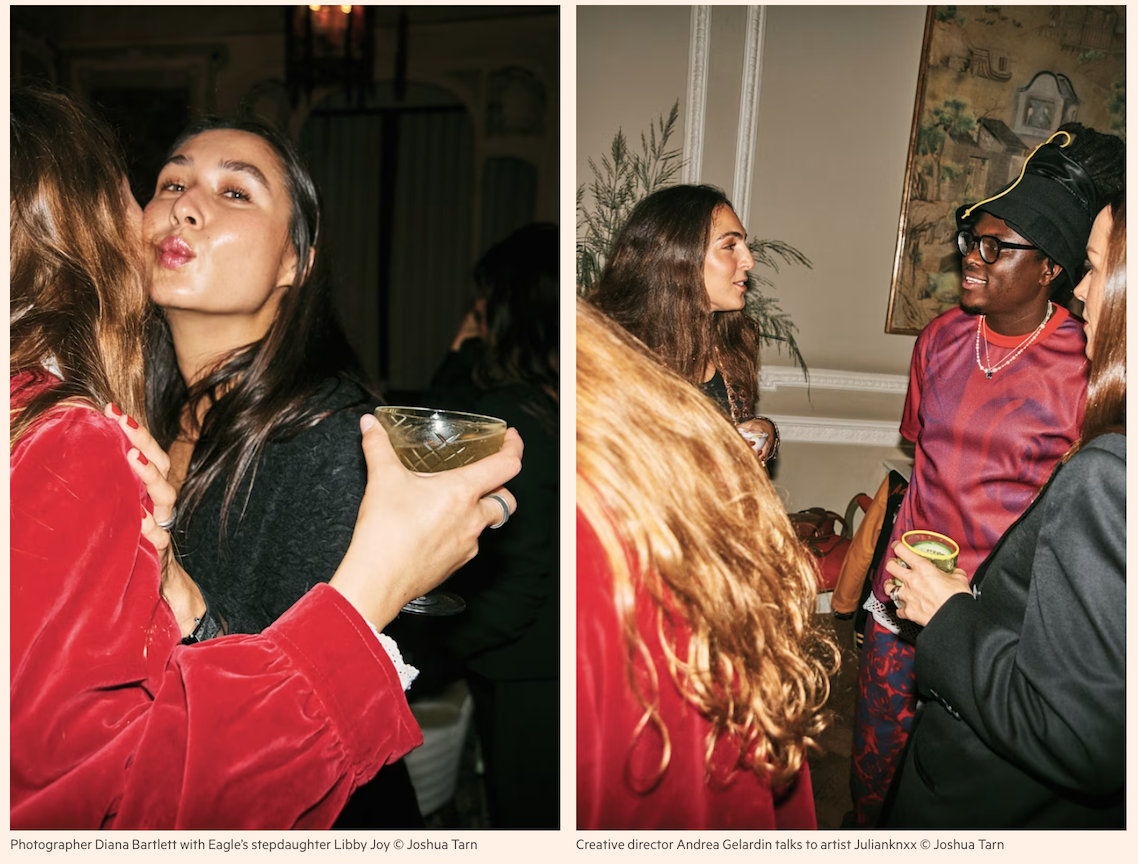
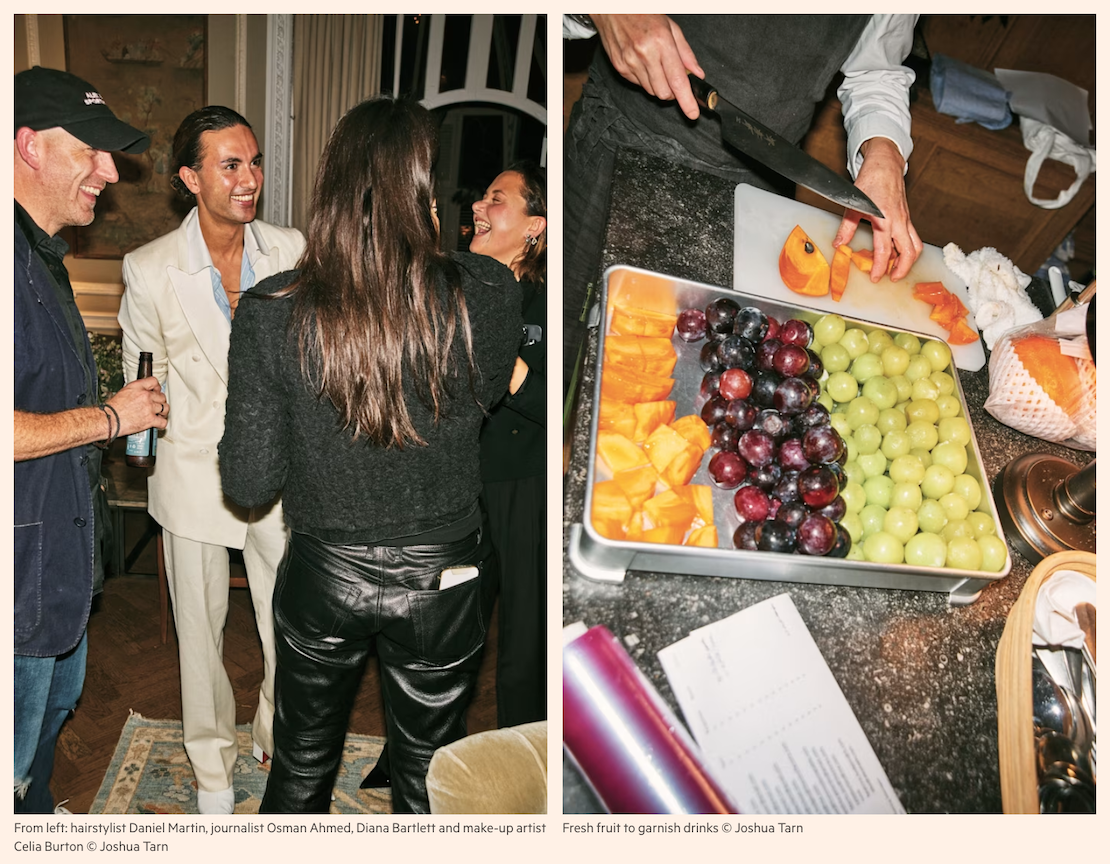
“A great party is when genuine friendships are ignited,” says creative director Alex Eagle. “I don’t know if I’m good at much, but I do feel I’m good at bringing people together, and them becoming friends.”
Tonight’s guests are “some old friends, some new”: family, school friends, creative partners, and resident artists at 180 The Strand, the brutalist London building where Eagle has her Sporting Club. They include poet and artist Julianknxx; Eagle’s 21-year‑old stepdaughter Libby Joy; Andrea Gelardin, former creative director for Lady Gaga; and yoga powerhouse Adrienne Everett.
The setting is Oakley Court, the 19th-century neo-gothic mansion house on the River Thames (The Rocky Horror Picture Show was filmed here), where Eagle is creative director. “It feels more like a home, even though it’s a hotel,” she says. “It’s nothing too formal; more help yourself.” Inside the drawing room – arts and crafts with a Japanese twist – the two fires are roaring, the moss velvet-edged curtains drawn tight, and the mantels covered in clusters of candles. “It’s cosy, which really works with the gothic vibe,” says Eagle.
Cosy definitely does not mean dressed-down. Eagle is in a signature own-brand black tuxedo; Lithuanian artist Indrė Šerpytytė and journalist Osman Ahmed are in its white counterparts, Libby Joy is draped in a scarlet velvet cape coat and Geldarin is in a swathe of gold brocade. The handbags are almost worthy of their own invitations.
Negronis, whisky sours and champagne are served in Eagle and Hodges handblown glasses. “If you have a really nice glass, everything tastes better,” says Eagle. And “nothing too matchy-matchy,” she scoffs. “And lots of different kinds of glasses – I don’t necessarily use a wine glass for wine or a Martini glass for a Martini.” Eagle herself is sipping a (non-alcoholic) Tanqueray Zero and tonic with a sprig of rosemary from the kitchen garden. “Enough bloody elderflower and fizzy water! Now lots of people don’t drink, it’s important to have really good mocktails.” Non-alcoholic Palomas, with fresh grapefruit and soda, are also a “delicious” substitute.
Canapés decorate low tables around the room; small in number but substantial in size. “I’d rather have a plate of less, but where each one is generous. That feels really sumptuous and luxurious,” says Eagle. Tonight’s snacks are jewel-like Japanese bites from Oakley Court’s chef Akira: slivers of salmon and tuna tied with edible ribbons. Each could be one course from the omakase menu he leads in the dining room.
In the corner is a stack of records. “We never have music piped out of the speaker,” says Eagle, “My husband owns the old EMI vinyl pressing plant; he’s mad about vinyl, it’s always records playing. Vinyl makes a big difference; people always interact, choosing records.” It’s one more way for new friendships to begin.
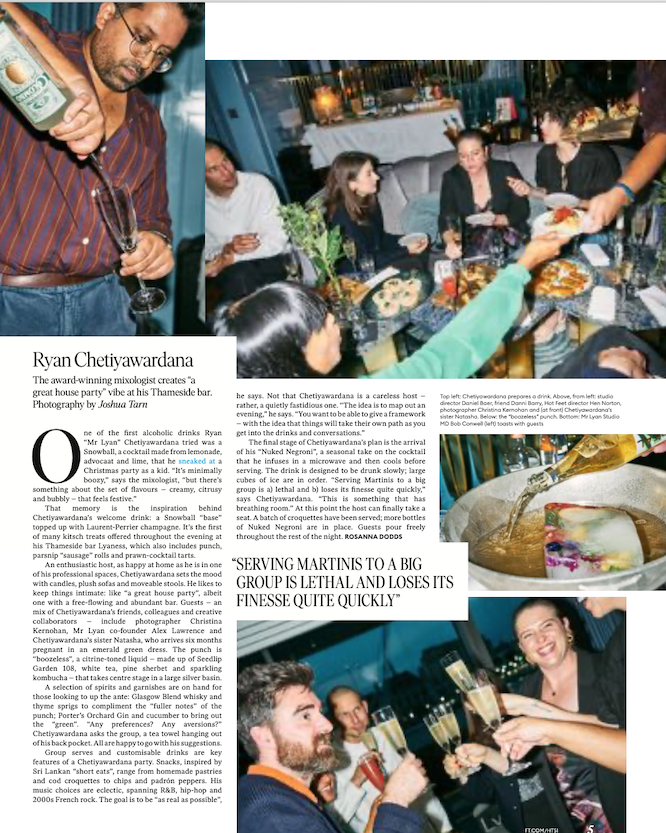
Ryan Chetiyawardana creates a ‘house party’ mood at his Thameside bar
One of the first alcoholic drinks Ryan “Mr Lyan” Chetiyawardana tried was a Snowball, a cocktail made from lemonade, advocaat and lime, that he sneaked at a Christmas party as a kid. “It’s minimally boozy,” says the mixologist, “but there’s something about the set of flavours – creamy, citrusy and bubbly – that feels festive.”
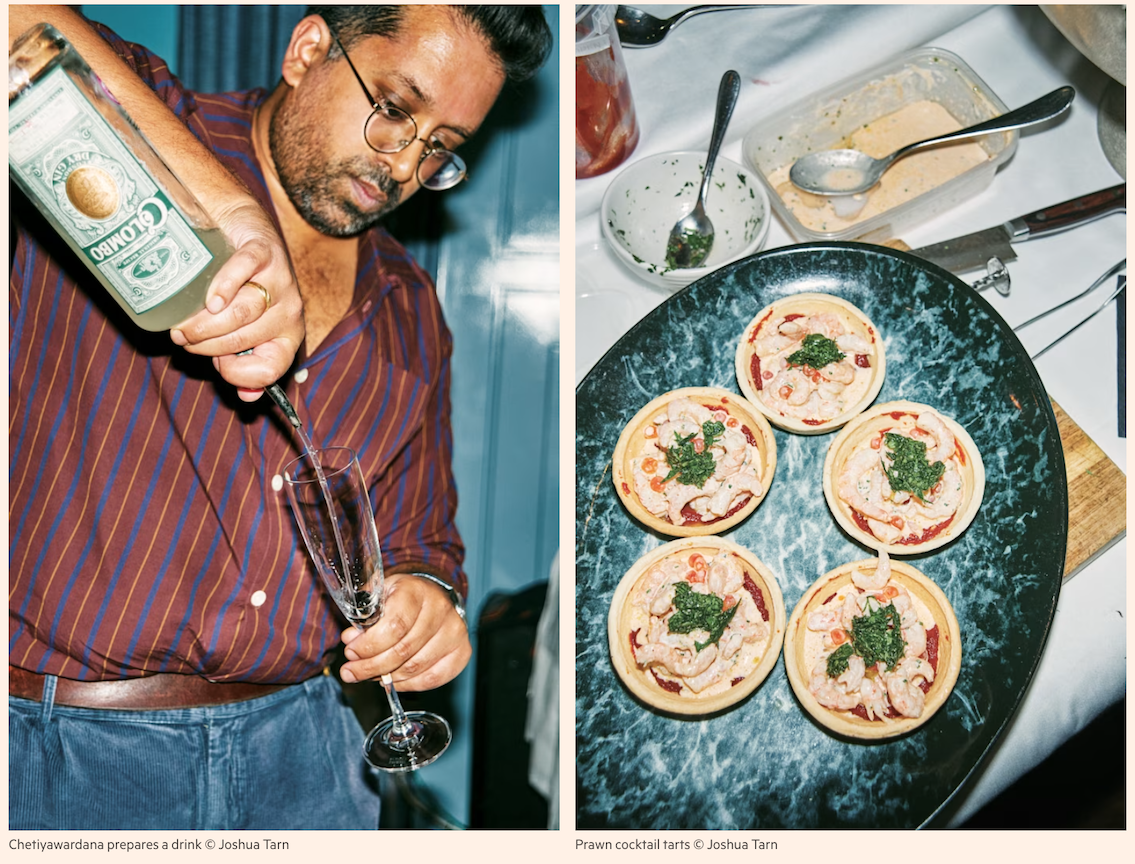
‘Serving Martinis to a big group loses its finesse quite quickly’
One of the first alcoholic drinks Ryan “Mr Lyan” Chetiyawardana tried was a Snowball, a cocktail made from lemonade, advocaat and lime, that he sneaked at a Christmas party as a kid. “It’s minimally boozy,” says the mixologist, “but there’s something about the set of flavours – creamy, citrusy and bubbly – that feels festive.”
That memory is the inspiration behind Chetiyawardana’s welcome drink: a Snowball “base” topped up with Laurent-Perrier champagne. It’s the first of many kitsch treats offered throughout the evening at his Thameside bar Lyaness, which also includes punch, parsnip “sausage” rolls and prawn-cocktail tarts.
An enthusiastic host, as happy at home as he is in one of his professional spaces, Chetiyawardana sets the mood with candles, plush sofas and moveable stools. He likes to keep things intimate: like “a great house party”, albeit one with a free-flowing and abundant bar. Guests – a mix of Chetiyawardana’s friends, colleagues and creative collaborators – include photographer Christina Kernohan, Mr Lyan co-founder Alex Lawrence and Chetiyawardana’s sister Natasha, who arrives six months pregnant in an emerald green dress. The punch is “boozeless”, a citrine-toned liquid – made up of Seedlip Garden 108, white tea, pine sherbet and sparkling kombucha – that takes centre stage in a large silver basin.
A selection of spirits and garnishes are on hand for those looking to up the ante: Glasgow Blend whisky and thyme sprigs to compliment the “fuller notes” of the punch; Porter’s Orchard Gin and cucumber to bring out the “green”. “Any preferences? Any aversions?” Chetiyawardana asks the group, a tea towel hanging out of his back pocket. All are happy to go with his suggestions.
Group serves and customisable drinks are key features of a Chetiyawardana party. Snacks, inspired by Sri Lankan “short eats”, range from homemade pastries and cod croquettes to chips and padrón peppers. His music choices are eclectic, spanning R&B, hip-hop and 2000s French rock. The goal is to be “as real as possible”, he says. Not that Chetiyawardana is a careless host – rather, a quietly fastidious one. “The idea is to map out an evening,” he says. “You want to be able to give a framework – with the idea that things will take their own path as you get into the drinks and conversations.”
The final stage of Chetiyawardana’s plan is the arrival of his “Nuked Negroni”, a seasonal take on the cocktail that he infuses in a microwave and then cools before serving. The drink is designed to be drunk slowly; large cubes of ice are in order. “Serving Martinis to a big group is a) lethal and b) loses its finesse quite quickly,” says Chetiyawardana. “This is something that has breathing room.” At this point the host can finally take a seat. A batch of croquettes have been served; more bottles of Nuked Negroni are in place. Guests pour freely throughout the rest of the night.
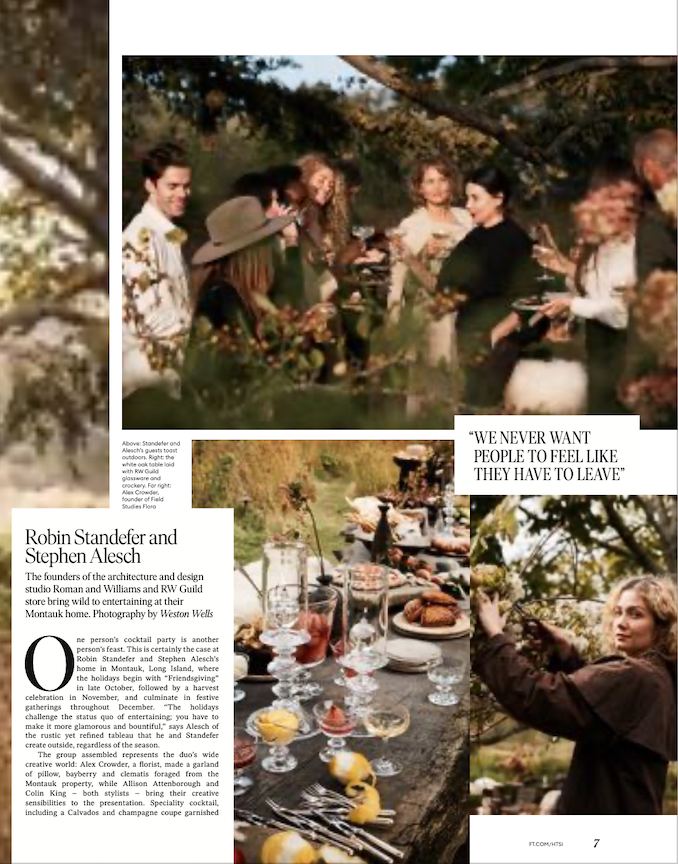
Robin Standefer and Stephen Alesch ‘We never want people to feel like they have to leave’
One person’s cocktail party is another person’s feast. This is certainly the case at Robin Standefer and Stephen Alesch’s home in Montauk, Long Island, where the holidays begin with “Friendsgiving” in late October, followed by a harvest celebration in November, and culminate in festive gatherings throughout December. “The holidays challenge the status quo of entertaining; you have to make it more glamorous and bountiful,” says Alesch of the rustic yet refined tableau that he and Standefer create outside, regardless of the season.
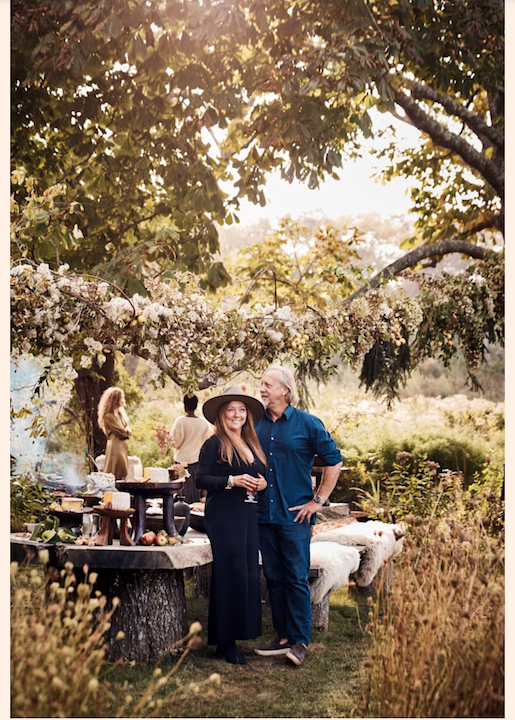
The founders of Roman and Williams and RW Guild take the festivities outside at their Montauk home
One person’s cocktail party is another person’s feast. This is certainly the case at Robin Standefer and Stephen Alesch’s home in Montauk, Long Island, where the holidays begin with “Friendsgiving” in late October, followed by a harvest celebration in November, and culminate in festive gatherings throughout December. “The holidays challenge the status quo of entertaining; you have to make it more glamorous and bountiful,” says Alesch of the rustic yet refined tableau that he and Standefer create outside, regardless of the season.
The group assembled represents the duo’s wide creative world: Alex Crowder, a florist, made a garland of pillow, bayberry and clematis foraged from the Montauk property, while Alison Attenborough and Colin King – both stylists – bring their creative sensibilities to the presentation. Speciality cocktails, including a Calvados and champagne coupe garnished with lemon verbena, and hibiscus rosehip spritzes with rosemary, pomegranate and cranberry-infused ice cubes, get the party started in unexpected ways.
A spectacular slab of white oak, designed by Standefer and Alesch, serves as a centrepiece – one that’s “an artistic installation piled high with apples, hydrangeas and sedge – all from our land”, says Standefer of the “green room” she oversees. Offerings include sharp cheeses from Vermont, a honeycomb from a local beekeeper, figs stuffed with mascarpone and drizzled with honey, bountiful shellfish towers served on an RW Guild platter designed by Heami Lee, and pistachio-garnished rose-vanilla poached pears.
An open fire pit is not only atmospheric – with the scent of juniper logs permeating the air – but is also functional for Alesch, who is a fan of open-flame cooking. “We want any party to be immersive,” says Standefer. “And we never want people to feel like they have to leave, so even if it’s billed as a cocktail party we’ll have the makings of a four-course dinner, right down to the tarte tatin flambée that Stephen cooks on a tile,” she says.
Nothing goes to waste at the end of the evening. “We divvy up everything that’s left over – especially the cheeses, which we wrap in parcel paper – and send our friends on their way,” says Standefer. “We’re sustainable from the food to the setting and that’s important to us. For example, the magnificent garland… I’ll keep that until the squirrels devour it!”