
The Aesthete: Jean Nouvel talks personal taste
The Pritzker Prize-winning architect’s projects include the Arab World Institute, the Louvre Abu Dhabi and the forthcoming 53W53 in New York
The Pritzker Prize-winning architect’s projects include the Arab World Institute, the Louvre Abu Dhabi and the forthcoming 53W53 in New York

Jean Nouvel | Image: Emmanuel Fradin
My personal style signifier is my Yohji Yamamoto black clothing – dress shirts, traditionally cut trousers and a jacket – which I wear for three seasons of the year. I switch to white versions from June to September, because I’m typically in the south of France and more comfortable in lighter clothes. 14/15 Conduit St, London W1 (020-7491 4129; yohjiyamamoto.co.jp).
The last thing I bought and loved was a very minimal black Swatch watch, the Once Again GB743. I don’t buy much, but when I do, it is something functional, simple and made of practical materials. This watch is basic: there’s no messing around. £32; swatch.com.

Massachusetts Museum of Contemporary Art
And the thing I’m eyeing next is a book by one of my idols, Edgar Morin. I love this French philosopher/sociologist’s writing, and I am looking forward to reading The Cinema, or The Imaginary Man, which delves into imagination and human nature. $19.95; University of Minnesota Press.
An unforgettable place I’ve travelled to in the past year is Williamstown, Massachusetts. The landscape in autumn in the Berkshire mountains, with the brilliant red and orange foliage, was the most beautiful I’ve seen in my life. The Massachusetts Museum of Contemporary Art in nearby North Adams is an exceptional museum with incredible works by Sol LeWitt, and the Clark Art Institute is another world-class institution. Clark Art Institute, 225 South St, Williamstown, MA 01267 (+1413-458 2303; clarkart.edu). MASS MoCA, 87 Marshall St, North Adams, MA 01247 (+1413-662 2111; massmoca.org).
The best gift I’ve given recently was 96 bottles of wine to my father for his 96th birthday. I always give him wine and this year it was Château d’Yquem – one of his favourites. yquem.fr.
And the best one I’ve received was a beautiful original drawing by Claude Parent, from his widow Naad.

From left: Swatch Once Again GB743 watch, £32. Château d’Yquem, one of the wines Nouvel gave his father for his birthday. Eau des Baux by L’Occitane, £46 for 100ml. Nouvel’s Fedora by Motsch for Hermès | Image: Emmanuel Fradin
A recent “find” is Cartet, a French restaurant near Place de la République. It is like a museum of classic cuisine with specialities such as duck à l’orange and veal chops garnished with morels. With madeleines, chocolate mousse and tarte au citron all placed before you at the end of the meal, dining here is a bit of a wonderful disaster. 62 Rue de Malte, 75011 Paris (+331-4805 1765).
In my fridge you’ll always find foie gras from my home town of Fumel, good wine, chocolate, fruit and cheese, including comté, Roquefort, camembert and chèvre.

The Cinema, or the Imaginary Man by Edgar Morin
My favourite room in my house is my TV room. I am a huge fan of football and rugby, and I love to wash my brain by watching sport. The room is all black and features one of the same beautiful steel stars I used in the dome of the Louvre in Abu Dhabi. louvreabudhabi.ae.
The last thing I added to my wardrobe was a black fedora by Motsch for Hermès, which was steamed to fit my head perfectly. It is highly practical. hermes.com.
The grooming product I’m never without is Eau des Baux by L’Occitane. It has a very specific scent of cypress, which reminds me of the south of France. £46 for 100ml; loccitane.com.
If I didn’t live in Paris, the city I would live in is Nice. I love the setting: it’s on the sea, with beautiful light, and the climate is perfect. I am particularly fond of the old town and the Mont Boron fortification and park. The Yves Klein room at the Musée d’Art Moderne et d’Art Contemporain is a highlight, as is one of my favourite brasseries, Le Safari. It serves simply prepared artichokes, fresh scampi and fish with a Provençal twist. I like this straightforward cuisine. MAMAC, Place Yves Klein, 06364 Nice (+334-9713 4201; mamac-nice.org). Le Safari, 1 Cours Saleya, 06300 Nice (+334-9380 1844; restaurantsafari.fr).
An object I would never part with is my black Persol sunglasses. They fold easily to fit in my pocket, and I am never without them. 714 Series, from £196; persol.com.

Lenny Kravitz’s perfect weekend in Paris
The award-winning musician, producer, actor and oenophile continues to add strings to his creative bow, with his own design studio and a new role as creative director of Dom Pérignon
The award-winning musician, producer, actor and oenophile continues to add strings to his creative bow, with his own design studio and a new role as creative director of Dom Pérignon
“Saturday mornings start with a run in the Bois de Boulogne, near my home in the 16th arrondissement, or a visit to my trainer at L’Usine, a gym near Opéra. I’ll then stroll to the open-air market along Avenue du Président Wilson. I am a green juice, farm-to-table guy, and there’s always an incredible array of organic produce that sets me up for the weekend.
I love furniture and design objects, and wandering the Saint-Germain-des-Prés area gives me creative inspiration. I like Studio 7L, Karl Lagerfeld’s bookstore, which specialises in photography, fashion, design and architecture, and Studio Willy Rizzo, where you’ll find anything from contemporary lacquered tables to vintage fashion photographs. I might end up in the impressionist rooms at the Musée d’Orsay, where I’ll often just sit and relax.
After a morning spent exploring, I’ll go to La Société for a light lunch with friends. It draws a great mix of people – artists, tourists, the fashion crowd – and the space, designed by Christian Liaigre, is very soothing. There are hints of Asia, such as curries and tom yum soup, and the shrimp and avocado salad is excellent. Afterwards I might walk over to the Musée des Arts Décoratifs to see an exhibition such as the recent Dior retrospective, or I’ll go to a show at the Grand Palais.
I spend a lot of time in the Marais too, and for café culture I like Le Loir dans la Théière, which translates to “the dormouse in the teapot” from the Mad Hatter’s tea party. I love the laidback vibe; it looks like a place the Beat poets would have loved, and it’s a good stop for a cup of tea or a lentil salad. Alternatively, L’As du Fallafel, where I’ve been going for the past 30 years, serves excellent falafel sandwiches. There’s a line out the door, but it’s worth the wait.
Saturday nights are about dining out, and Pierre Sang in the 11th does amazing French-Asian cuisine. The Korean-born chef was raised by French parents and it shows in his incredibly fresh, creative food; the surprise tasting menus are delicious. He owns three restaurants in the area and literally runs between them. This one is kind of hipster – and just very cool.
I am a huge opera fan – I sang with the Metropolitan Opera in New York, growing up – and I also love the ballet. Before an evening at the Palais Garnier, I’ll often go to Matsuhisa at the Royal Monceau for its clean, inventive Japanese food.
Nights tend to be late, and the party is at my house: I’ve converted the cellar into a speakeasy. Dance parties might involve Mick Jagger or Naomi Campbell DJing, and at 5am we’ll head to Babylone Bis, an Afro-Caribbean restaurant that’s open all night – something hard to find in Paris. It’s hidden in an alley near Les Halles, and the poulet braisé with plantains, rice and beans and the funky zebra print and pictures of Marvin Gaye make it a fantastic place.
I’ll sleep until 11am, before heading to the Marché aux Puces in Saint-Ouen to look for midcentury pieces by Joe Colombo, Gabriella Crespi, Verner Panton, Warren Platner and Charles and Ray Eames. Galerie Glustin and Galerie Gam are great for furniture and lighting, and Marché Paul Bert is a favourite for fine pieces such as oil paintings, rare glassware and vintage clothing. I’ll have lunch at the Philippe Starck-designed bistro Ma Cocotte, where the food is really French and the open kitchen adds to the lively scene.
By the afternoon I’m burnt out. Friends and family gather, and we’ll cook. I’m more on the vegan side, but there’s always a roast chicken for the others. Then we’ll sit around my library, spinning 1970s records and talking about the album artwork, and I’ll start to feel recharged for the week ahead.”

Independent Copenhagen boutiques not to be missed
A quartet of fashion and interior treasure troves for curious travellers
A quartet of fashion and interior treasure troves for curious travellers

Co-owners Magali Chiaberge and Frans Pachner at Maritime Antiques & | Image: Maja Flink
Within striking distance of the harbour, visitors are greeted by the scent of traditional tar ropes as they cross the threshold of this Copenhagen boutique. A main draw is the shop’s world-class collection of maritime antiques, but co-owners Frans Pachner and Magali Chiaberge have added a somewhat unexpected fashion angle to their offering. A selection of “timeless, high-quality, functional clothes with a nautical vibe” includes stacks of utilitarian-chic jumpers in a largely neutral palette of navy blue, grey and black – and, of course, a smattering of stripes – presented on rough-hewn tables accented with fishing nets, enormous clam shells and skeins of rope. The creative endeavours of Chiaberge herself are also evident: her intriguing fine-art photography (from about £700 to £3,500) completes this downtown cool-meets-maritime mise en scène, which always sends shoppers on their way with a final nautical flourish – every purchase is wrapped in brown paper and tied with delicately scented fine tar twine. Toldbodgade 15, 1253 (+4533-121 257; maritime-antiques.dk). CHRISTINA OHLY EVANS

Keramiker Inge Vincents sells paper-thin porcelain
Keramiker Inge Vincents
As I walk down Jægersborggade, through a window I see a woman hard at work, putting the finishing touches to a delicate white jug. Candles flicker within, and stacks of shiny, ridged or curved porcelain are too inviting to miss. These pieces are wafer thin and look like they might break in an instant, but owner Inge Vincents assures me they are surprisingly robust. The shapes are warm and inviting to touch, with the curves of the cups a satisfying fit for hands. The ceramicist’s work revolves around the endless variations of the “thinware” technique – the normal slab method taken to paper-thin limits – and she has spent years perfecting the craft. I pick up a milk jug (about £37.70), ridged from base to lip, with a stubby cylindrical shape, and spy a rippled tulip vase (about £98.50), crooked and shiny inside. I buy both. Jægersborggade 43, 2200 (+4540-701 750; vincents.dk). JEMIMA SISSONS

A 1950s black-tinted glass console table (€4,000) at The Apartment | Image: Maja Flink

Beau Marché sources much of its stock from French flea markets
The Apartment
Secreted away in a residential pocket of Copenhagen, on the first floor of a private building with no store front or signage, The Apartment doesn’t rely on footfall. Yet this exquisite emporium of mostly midcentury furniture and lighting is well known within Scandi-cool and international design circles. Everything in the Georgian panelled living room, kitchen and bedroom is for sale, whether that’s an elegant 1950s black-tinted glass console table with coiled metal legs, or a contemporary chandelier – and guests can even stay the night there. Founder Tina Seidenfaden Busck travels monthly to scout for pieces – many from Italy, France and Sweden, most dating from the 1940s, ’50s and ’60s – and showcases her vintage finds alongside contemporary classics. The items are rotated constantly and she redecorates the entire place every six months. Overgaden neden Vandet 33, 1414 (+4531-620 402; theapartment.dk). LUCINDA BARING
Beau Marché
As a Scandinavian design junkie with a flat full of midcentury modern, I didn’t expect to return from a weekend in Copenhagen with souvenirs from France. But of all the intriguing independent shops tucked away behind the Strøget, it was Beau Marché that captured my heart. A mix of modern and vintage homeware, much of the stock was found in French flea markets by four Danish siblings, Julie, Elisabeth, Danielle and Christian Lee Dann. Everything is beautifully laid out – miniature Tolix chairs for tots, industrial lamps, vintage champagne crates and contemporary treasures. I couldn’t resist some adorable bowls, hand made at the Faïencerie de Niderviller, a ceramics factory that’s been around since 1735. I can’t help feeling smug: about £20 a pop, they were five times cheaper than the (admittedly rather lovely) blue fluted porcelain on sale at tourist-packed Royal Copenhagen down the road. Ny Østergade 32, 1101 (+4555-771 430; beau-marche.dk). RACHEL HOWARD

“I’m still relaxed after my visit to this reinvented Massachusetts motel”
Bringing Brooklyn-cool to the pastoral Berkshires
Bringing Brooklyn-cool to the pastoral Berkshires
I’ve spent a lot of time in the Berkshires over the years. I love the bucolic valleys and pristine villages in this part of northwestern Massachusetts. It makes for a wonderful weekend escape, just three hours hours from New York City, and is home to an increasingly world-class art scene with the outstanding Massachusetts Museum of Contemporary Art at its centre. The only problem is finding somewhere to stay – until this summer, that is, when the retro-chic Tourists opened its doors in the small city of North Adams.

The ranch-house-cum-lobby has a cool grown-up house party aesthetic and is furnished with Mario Bellini sofas | Image: Peter Crosby
My first thought as we approached this stylish take on a motor lodge this summer was, “I’m never going to be able to sleep,” given that the property runs alongside a particularly busy thoroughfare. But Tourists’ 48 rooms are located well within its generous grounds – a mix of woodland and lush gardens with the babbling Hoosic River in its backyard – and pretty much the only sound that wafted into my room was the soothing music selection from the short-wave radio. I’m still feeling relaxed from my recent visit thanks to the river views bought into our plywood-clad Canopy room via enormous picture windows. There’s even a state-of-the-art ventilation system that pumps in fresh mountain air.

The hotel has its own suspension bridge – an über-cool, minimalist metal construction courtesy of adventure park designer Gerhard Komenda | Image: Peter Crosby

Tourists boasts a salt-water pool and outdoor deck shower | Image: John Dolan
The reinvention of this roadside motel was helmed by Ben Svenson, a Boston-based design-loving developer whose creative partners in the project range from architect Hank Scollard and noted landscape architecture firm Reed Hilderbrand (who created the stunning grounds of The Clark Art Institute just up the road) to musician John Stirratt, bassist in Grammy Award-winning band Wilco, and local brewery owner Eric Kerns. Together, they’ve brought all kinds of cool aesthetics to this grown-up house party: tan Mario Bellini sofas adorn the original 1960s ranch-house-cum-lobby, while sleek bathrooms are kitted out with Dornbracht fixtures, organic toiletries from Vermont brand Ursa Major (the Perfect Zen body lotion is delicious), denim robes and rainbow-coloured towels for use in the outdoor deck shower and saltwater pool. The hotel even has its own suspension bridge – an über-cool, minimalist metal construction courtesy of adventure park designer Gerhard Komenda.
Food is another major focus, overseen by chef Cortney Burns, former co-chef of San Francisco’s revered Bar Tartine. A restaurant called Loom will open in early 2019, but for now guests can dine in the Lodge or on the sprawling Deck Bar. And the menus are already impressive – charred summer vegetables with brown rice tabbouleh, green tahini, yoghurt and olives; seared halibut with aubergine and tomatoes. Delightful.

Zohiko: a shrine to Kyoto’s elegant handmade lacquerware
Emperors et al are drawn to this elegant Kyoto store’s alluring array of locally crafted lacquerware embellished with silver, gold and mother-of-pearl
Emperors et al are drawn to this elegant Kyoto store’s alluring array of locally crafted lacquerware embellished with silver, gold and mother-of-pearl
A visit to Kyoto will invariably lead to Teramachi Street, a mecca for smart shops since the Meiji period in the 1800s. Along an enticing stretch lined with antiques shops, washi-paper makers and a centuries-old tea emporium, is a sleek storefront that gives way to a magical world of glossy, hand-hewn lacquerware.
Zohiko has been in the same family since 1661, but was moved to its current gallery-like space in 2014. “We wanted a calm, clean atmosphere to bring out the elegance of the lacquerware,” says Kazumi Nishimura, who co-owns the store with husband Tsuyoshi. “We aim for simple beauty with our pieces. There’s no need for excessive design or harsh lighting.”

Ornamental red-lacquer boxes, about £220 | Image: Yasuyuki Takagi
A ground-floor showroom leads to an archive of rare pieces, some dating from the 17th century – minimalist white shelves display a mix of functional and decorative objects in the highly polished red and black lacquerware peculiar to Kyoto. The owners delight in sharing their history and the artisanal maki-e technique – a process of embellishment with silver, gold and lustrous mother-of-pearl – that makes Kyoto lacquerware so distinctive.
From everyday, heat-retaining bowls (¥16,200, about £110 for a set of two) to ceremonial tea services (price on request) inlaid with opalescent abalone shells, every piece begins with a slab of local keyaki wood or bamboo that’s carved and sanded to smooth perfection. Only after 20 or more layers of urushi lacquer (or tree resin) have been applied and polished is the piece ready for decoration at a nearby atelier.
“There are various lacquer colours – black, blue, red, white – but I think the most beautiful is still black,” says Nishimura. “It’s not a pigment but rather a shade born by oxidising lacquer with iron.”
Among the glossy creations on offer are ornamental red-lacquer boxes (about £220) with nature motifs – orchids, cranes and clouds recur – rendered in brushed gold, and minimalist matcha-tea canisters (about £485) in muted, matte-black lacquer. Elegant incense boxes (about £2,610) decorated with fire-breathing dragons sit cheek by jowl with a textural, one-of-a-kind, black jewel casket (about £8,210) bearing Kyoto’s pride – cherry blossoms in bloom – in gold with accents of shimmering shell.
Bespoke work (price on request) is a speciality and no project is ever deemed too small or too complex. The store has taken orders for inkstone boxes in unusual shades of sapphire, orange and ivory, created ornamental folding screens and received a commission for the elaborate thrones for the current emperor and empress that grace Kyoto’s Imperial Palace. Daily-use items – geometric trays, sake sets or plates in varying organic shapes – typically take three months to complete, while more elaborate items such as an incense burner (about £6,870) with a woven silver top “might take two years or more because of its unique shape,” says Nishimura.
“Lacquerware is part of day-to‑day Japanese living,” says Nishimura. “It’s antibacterial, hardwearing and, most importantly, the pieces are comfortable to touch and to hold, which makes eating and drinking a pleasure.”

Stay in a Jean Prouvé masterpiece
Guests of Villa La Coste can now check into a Prouvé prefab – an art installation adapted by Richard Rogers, which is set to become a unique bolthole experience
Guests of Villa La Coste can now check into a Prouvé prefab – an art installation adapted by Richard Rogers, which is set to become a unique bolthole experience
The discerning traveller needs no excuse to visit Château La Coste in the south of France, but a unique experience fusing art and architecture is an enticing added incentive. From Monday October 1, the Provençal winery, museum and boutique bolthole will collaborate with Galerie Patrick Seguin Paris to offer guests the unique experience of booking into a prefabricated house designed by midcentury master Jean Prouvé, which has been adapted for modern use by Pritzker Prize-winning architect Richard Rogers.
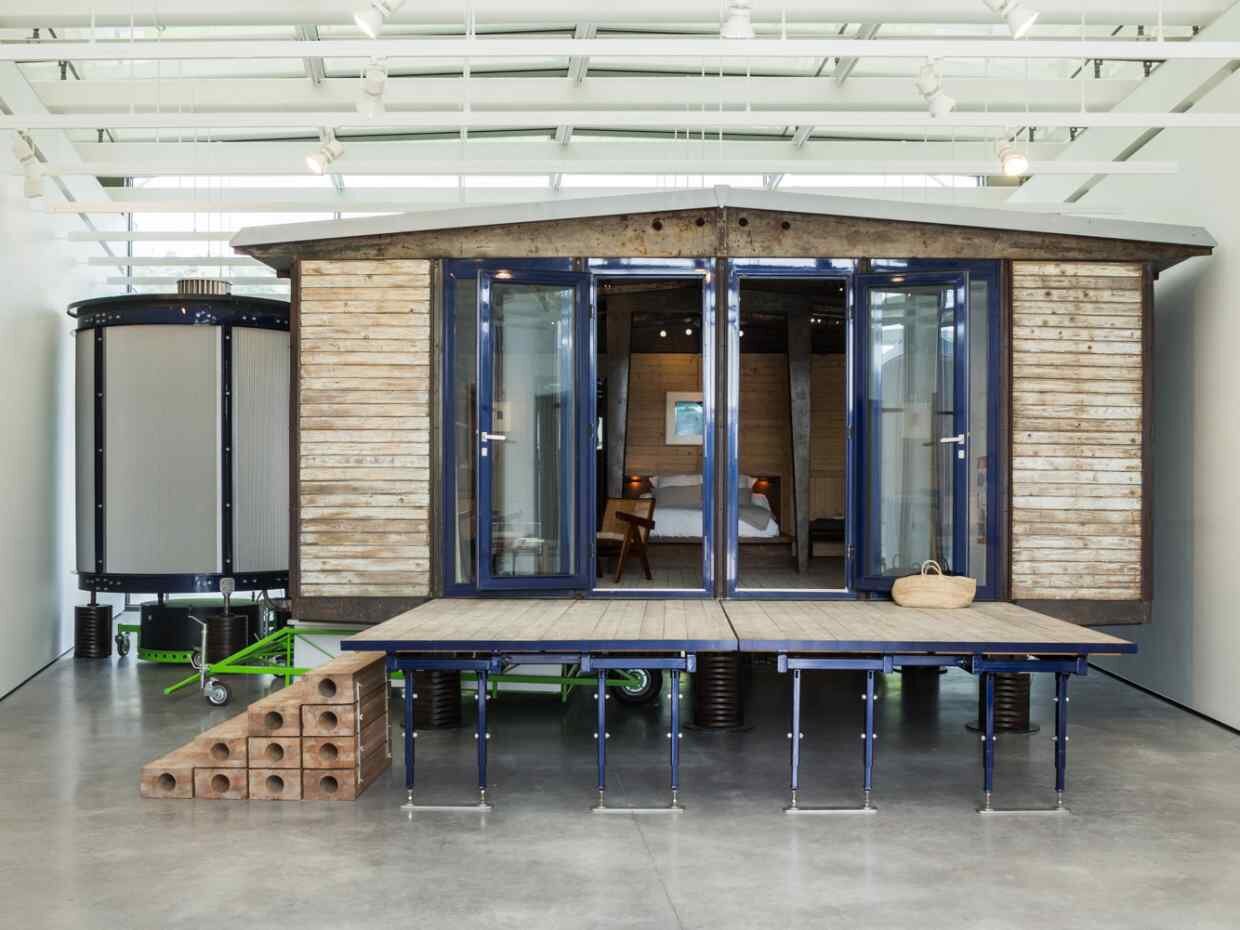
The prefabricated house designed by midcentury master Jean Prouvé has been adapted for modern use by Pritzker Prize-winning architect Richard Rogers
The 6x6 Prouvé house –a passion project of gallerist Patrick Seguin that was realised by Rogers in 2015 –is on display at Villa La Coste’s Renzo Piano-designed art gallery. Now, guests will not only be able to marvel at the piece but stay in it (from €2,000 per night) throughout 2019. Prouvé designed the spare, functional Demountable House in 1944 for victims of the second world war left homeless in France’s Lorraine region, but with careful adaptation that preserves the integrity of the original structure, it has become chic accommodation – complete with furnishings and art from Patrick Seguin’s impressive personal collection.

Guests of Villa La Coste can book to stay in the Prouvé house (from €2,000 per night) from Monday October 1

The house is furnished with design classics and art from Patrick Seguin’s personal collection
Guests will be in good company during their stay, as Château La Coste hosts a world-class art collection featuring works by Louise Bourgeois, Alexander Calder and Ai Wei Wei.
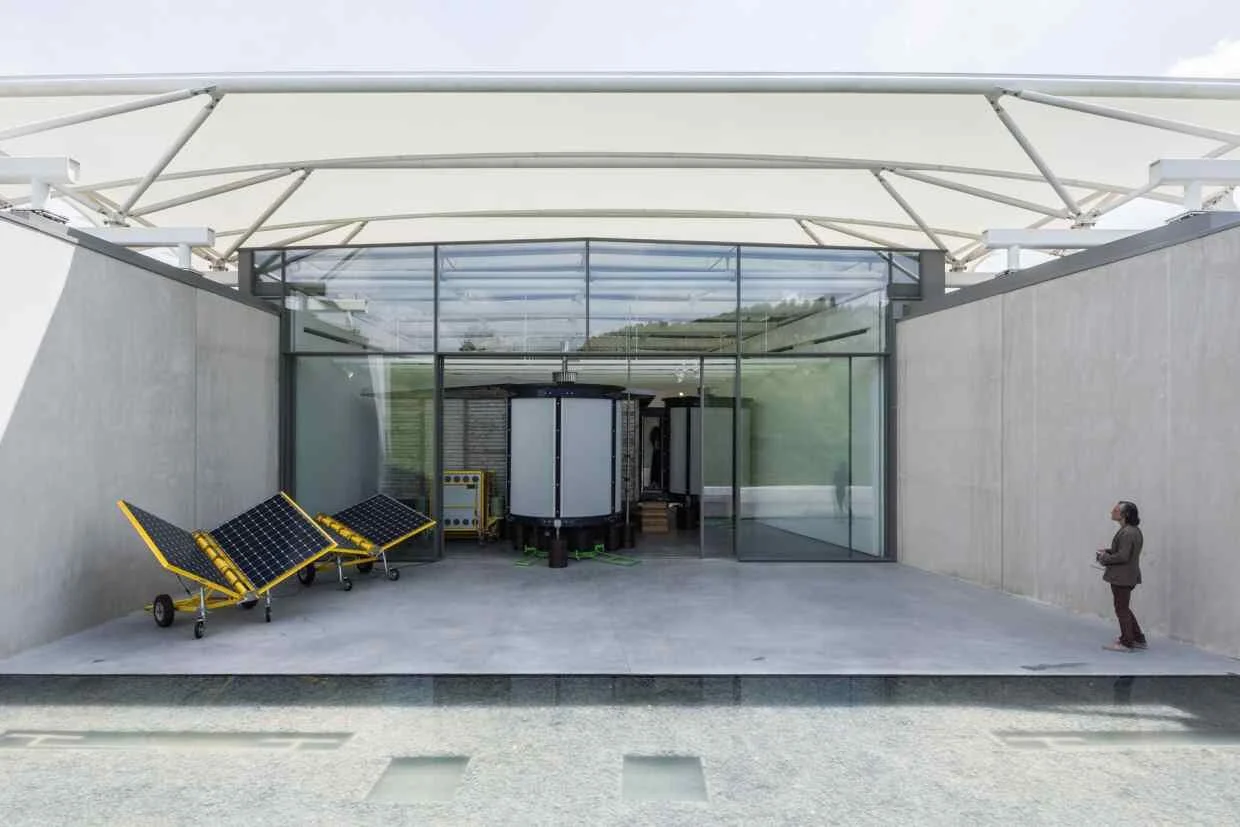
Villa La Coste’s Renzo Piano-designed art gallery

A long weekend in Cornwall with Olga Polizzi
Rocco Forte’s design director takes Christina Ohly Evans on a seaside sojourn of slick sailboats, sculpture gardens, sublime seafood and secret hideaways.
Rocco Forte’s design director takes Christina Ohly Evans on a seaside sojourn of slick sailboats, sculpture gardens, sublime seafood and secret hideaways.

Olga Polizzi on the seafront at St Mawes | Image: Jooney Woodward
“I came to Cornwall late in life and fell in love with it straight away. My husband has been coming here all his life; I was introduced to the area 28 years ago and it was a revelation. Cornwall feels like another country – the pace is slower, the light is beautiful and, because the Gulf Stream passes right by, the weather is that much milder. You’ll feel very connected to nature here – the sea, the rocks, the beach – and the people are also incredibly kind. It feels like a particularly vibrant area now, with new restaurants and art galleries adding to the cultural mix. Best of all, you can walk the Cornish coastal path for miles, and while the going isn’t always easy, it is beautiful throughout the seasons.
Of course, I recommend a stay at Hotel Tresanton, the eclectic little inn that I looked at for two years before buying. It was formerly a yacht club; the collection of buildings was in total disrepair when I acquired it, but we’ve managed to create a very relaxed, almost Mediterranean-meets-New England getaway where each of the 30 rooms has a different feel – and a view of the sea. It’s a wonderful place if you like sailing, and we have a magnificent 8m classic yacht named Pinuccia that’s available to our guests. She was built in 1939 to race for Italy at an international competition and from May to the end of September, our skipper Mark will take you sailing around Falmouth bay – one of the most beautiful places for boating in Britain.

The Lookout Suite at the Artist Residence in Penzance
I furnished the rooms with antique finds from Penzance and paintings from the Lemon Street Gallery, in Truro; its offerings are as good as anything you’ll find in London, so I am constantly adding to the hotel’s collection of contemporary Cornish and more traditional art.
The village of St Mawes, with the boats bobbing in and out of the harbour, is the perfect, quaint seaside spot for a good meal or a bit of retail therapy. I always recommend The Watch House, where chef Will Gould will give you a very good, seafood-centric meal. In terms of stores, my daughter Charlie’s shop, Onda, in the centre of the village stocks excellent clothing and accessories for young and old alike; I buy many of my clothes here and particularly like the new designers she carries, like Annette Görtz and Munthe, a Scandinavian brand. You can find beach bags, jewellery and the latest trainers, too. The village also has a tiny but very well‑stocked delicatessen called Mr Scorse, which is owned and run by Jon Scorse – a friend who used to work at Tresanton. He sells a very good homemade pesto, all sorts of jams and honey, and delicious Cornish gins.
From St Mawes you can take a lovely walk past one of Henry VIII’s castles, which was built in the 16th century to protect the English coastline. You’ll stroll through fields along the seaside for about an hour before reaching the St Just in Roseland church. Built in the 13th century, it has one of the prettiest churchyards in England, right on the water.
Summer is the perfect time to take the ferry from St Mawes across to Place Creek, and walk either to St Anthony’s Lighthouse or the Hidden Hut, which serves excellent seafood chowder and freshly baked bread, overlooking the pristine Porthcurnick Beach on the Roseland Peninsula. It’s a casual spot, a favourite with locals who come for the bespoke espresso martini ice cream that’s made with Cornish clotted cream or, in season, an excellent elderflower cordial. If one is motivated, however, the coastal path extends for many more miles from here. This area is a true walker’s paradise.

Henry VIII’s castle in St Mawes overlooking the Fal estuary | Image: Maurizio Rellini/4Corners Images
I love going to St Ives, and always make a point of stopping at Leach Pottery outside town. Bernard Leach was one of Britain’s best-known potters; he trained in Japan and came back to St Ives where he started his own kilns. He died many years back, but the exquisite ceramics tradition continues here – there is regularly an artist in residence and it’s a good place for picking up interesting pieces. There’s also Tate St Ives, which has been enlarged and has a very good collection of Cornish art, and I always discover emerging artists at the Penwith Gallery. The Barbara Hepworth Museum, with its lovely sculpture garden, is another must.
In St Ives there are several good restaurants, but my favourite is the Porthminster Beach Café, overlooking the bay and Godrevy Lighthouse beyond. The cuisine has an Asian influence with Cornish ingredients. Everything is fresh, from the vegetables and herbs that come from the back garden to the Porthilly oysters and monkfish served with a tangy curry.

A seafood platter at The Watch House, St Mawes
If you want to go a little further afield from St Ives, take the coast road – one of Britain’s most beautiful – to Zennor, and to the best gastro pub I know: The Gurnard’s Head. It has a very limited menu, which I like because it means that everything – mussels, grilled plaice – is fresh. From Zennor, go on to Porthcurno, which is almost the most westerly point of Britain. (Don’t go to Land’s End, however, which is the most westerly point and is rather disappointing.) In Porthcurno there’s the Minack Theatre, perched on the cliffs high above the Atlantic Ocean. It was built between the two world wars and continues to put on plays, concerts and operas every summer in the open air. The stage is set with its back to the sea and the whole thing is very dramatic. The Telegraph Museum here is also worth a look. Over 150 years ago, submarine telegraph cables were laid from here all the way to India. In 1928, the Eastern Telegraph Company merged with Marconi’s Wireless Telegraph Company and this paved the way for today’s worldwide communications system.
From Porthcurno, drive to Mousehole, known for its exquisite circular harbour, and on to Newlyn, one of the largest fishing ports in Cornwall. I always visit the Newlyn Art Gallery, and from there I highly recommend a walk along the promenade to the Jubilee Pool, the newly restored, enormous outdoor pool that’s set into the sea. You can’t leave Newlyn without having a Jelberts ice cream. It only serves vanilla – with a dollop of Cornish clotted cream on top – but it’s simply the best.

The Withiel Sculpture Garden at Lemon Street Gallery, Truro | Image: Emily Whitfield-Wicks
Nearby is Penzance, where you will find the Artist Residence, a quirky and unusual hotel run by a lovely young couple who do everything themselves. It is eclectic and fun. Another place that I can go to again and again is the Lizard, a part of Cornwall that is weird, wild, wonderful and a little bit spooky. In Church Cove there you will find the tiny, ancient Gunwalloe Church in a sandy cove on the beach – very moving and romantic. Nearby you can buy lighthouse statues made of Cornish Serpentine marble. I always buy the old ones when I see them.
On the way back to London, Coombeshead Farm near Lewannick is a wonderful bed and breakfast between Cornwall and Devon, nearer to our Hotel Endsleigh than to Tresanton. It’s just 20 miles from Dartmoor National Park and it’s an intimate, magical place. The owners are the acclaimed chefs April Bloomfield and Tom Adams, and they serve absolutely delicious food, grown and picked by them, on their own land. Don’t leave Cornwall without visiting Rick Stein’s The Seafood Restaurant on the north coast. Rick is still Cornwall’s most famous chef, and thousands of people come to Padstow every year to eat his simply prepared, incredibly flavourful seafood.
Cornwall is having a moment; I think that’s because life is much easier here than it is in London. People are helpful, you’re surrounded by nature and there is a large creative community that’s being drawn to the Falmouth School of Art, among other places. I remember not so long ago when I had to bring all my produce down from London, and now you can find all kinds of unusual vegetables and virtually every type of cuisine. Much of life in Cornwall remains the same, but I like that new energy.”

Mate Gallery: a trove of nautical treasures
Seaside roots in Massachusetts and Scotland were the inspiration behind this ever-changing California emporium
Seaside roots in Massachusetts and Scotland were the inspiration behind this ever-changing California emporium
“We thought, why not bring a bit of New England to the West Coast?” says Matt Albiani of the decision to open Mate Gallery in the oceanside town of Montecito, California. Drawing on their seaside roots, Albiani, originally from Massachusetts, and co-owner Ron Brand, from Broughty Ferry in Scotland, have created a magical 160sq ft space teeming with nostalgic nautical finds.
Set within the rustic-chic Montecito Country Mart, Mate Gallery is a preppy design-lover’s dream, stocked with rare pieces sourced from the pair’s travels. A mix of periods and styles makes the tiny space sing: a recent trip to Rome yielded marine oil paintings that line the walls, while an attic sale at a stately home outside Edinburgh led to a cache of binoculars, folding chairs and assorted decorative objects. “Our rule of thumb is to attend yard sales in upmarket towns,” says Brand. “Easthampton, Greenwich and Scituate, on the Massachusetts South Shore, are full of treasures.”

The magical 160sq ft space is teeming with nostalgic nautical finds | Image: Matt Albiani
These frequent buying expeditions mean that the shop rarely looks the same from one month to the next, and it’s this freshness that draws a clientele that includes Ellen DeGeneres and Katy Perry. “Tourists driving down the Pacific Coast Highway seek us out, and Instagram has been a total game-changer,” says Albiani. “Our graphic signal flags, maps and textiles go over particularly well.”
Curiosities run the gamut from needlepoint caps and belts (from $41 to $135) bearing images of seagulls and sailboats, to ships in bottles ($75-$295) from Maine that are “a favourite, and very difficult to find in mint condition,” says Brand. There are vintage brass anchor and irons ($1,100) and cream Hudson’s Bay wool blankets ($425) with trims of navy, red and emerald green, which sit beautifully with Turkish and Moroccan rugs (from $295) “in muted neutrals that are wonderfully worn,” says Albiani. Images (from $1,200) of lifeguards and water pursuits by Albiani himself line the walls alongside oil portraits ($195-$3,000) of ships’ captains and lighthouses. Brand’s British roots can be seen in the blue and white ceramics (from $19) by Jersey Pottery, decorated with fish.
Tables and shelves are stacked with classic books – first-edition copies of Jaws ($125), for example – as well as the duo’s own Sun Burn soy-based candles ($41) that are scented to evoke a day at the beach. A pair of giant lobster claws in a 12in-high cloche ($295-$695), rare cotton California state flags ($425) emblazoned with the grizzly bear, and textural rope-wrapped surfboards (from $1,100) are among Mate’s most eye-catching inventory. “We bring beat-up surfboards to a local artisan, who then wraps them in 500ft of rope,” explains Brand of these one-of-a-kind, very SoCal objets d’art.
“We keep it fresh and mix it up,” says Albiani of the elevated jumble sale-meets-Martha’s Vineyard vibe. “Hopefully people will come into the store and remember some part of their childhood, particularly the happy highlights of summer.”
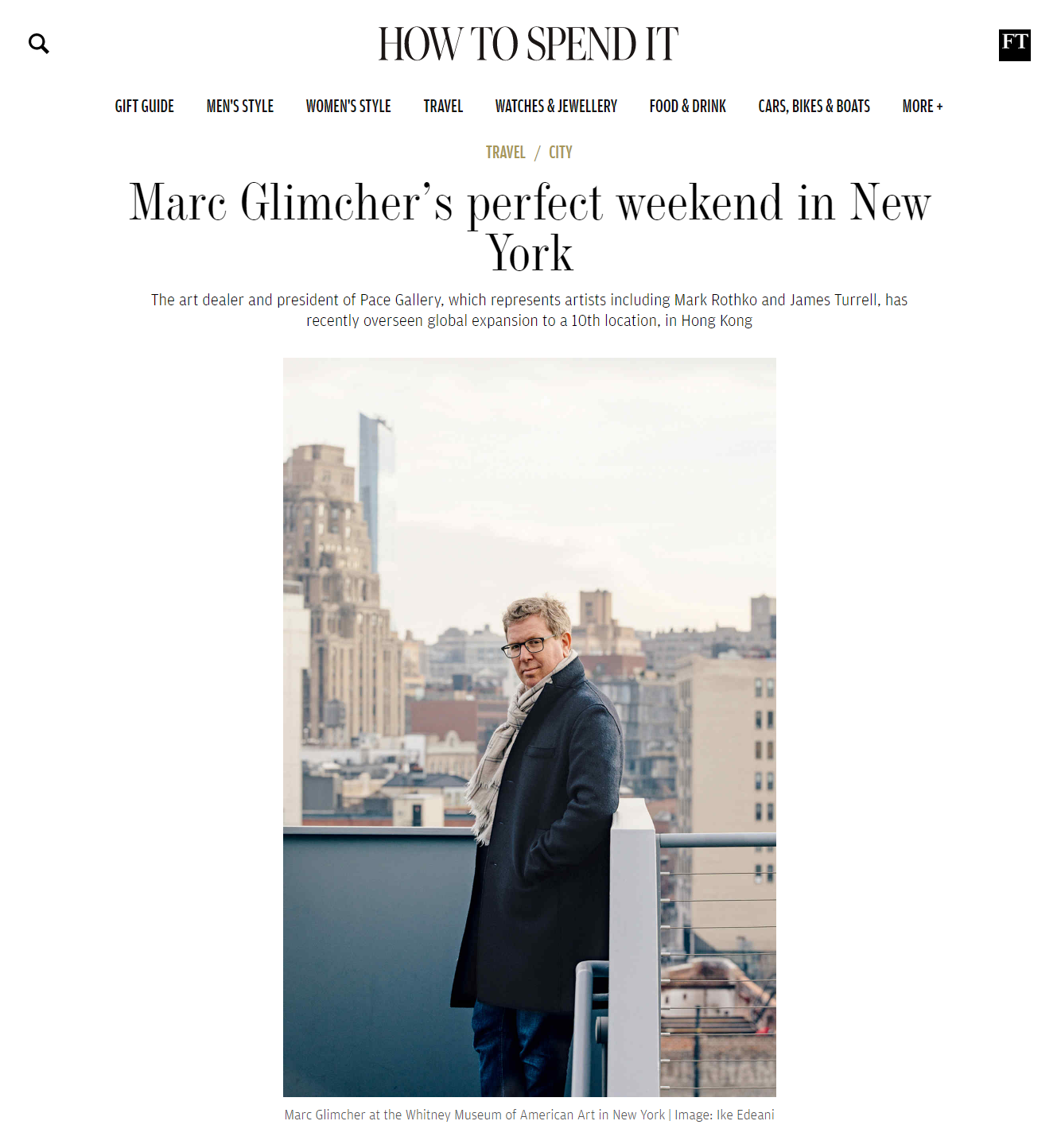
Marc Glimcher’s perfect weekend in New York
The art dealer and president of Pace Gallery, which represents artists including Mark Rothko and James Turrell, has recently overseen global expansion to a 10th location, in Hong Kong
The art dealer and president of Pace Gallery, which represents artists including Mark Rothko and James Turrell, has recently overseen global expansion to a 10th location, in Hong Kong
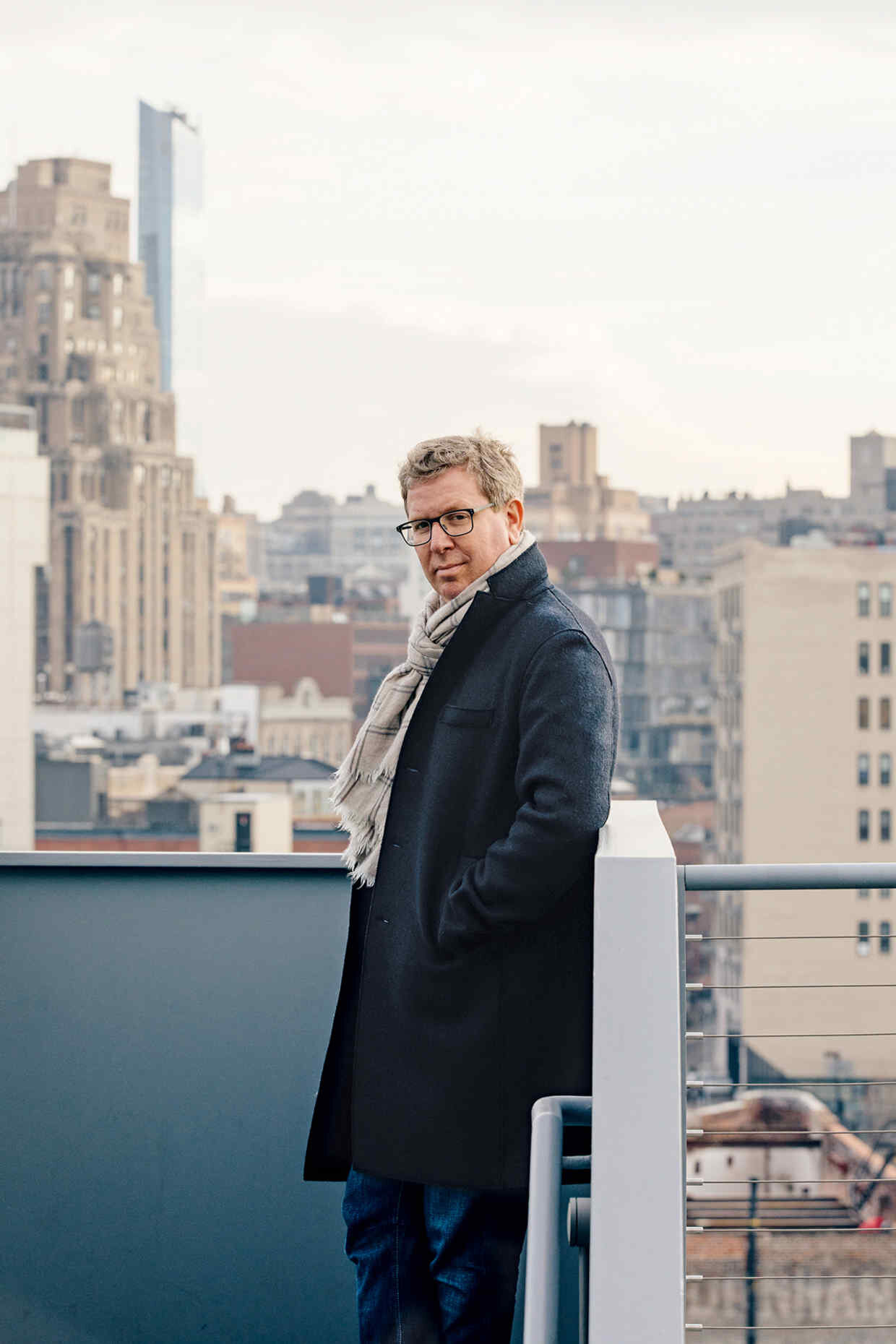
Marc Glimcher at the Whitney Museum of American Art in New York | Image: Ike Edeani
“My wife Fairfax and I begin Saturdays with matcha and meditation, then a bit of rounding – a yoga-like practice – before one of the healthiest breakfasts imaginable: scrambled eggs with parsley, and smoked salmon, sauerkraut and avocado. I spent the first 50 years of my life eating sugar, and the past three eating healthily, and I finally feel terrific.
My weekends are all about family and rejuvenation; they are the crowning achievement of the week. However, in the art world there is no division between your work and personal life, so art is always woven into Saturdays.
Sometimes I’ll take out the Tesla and go and see artists such as Julian Schnabel downtown. Studio visits are a relaxing way to see artist-friends when I’m not trying to get to another appointment. But more often than not, our family of six – I have four kids from my previous marriage – will walk around the city, visiting museums. Our go-to is the Whitney, where we’ll see a show and have healthy salads at Untitled, Danny Meyer’s restaurant, before heading uptown to my all-time favourite institution, the American Museum of Natural History. I’m a geek, so this place, with its gems and relics, really appeals – and I force everyone to come, because it’s a masterclass in how to present ideas and images. Afterwards, we’ll head across the street to Gari Columbus for the best sushi on the Upper West Side.
I like to stroll downtown and stop at the Astro Gallery of Gems – Fairfax and I are huge collectors of crystals of all kinds. Then it’s on to Books of Wonder for the kids, followed by the photography shop Adorama for the Leica cameras, my weakness.
We all love ABC Carpet & Home for things we don’t need, from tarot cards to all manner of drinking glasses. If we time it right, we’ll go to ABCV, Jean-Georges Vongerichten’s new plant-based restaurant: the spinach spaghetti and roasted mushrooms are not to be missed.
Our afternoon stops include Grimm Gallery on The Bowery and the David Zwirner and Hauser & Wirth galleries in Chelsea. We’re building a gallery on West 25th Street, so I’ll go by and check on the progress, then we’ll walk our Maltese, Matisse in Madison Square Park and return home for a little meditation before dinner. Saturday nights are either early – at I Sodi, where you have to go at 5.30pm to get a table because the pastas are so fantastic – or late, tequila-fuelled affairs at Cosme, where the Mexican chef makes excellent marinated cobia al pastor.
Fairfax’s meals are more elaborate than mine, so Sunday’s avocado toast comes with nettles and chillies. On these leisurely mornings, we watch CBS Sunday Morning for an upbeat start, followed by CNN for the bad news – and we never miss The New York Times.
I’ll go to the Equinox gym for a quick, intensive workout. I believe the trick to consistent exercise is to not have a trainer; it’s just another relationship that gets in the way.
In the afternoon, we’ll make time for our family band – between us we play the guitar, the ukulele and the drums. Then we’ll head to EN, the Japanese brasserie, where I order the salmon rice and steamed gingko nuts for sharing, or to Il Buco in NoHo, where the intimate atmosphere and the sinful porchetta make for a cosy and delicious meal.
The day winds down with The Leftovers, my current favourite TV programme. Then I pack my bags for Palo Alto, or London, or Seoul…”

Alára: an ode to African creativity in Lagos
This dramatic, multilevel David Adjaye-designed Lagos concept store celebrates pan-African craft, from fashion to furnishings
This dramatic, multilevel David Adjaye-designed Lagos concept store celebrates pan-African craft, from fashion to furnishings
“People don’t come here for basics, but for glamour,” says Reni Folawiyo, founder of Nigerian concept store Alára. Set in the burgeoning Victoria Island district of Lagos, the space is a design lovers’ dream: a multi-level theatrical building by Ghanaian-British architect David Adjaye that hosts an eclectic mix of fashion, art, furnishings and decorative objects – some sourced in Europe, but many more from other parts of Africa, including the mountains of Morocco.
Alára – or “wondrous performer” in Yoruba – was chosen by Folawiyo “because there are so many performance elements to the space,” she says of the store’s calendar of fashion shows, art exhibits and pop-ups – plus the bustle of Nok, the restaurant tucked behind the main building. It is helmed by experimental Senegalese chef Pierre Thiam, who takes classics of African cooking to new epicurean heights.

A selection of Gillian Fuller bead cuffs, $77 each, on a Danye woven placemat, $87 | Image: Lex Ash
It was a casual conversation with fashion designer Duro Olowu that led to the selection of Adjaye for this bold project to celebrate pan-African craft. “He’s African and shared my vision of discovery and wonder immediately. This was an emotional endeavour for everyone involved, as we all want our country to do well,” says Folawiyo. The result of their collaboration is a dramatic three-storey glass and metal-clad structure that’s inspired by both traditional Yoruban adire textile patterns and the saturated red colours of the Nigerian soil.
Behind the striking façade, items are displayed exhibition style; the first floor is dedicated to women’s clothing labels such as YSL, Dries Van Noten and Duro Olowu, though it is the kaleidoscopic dresses ($1,000) by Nigerian talent Amaka Osakwe that embody the Alára ethos. “Her collections [for Maki Oh] tell stories in interesting and contemporary ways and are very grounded in her culture,” Folawiyo says of Osakwe’s locally dyed silk and adire creations. Colourful accessories include beaded cuffs ($77) by South African Gillian Fuller, and iridescent earrings ($300) from Danish jeweller Monies.
A robust menswear offering “is focused on creative, informal weekend wear that is suited to the tropics,” says Folawiyo, citing jackets ($400) by Post-Imperial and cool kaftans ($300) by local designer Kenneth Ize. Customised Cartier and Rolex watches (from $33,000) by MAD Paris, rhodium and rose-gold Tateossian cufflinks (from $300) and grooming staples including Men’s Society beard oil and brushes ($100 per set) stand out on display against Adjaye’s wenge-wood finishes.
But what makes this shopping experience so special is the continually changing finds from Folawiyo’s colourful buying trips. On any given day, embroidered Tuareg trunks from Mali might sit beside sculptures from Senegal and Burkina Faso, furniture discovered at Milan’s Salone del Mobile, north African Berber carpets ($2,000) and origami-inspired Lumio lights ($300).
But the beating heart of the store lies in those pieces created by local talents. “We encourage young African designers to pull from their rich history and culture,” says Folawiyo. “Most of all, we just hope kids will come in and see the limitless design possibilities…”

Daniele Riva’s perfect weekend on Lake Como
The master builder of the Cantiere Ernesto Riva is the eighth generation of the Como family to craft exquisite wooden boats, from simple skiffs to vaporinas, entirely by hand
The master builder of the Cantiere Ernesto Riva is the eighth generation of the Como family to craft exquisite wooden boats, from simple skiffs to vaporinas, entirely by hand
“Lake Como is the best place to be in summer; the weather is good, the food excellent and it’s very safe – the doors are always open. Little has changed here over the centuries and the days are very carefree. My weekends are spent in nature, either out on the water or hiking and biking with my children, Sara and Stefano.
Saturday starts at Poletti, in the small town of Laglio where I live; the cappuccino and jam-filled croissants are the best you’ll find anywhere. This place is an institution and everyone comes here to start their day with bread, cakes and pastries, including crisp chiacchiere during carnevale. I also like Da Luciano, another family-run place, at any time of day; it’s part café, part deli, part wine bar, and the bresaola is a must.
After a light meal, we might hike around the lake, past the medieval Isola Comacina. The island once belonged to Milan, and when it finally gained independence in the 12th century it was burnt to the ground. Every year in late June we celebrate its independence with a festival of fireworks and music, and the island is lit up with red maritime lights. It is best to watch from the water on a Lucia, a traditional flat-bottom fishing boat; an Inglesina, a covered boat designed in the 19th century to protect the English from the strong sun; or from a vaporina, one of the chic mahogany motorboats synonymous with la dolce vita.
If we’re feeling energetic, we’ll hike all the way to Tremezzo. The villas and gardens lining the lake show off all the cultures and architectural styles that have touched this area over time, and one of my favourites to visit on a Saturday afternoon is the Villa Carlotta, across from Bellagio. The gardens are extraordinary; full of rhododendrons, azaleas, bamboo and all kinds of statues and fountains. I also love the spectacular 18th-century Villa del Balbianello, perched high above Lenno: it featured in Casino Royale and now showcases an incredible collection of artefacts from around the world.
Lenno is home to the glamorous Grand Hotel Tremezzo, but on a Saturday evening we’ll go there for La Fagurida, which serves authentic Lombardy cuisine. It has beautiful views of the lake – maybe the best – and the friendly owner, Adriana, serves excellent polenta uncia, a local dish with garlic, butter and sage.
Il Sereno, the contemporary hotel designed by Patricia Urquiola, is another lovely spot to watch the sunset. It’s ideal for an aperitivo and they have a delicious tapas-style tasting menu. Or we might go to Blevio, home to Momi, for homemade pappardelle and fried lake fish such as perch or lavarello. The chef, Momi, holds cooking classes and will take six guests to the market in the morning and help them cook a hearty meal, prosecco in hand.
Sundays are for relaxing with friends and family and we’ll often go to Como, stopping to admire the gothic cathedral and the colourful Palazzo Broletto. La Vita è Bella, a small restaurant on the harbour is good for a light salad before visiting the fascinating Silk Museum. Como is more commercial than some of the other towns, but it has its charms. One of my favourite shops is L’Arte di Modellare il Cuoio, a little leather atelier that specialises in handmade accessories.
Later, I might take my electric boat Ernesto – named after my father – out on the lake, or we might ride the funicular up to the quaint town of Brunate, the place to enjoy mountain foods – creamy polenta, casoretta and zincarlin cheeses, and the local favourite, pizzoccheri, a buckwheat pasta dish. Full of good food and fresh air, I’m ready for the week ahead.”

A long weekend in Buenos Aires with Nacho Figueras
From the “best steak in the world” to boots fit for a prince, the polo champion and Ralph Lauren ambassador shares his local secrets with Christina Ohly Evans. Portrait by Javier Pierini
From the “best steak in the world” to boots fit for a prince, the polo champion and Ralph Lauren ambassador shares his local secrets with Christina Ohly Evans. Portrait by Javier Pierini
Architecturally and spiritually, Buenos Aires is a very European city, so it’s often referred to as ‘the Paris of South America’. There are a lot of similarities between the two, for sure – many of the parks and streets were designed by the same people – but in the end, the feel here is distinctly Latin. I think we have a very Spanish/Italian flair, with our love of food, style and overall enthusiasm for life. I travel the world, and no matter where else I visit, I always love BA best. It’s a magical city and it seems to exceed expectations every time.
There has been a rich mix of people and cultures over the past 100 years, and you really see that in the diverse architectural styles and neighbourhoods, as well as in the art and different cuisines. One of the most beautiful periods for Buenos Aires was the belle époque era in the early 1900s, when Argentina was one of the wealthiest countries in the world. During this time some spectacular buildings, such as the Alvear Palace Hotel in Recoleta, were built, and I always recommend a stay here if you want to feel the magic of old‑world Buenos Aires. It was totally renovated recently, but the big top-floor suites still have a classical feel and some have terraces overlooking the city.
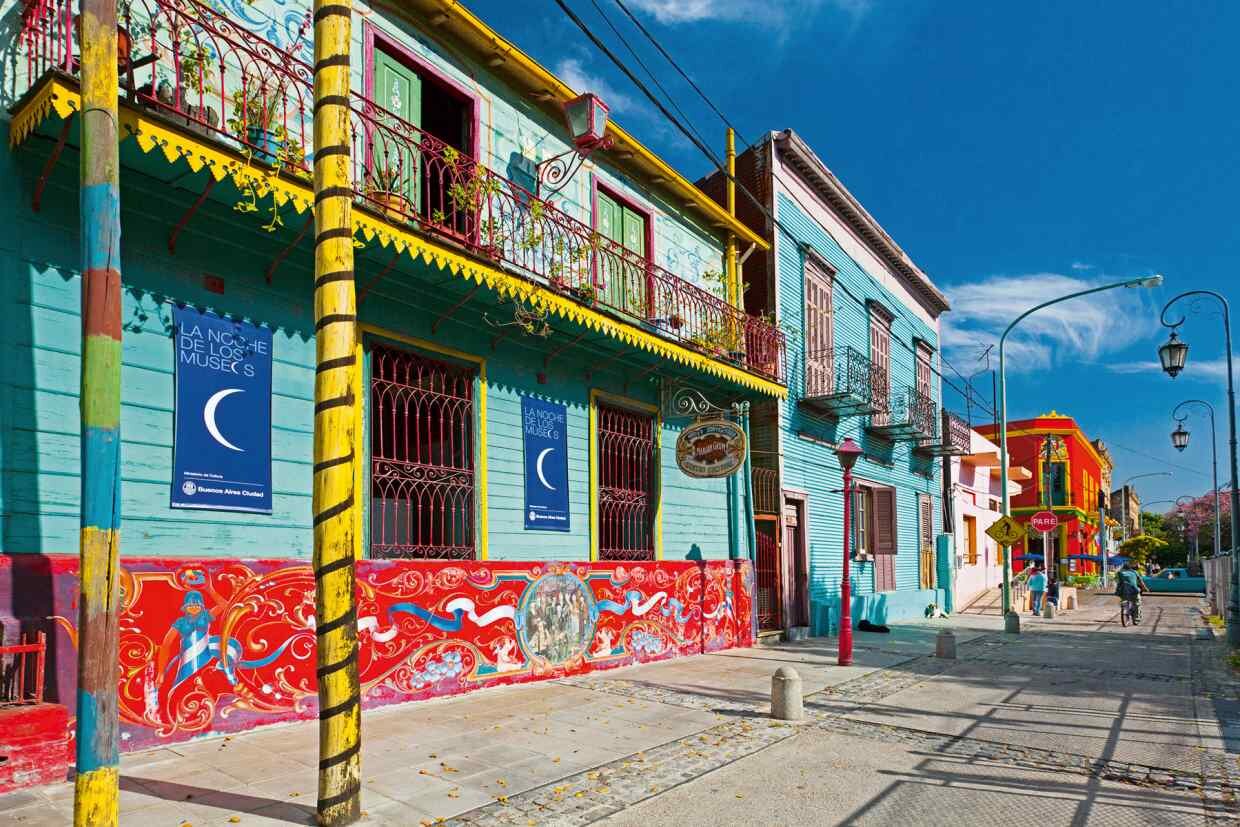
The colourful façades of the city’s La Boca district | Image: Estock/4Corners Images
The Palacio Duhau – Park Hyatt is another grand hotel that’s set in a former mansion, but it has a more minimalist feel than the Alvear. The unique thing here is the rear garden; it’s a complete urban oasis, and a great place to meet for drinks on a warm evening. Then there is the Home Hotel, in Palermo – our version of Williamsburg, Brooklyn – which has a more boutique-y feel, a Nordic-meets-South America design. The very simple but beautiful pool is surrounded by jasmine and all kinds of greenery. But of all the places to stay, one of the best-kept secrets is Estancia La Bamba de Areco, which is just an hour or so outside the city. If you’re looking for horseback riding, a real asado, authentic gauchos and polo playing, this place is just incredible.
The heart of Buenos Aires is the French heritage district of Recoleta, where you’ll find the more formal hotels and shops, as well as some of the best restaurants in the city. One of the most impressive sights here is Recoleta cemetery, which dates from the 18th century and is packed with mausoleums – some beautifully maintained and others in disrepair. Recoleta is the perfect area to shop, and Arandú is a great resource for all kinds of equestrian things; you’ll find cowboy boots, saddles and traditional gaucho bags in bright colours among three floors of gear. Florería Atlántico in Retiro is another favourite. It’s an incredibly fragrant flower shop by day and a lively bar by night, and they serve their own gin that’s flavoured with Argentinian yerba mate tea.
For a slightly more fun, funkier feel I like Palermo Soho and also the tree-lined streets of Palermo Chico. The best steak in the world is at La Cabrera, where the huge slabs of ojo de bife – or ribeye steak – are served with traditional sides and a chimichurri sauce made of garlic, chilli and coriander. The room will be packed with Argentines and tourists alike, and it’s a real taste of local life. Nicky NY is the place for sushi with a lot of ambience, but what I really love is the Harrison Speakeasy bar that’s downstairs. It has a very special, festive vibe, though getting in can be tricky.
This area has culture to offer as well, including the Museum of Latin American Art of Buenos Aires – or MALBA – where the modern and contemporary Latin American art is world class, and so is the granite building that contains the collection. The restaurant here – Ninina – is a perfect spot for a relaxing lunch outside on the patio.

Tango in San Telmo | Image: Getty Images
One of the best additions to Palermo Chico in the past few years is the concept boutique Casa Cavia. It’s set in a beautiful white mansion from the 1920s that’s been updated and now includes a restaurant, bar, flower shop and bookstore. I like to have lunch here because not only is the food excellent, the architecture is a mix of historical and contemporary features, and the scene is always lively.
If you’re looking for an haute cuisine experience, then Tegui in Palermo Viejo is the place to try star chef Germán Martitegui’s set menus, which include unique takes on Argentine classics. The chef is often there, making it feel intimate and special, and while the entrance is unassuming, it is regarded as one of the best restaurants in South America. So is Francis Mallmann’s Patagonia Sur in the colourful La Boca neighbourhood. It’s set in a brightly painted private house that only has space for a few people and offers a fixed six-course menu. I take every special guest here – Ralph Lauren, for example – and it’s a wow every time.

Congress Square in the heart of the city | Image: Getty Images/EyeEm
The more eclectic San Telmo neighbourhood is another area for exploration, and one of the best shops there is Juan Carlos Pallarols. This silversmith has an international following, and he makes things like the Pope’s chalice – Pope Francis is Argentinian – as well as silver roses and sets of steak knives. He is a true craftsman and his work is so intricate and specific to Buenos Aires. The area comes to life on Sundays, when the Feria de San Telmo antiques fair is held. It’s like our version of the Marché aux Puces, and you can find treasures ranging from early-20th-century linens to full sets of silverware to leather bags and furniture.
There are certain things associated with Buenos Aires, and tango, polo and football are all top of the list. For football fans, a Boca Juniors game is a must; the atmosphere is electric. You’ll find tango all over the city, but the performance at the Faena Hotel in Puerto Madero is among the best, as Rojo Tango gets the top dancers. Although it’s a modern hotel, this is the place to see this musical art form.

Recoleta’s Alvear Palace Hotel recently had a total renovation
Polo is a huge part of my life, but also life in Buenos Aires generally. In November, the Argentine Open is played in fields in the middle of the city and everyone turns out. Polo is played every day at the Cría Yatay polo club, on one of my estancias outside the city, where I also give lessons on occasion and where we host various club matches. This city is a great place to buy kit for the sport, and for polo boots there is none better than Casa Fagliano in Hurlingham. It’s about an hour outside the city, but worth it for the custom boots that are favoured by Prince Charles and the Sultan of Brunei. The family that runs it is amazing; three generations work in the shop, fitting and sewing the boots, and the whole experience feels like being in Geppetto’s workshop.
In the General Díaz area, where I live, there is a great shop for all things to do with tack, called Logi Polo. You’ll find everything here – from helmets to cool T-shirts to polo mallets, of course. For visitors to this area, I always recommend Fettuccine Mario for dinner. It’s a very special restaurant that gives any Italian trattoria a run for its money. This place is old-school; the knowledgeable waiters – most of whom have been there for 25 years – wear white jackets and there is nothing fussy or corporate in sight.
We’re still a little slower here than the rest of the world, and I mean this in the best sense. In general, it’s stayed the same over the years and that’s a good thing. It still feels special and historical, minus the cellphones. Honestly, an excellent cellphone service is a modern curse. I hope people will come here and put away their phones for just a little while, because there is so much beauty to see and so much to experience.

A long weekend in New York with David Adjaye
The celebrated architect – currently building his first residential tower in Manhattan – talks cocktails in Dumbo and art in Harlem with Christina Ohly Evans. Portrait by Nicholas Calcott
The celebrated architect – currently building his first residential tower in Manhattan – talks cocktails in Dumbo and art in Harlem with Christina Ohly Evans. Portrait by Nicholas Calcott
I first came to New York as a wide-eyed architecture student in the 1990s and was immediately in awe of the greatest metropolitan skyline of the 20th century. It is truly a 24-hour city and the energy of it is just fascinating; it’s a world prototype for how different communities can come together and create a model of density.
I divide my time between London, New York and Accra, but my home here is in Harlem. And while I spend much of my time uptown, I find charm in every neighbourhood, including the outer boroughs. I especially love Prospect Park in Brooklyn – which feels like more of a hidden, suburban area – and also the burgeoning Financial District.

The terrace at Cecconi’s in Dumbo, Brooklyn, ideal for cocktails | Image: Dave Burk
In London you have about 30 different neighbourhoods that are all like little hamlets crashed into each other, but in New York there is a very different kind of urbanism. You can almost do resort breaks in this city: if you’re bored in a certain area, you can go to a park in a different borough, or walk along the water somewhere else. That diversity is its power. Another strength is the authentic intermingling of cultures and groups, which intertwine at moments to produce something new and beautiful, and diverge at others to allow differences to be preserved and respected.
One of the things New York does really, really well is tall buildings. Some of the best skyscraper architecture is downtown, including the iconic Woolworth Building and the Potter Building, with its fantastic, deep façade. Their craftsmanship and detailing make them not only unique but beloved. You can sense the human hand in their design and construction and they have inspired my current condominium project at 130 William Street.
There’s an organic quality to the layout downtown versus the more regimental grid uptown; and the incredible density of scale in this part of lower Manhattan is unlike anything in Europe. I’ve discovered a whole new world of amazing artisans, restaurants and shops down here, such as the incredible floral designs of Emily Thompson Flowers. The Beekman, with its dramatic atrium, has been faithfully restored and is a lovely hotel from which to explore some of the city’s first streets. Augustine is a new favourite for fantastic, unfussy food, while The Wooly Public – in the original restaurant space of the Woolworth Building – serves dishes that pay homage to the 1913 menu. It’s a fun play with the area’s history.
When friends come to New York I’ll often recommend they stay at The Mercer in SoHo; André Balazs is a master of crafting hotel experiences that reflect the cities they’re in, and this is no exception. The Mercer Kitchen is a great place to meet for a drink before dinner at Mission Chinese Food – an incredibly lively, fun spot that represents downtown done well. SoHo is also perfect for shopping: the fashion store Opening Ceremony on Howard Street is incredible. I think what Humberto [Leon] and Carol [Lim] have achieved there is remarkable, and the store is truly a trendsetter and a global destination. Rick Owens’ flagship, with its stark space that lets the collection shine, is another shop I always have to visit.

The northernmost stretch of the High Line at the Rail Yards | Image: Iwan Baan
Obviously, this city is rich in museums and galleries. Salon 94 on the Upper East Side is a great alternative to conventional white-box galleries, as visitors can experience artworks and performances in a furnished, inhabited space. And The Noguchi Museum in Long Island City is the perfect spotlight for a brilliant mind: the artist’s works are highlighted beautifully in a very peaceful space.
David Zwirner and Luhring Augustine are excellent galleries as well, and, of course, Marian Goodman is a must: Tony Cragg’s show there last year was stunning. The Brooklyn Museum has brought some of the most exciting and innovative exhibitions to the city, and its permanent collection is both daring and contextual, while The Studio Museum in Harlem is unparalleled in the way it supports both artists and its community. It’s incredibly rare to find an institution with a keen sensitivity to both these groups – its director and chief curator Thelma Golden is a national treasure. In terms of combining culture and food you can’t get more New York than The Modern, which overlooks MoMA’s sculpture garden: the restaurant is consistently good and integrated seamlessly into the institution.
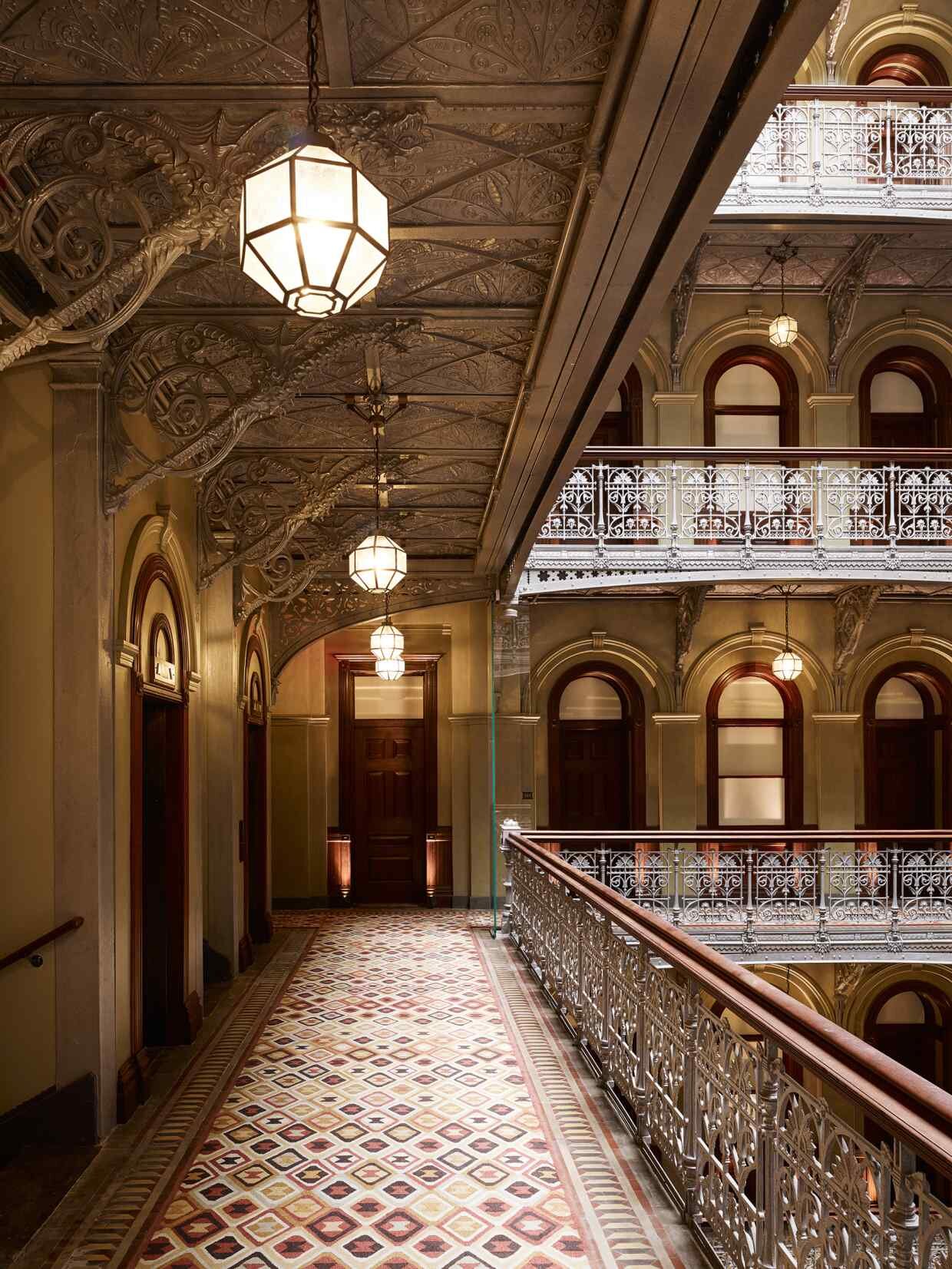
The Beekman hotel in downtown Manhattan
The Upper East Side holds a particular charm for me, with its incredible mansion blocks and a street life that feels very much like London. It’s packed with cultural places, restaurants and local shops, and despite the height of some of the buildings and the density, it has a unique intimacy and generosity. I always recommend a stay at The Lowell because the rooms are cosy and personal; they feel almost like apartments.
The area also houses one of the world’s great modernist buildings, The Met Breuer. It’s a remarkable study in contrasts: the insular presence of the exterior, and the openness and intimacy of the interiors. A few blocks away is an Italian restaurant called Sette Mezzo, which I like for the grilled salmon and old-world feel – it harks back to a bygone era, when neighbourhood communities felt entrenched.

Prospect Park in Brooklyn | Image: Getty Images
I am a huge admirer of landscape architect Frederick Law Olmsted, and beyond Central Park I really love Prospect and Fort Greene Parks, both in Brooklyn. Prospect Park is a masterpiece: the bucolic beating heart of Brooklyn that is at once a retreat and a cultural hub. Fort Greene Park is a great example of neighbourhood place-making. It’s a true community gathering space with an extremely local feel. And after a day spent in Brooklyn, there’s no better place than Cecconi’s, in Dumbo, for a cocktail with great skyline views on a summer evening.
Back uptown in Harlem there is such a rich history; in many ways it represents the quintessence of black urban modernity across the globe. Architecturally there are so many inspiring elements – from the iconic brownstone stoops to the beautiful churches with dramatic interiors, like the First Corinthian Baptist Church and the Salvation and Deliverance Church. Sometimes I’ll take friends to the Sunday church services at the Abyssinian Baptist Church – not so much for religious reasons, but because I just love the singing and the atmosphere.
An artistic Harlem highlight is Gavin Brown’s Enterprise, with its series of dramatic exhibition spaces. And, of course, there’s the Apollo. This theatre represents the successes and struggles of Harlem as the epicentre of urban black life, and the sense of history is palpable.
One of the best restaurants – and definitely the best jerk chicken – in the area is Red Rooster; not only is [chef] Marcus [Samuelsson] a culinary genius, but this place represents to me the true promise of New York, which is a space that actually supports and embraces diversity, and that is at once specific and personal. A more under-the-radar place is Accra Restaurant, which serves completely authentic Ghanaian food – plantain fufu, jollof rice – in a simple, lively setting.
When a city succeeds, it gives spaces back to its residents – like the High Line, or the wonderful little parks and squares that are found between the office towers in midtown Manhattan. Both New York and London are struggling with environmental issues and we need bold vision and leadership to keep imagining the possibilities for these magical, underused spaces. The mayors of both cities are exemplary in that they are both for the public – and when you get it right the money follows, because it creates a quality of place. I believe architecture can be a big part of that.
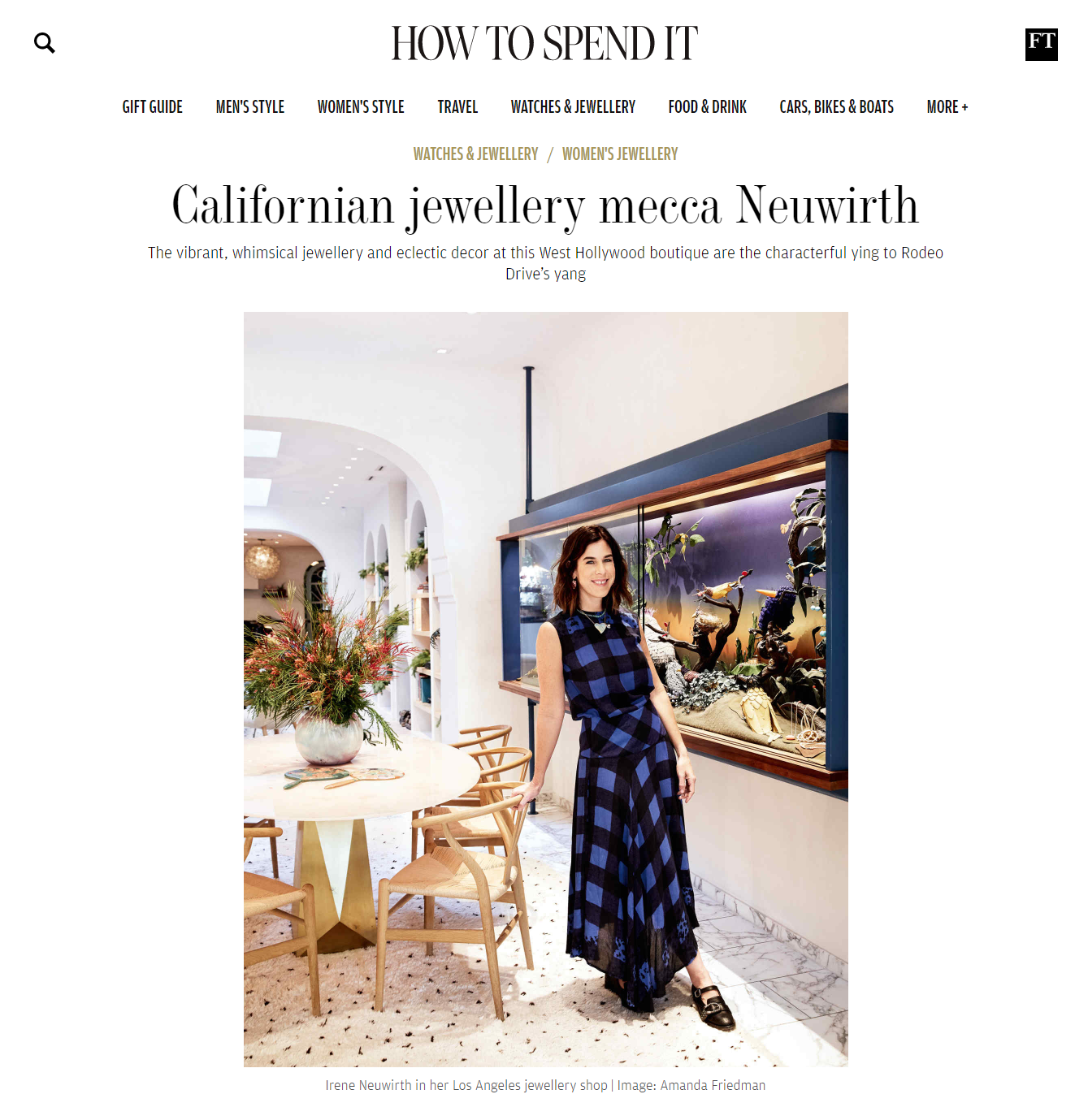
Californian jewellery mecca Neuwirth
The vibrant, whimsical jewellery and eclectic decor at this West Hollywood boutique are the characterful ying to Rodeo Drive’s yang
The vibrant, whimsical jewellery and eclectic decor at this West Hollywood boutique are the characterful ying to Rodeo Drive’s yang
It was a walk along opulent Rodeo Drive in Beverly Hills that prompted LA-based jeweller Irene Neuwirth to open her eponymous shop in nearby – but decidedly lower-key – West Hollywood. “The high jewellery stores that line that street always felt a bit intimidating and I wanted to create the antithesis of that,” says Neuwirth of the light-filled boutique on Melrose Place she opened in 2014. “This is a place where people can relax and even have lunch while browsing, and everything is meant to be touched,” she says. “There are elements of a traditional jewellery store, but really it’s just an inviting space that’s a reflection of me.”
With her heart set on this historic building with its ivy-covered façade, Neuwirth enlisted the help of Pam Shamshiri of LA’s Commune Design to create an eclectic backdrop for the colourful, whimsical pieces she designs for clients including Ruth Negga and Julia Louis-Dreyfus. White plaster walls, gently curving archways and marble floors all lend an organic feel, while jewelled sconces from legendary set designer Tony Duquette’s estate, a vintage pink couch and hand-knotted Moroccan rugs add unexpected touches.

From top: turquoise, diamond pavé and gold ring, $6,930, and opal, turquoise and gold earrings, $3,260 | Image: Amanda Friedman
Sleek vitrines and a dramatic diorama by LA artists Clare Crespo and Marine Panossian display the creations to dazzling effect. Her style is a vibrant mix of rare, semiprecious and precious stones – opals have long been her signature (opal and turquoise earrings, $3,260), often in their raw state, set in burnished or satin-finished 18ct gold.
Among her most sought-after pieces are her pear-shaped Cutout Drop earrings ($2,440) in various shades of burnished gold, including a pair ($6,890) with Akoya pearls. Necklaces have a California cool-meets‑Rajasthan vibe, with eye-catching offerings such as a 46cm rose-gold chain ($67,960) adorned with “charms” of pink Australian opal, moonstone, tourmaline, beryl, Mexican fire opal and full-cut diamonds. Satin-finished rose-gold bangles ($6,530) studded with onyx cabochons, a carved turquoise ring with diamond pavé ($6,930), and aquamarine and turquoise cabochon pendants (from $730) are more classic in style.
Bespoke pieces have included a stunning tiara (price on request) with Mozambique rubies crafted for last year’s Oscars, shoulder-dusting sapphire and tourmaline earrings (price on request) for the Met Gala in oxidised 18ct white gold and mismatched cufflinks (price on request) made of raw diamonds.
No detail of the store has been overlooked – from the flamingo topiaries that flank the entrance to the hand-held vintage mirrors with sunsets and swirling vines by local artist Aaron Morse. The store’s eat-in kitchen, complete with Lacanche stove, adds warmth to the space and invites visitors to linger – Neuwirth often hosts clients there, serving lunches such as vermicelli with mint and cucumber from the store’s neighbours, Croft Alley. “The boutique is a sensory experience and we encourage people to try things on,” she says. “Who knows? If not now, they might wish to have a piece later.”

“I struck literal gold with the discovery of this jeweller on hippy-chic Hydra”
Fine jewellery and graphic home accessories hit the hot spot at Elena Votsi
Fine jewellery and graphic home accessories hit the hot spot at Elena Votsi
I have a thing for evil eyes – the little talismans intended to ward off a malevolent stare – and nowhere have I found them to be more abundant, or more beautiful, than in Greece. On a recent trip to the hippy-chic island of Hydra, just south of Athens, I struck literal gold with the discovery of Elena Votsi, a jeweller whose work is inspired by the sun and the surrounding Aegean Sea of her birthplace and who has worked on pieces in collaboration with Ralph Lauren.

Set in a whitewashed building on Hydra’s main harbour, Elena Votsi’s shop is a treasure trove of modern Greek finds
Set in a whitewashed historic Hydriot building on the island’s main harbour, the artist’s eponymous shop is a treasure trove of modern Greek finds. Simple, sleek display cases highlight both her bohemian designs, all handmade in Greece – think colourful leather lariats with silver fish pendants (€45-€65) and casual clutches (€140) emblazoned with Greek flags – as well as her more geometric fine jewellery pieces.
I was instantly won over by Votsi’s white ceramic mugs (€40-€90) with simple red and blue graphics of donkeys, fish and nautical flags – all symbols of island life – as well as by her cushions and assorted textiles (from €55) bearing contemporary versions of the traditional evil eye. If I had been travelling with more than a carry-on bag, I would have done some serious damage in this charming boutique, but as I refuse to check in luggage, my buying opportunities were limited to smaller, portable mementos.

Elena Votsi ceramic mugs, €40-€90 each
I had a lot of fun trying on a selection of jewellery, particularly brilliant red and sea-green ceramic evil-eye pendants (€650-€1,200) set in 14 and 18ct gold, eventually settling on a one-of-a-kind white marble disc (€1,100) with a miniscule evil eye engraved in gold at the centre. On the other side, the piece is inscribed with the uplifting Greek words for “light” and “life”. Sweet Christos Daskarakis, the store manager, tried to talk me out of buying the matching chain – “Surely you have one at home?” he reasoned – but the weight of Votsi’s links struck me as perfect for the charm, so I went for the whole package.
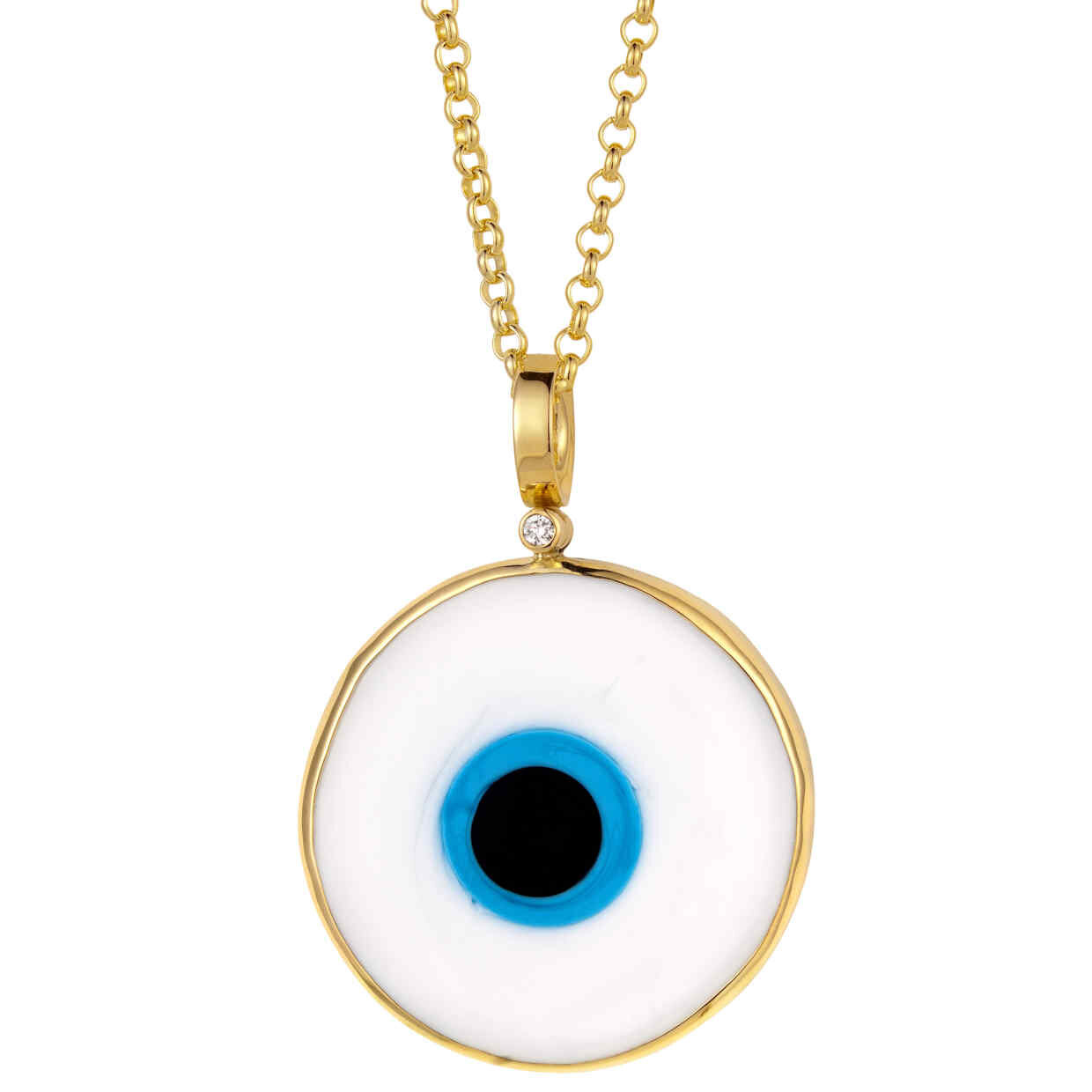
Elena Votsi marble and gold disc pendant, €1,100
For those in search of precious items that will translate well from beach life to the city, the store offers many of the exquisite pieces that Votsi – a Royal College of Art alum – is so well known for. I was particularly taken with one-of-a-kind stone “heart” pendants (from €7,000) accented with tiny gemstones; a diamond Eros ring (€11,000) set in 18ct yellow gold with white diamonds; and a magnificent gold charm necklace (€28,000) embellished with shells and sharks’ teeth.

Elena Votsi gold charm necklace, €28,000
Of all the evil-eye trinkets I amassed on this trip – Christmas tree ornaments, bracelets, a cerulean paperweight – my statement-making necklace is by far the most meaningful. I’ve worn it virtually every day since I returned home – with casual T-shirts or for a night out – and it reminds me of a spectacular trip and a truly unique island vibe.

Custom cookware in silver and copper
Duparquet pans are entirely handcrafted
Duparquet pans are entirely handcrafted
It was a holiday in Burgundy – and in particular a transcendent meal at famed restaurant La Côte d’Or – that spurred mechanical engineer Jim Hamann to pursue his passion for pans. Inspired by the cookware of the region, Hamann returned home to Rhode Island and opened a studio restoring pots and pans of varying sizes and vintages, such as early-1900s American-made copper frying pans, and tin- and silver-lined sauté pans from Le Cordon Bleu.

Full 22-piece sets of silver-lined copper cookware ($12,500-$15,000) and solid-silver sets (from $50,000) can also be commissioned
Hamann’s love of food and product design meet in the custom cookware he now crafts for a growing global clientele that includes chefs Alain Ducasse and Daniel Humm of Eleven Madison Park. What began as a range of copper pots and pans – 6in fait-tout models for sauces ($380) and larger sauté versions ($650) – has grown to include a made-to-order selection of stunning solid-silver pans “that have more even heat conductivity than copper,” says Hamann.
Sizes, grips and other embellishments can be altered according to a client’s specific tastes. In general, there are 12 different sizes to choose from, with 9in omelette and frying pans ($2,800) among the most popular. Straight-sided sauté pans in 8.75in and 12.5in sizes (up to $10,000) are other common requests, and each is solid silver with sterling silver rivets. Only the handles are made of cast iron – “because they don’t conduct heat,” Hamann explains – and covered in hand-stitched leather. Full 22-piece sets of silver-lined copper cookware ($12,500-$15,000) and solid-silver sets (from $50,000) can also be commissioned, though clients need to be prepared to wait as more complex orders can take three months or more.

Hand-stitched leather covers the cast iron handles of the pots and pans
All the craftsmanship – from the pans to matching copper inlaid maple burl and teak knives (from $190-$230) and the leather detailing – is performed by Hamman and his small team. The only exceptions are the linen-lined ash boxes custom made for each pan by a local Rhode Island School of Design student “who is both a furniture designer and a foodie,” says Hamman.

Dine like Dior
Christian Dior was passionate about cuisine and couture, and the Hôtel Plaza Athénée – the address where he showed his inaugural collection – has created a menu inspired by the designer’s cult cookbook
Christian Dior was passionate about cuisine and couture, and the Hôtel Plaza Athénée – the address where he showed his inaugural collection – has created a menu inspired by the designer’s cult cookbook
Haute couture meets haute cuisine at the Hôtel Plaza Athénée, Paris, where those in town for fashion week (July 1-5) can sample the Menu Dior at Le Relais Plaza restaurant – created by chef Philippe Marc under the command of multi-Michelin-starred chef Alain Ducasse. Christian Dior was a passionate gourmet, and the three-course dinner (€90) – inspired by the designer’s cult cookbook La Cuisine Cousu-Main, published in 1972 – features a selection of his favourite dishes.

A Dior model at the hotel in 1947
The brasserie’s art deco setting – modelled on legendary liner the SS Normandie – creates a stylish backdrop for a starter of mimosa egg with smoked haddock and a green Granny Smith apple garnish, followed by succulent grilled lamb chops with braised lettuce and thick-cut, crispy potato savonnettes bathed in a delicate jus. The designer’s pièce de résistance, a seasonal strawberry Melba, tops off the evening.

Le Relais Plaza restaurant in 1937 – the art deco interior was inspired by the SS Normandie

The hotel facade as Christian Dior would have seen it
The palace hotel figured prominently in Christian’s Dior’s life – in 1947 he established his atelier across the street at 30 Avenue Montaigne, and he showed his inaugural collection at the hotel. Later, Dior’s iconic Bar suit was named after the Plaza Athénée’s cocktail lounge.

Dine in a Jean Cocteau work of art
It was a place of escape for Jean Cocteau and a summer gathering spot for Coco Chanel, Marlene Dietrich and Pablo Picasso – now guests at Grand-Hôtel du Cap-Ferrat can enjoy fine dining at La Villa Santo Sospir
It was a place of escape for Jean Cocteau and a summer gathering spot for Coco Chanel, Marlene Dietrich and Pablo Picasso – now guests at Grand-Hôtel du Cap-Ferrat can enjoy fine dining at La Villa Santo Sospir
Fine art meets fine dining on the French Riviera from June 1 through to August 15, when guests at the Grand-Hôtel du Cap-Ferrat can savour the surroundings of the iconic Villa Santo Sospir. The villa was a summer retreat of the poet, writer, artist and filmmaker Jean Cocteau, and a gathering place for luminaries such as Coco Chanel, Marlene Dietrich and Pablo Picasso. It sits high above the Mediterranean and is an ideal venue for a Michelin-starred, entirely bespoke, four-course dinner orchestrated by the hotel’s executive chef Yoric Tièche.

The dining experience will begin on the terrace where guests will enjoy the artist’s favourite aperitif – the bitter La Suze – while watching the sunset
Over the course of several years in the 1950s, Cocteau enlivened the residence of Francine Weisweiller (a patron to both Cocteau and Yves Saint Laurent) with a series of colourful murals, mosaics and frescoes – all of which remain today and make for a unique setting. The fine dining experiences can be arranged for up to six people and begin with a transfer from the Grand-Hôtel to the villa, followed by a tour of the property with long-time estate manager, Eric Marteau. After viewing Cocteau’s immersive masterpiece, guests will retire to the terrace to sip the artist’s favourite aperitif – the bitter La Suze – while watching the sunset.

A view of the intimate dining room where guests will be served a Michelin-starred, entirely bespoke, four-course dinner

The bedrooms are also adorned with Cocteau’s murals
The real fun, however, begins at dinner (from €4,200 for two, €286 per additional person and €150 per child under 12), a culinary odyssey conceived by chef Tièche and orchestrated by an on-site chef and maître d’ as guests are seated in the intimate sitting room – a spot where Cocteau and his friends once dined.

A view of the dining area adjoining the sitting room at La Villa Santo Sospir

An appetiser of tartare de poisson | Image: Jean-Claude Amiel
The menus feature plenty of fresh fish and pay homage to the artist with the inclusion of some of his favourite dishes, such as roasted veal filet with girolle mushrooms and a savoury-sweet peach and almond purée, as well as a fricassée of lobster with black garlic. Appetisers include seasonal vegetable salads and catch-of-the-day tartares, while a verbena-infused apricot with sorbet makes for a refreshing endnote to the meal.

Benjamin Millepied’s favourite bespoke shoemaker
The founder of LA Dance Project and former artistic director of the Paris Opera Ballet reveals to Christina Ohly Evans why the ethics as much as the aesthetics of sneaker brand Feit seduced him. Portrait by Weston Wells
The founder of LA Dance Project and former artistic director of the Paris Opera Ballet reveals to Christina Ohly Evans why the ethics as much as the aesthetics of sneaker brand Feit seduced him.
As a dancer, I’m obviously very sensitive about my feet. Added to that, I tore the plantar fascia in both feet when I was in my 20s – so the way a shoe feels and supports is incredibly important to me. When I met [Feit co-founder] Tull Price about seven years ago, I was intrigued by the fact that his focus was on bespoke leather sneakers and immediately responded to the level of artistry and attention to detail he gives his shoes. He only uses the best natural materials, and his methods of production are unlike those of any other maker I’ve found – and I’ve tried many. Even the latex soles are made from the milk of rubber-tree plants.
It was Feit’s ethos as much as its streamlined aesthetics that resonated with me from the beginning. Most of what we surround ourselves with today – including our shoes – is petroleum based, so Feit is Tull’s reaction to automation and chemical products. All the pairs are handmade using a single piece of leather, giving them an almost Japanese aesthetic that I can dress up or down.
My first pair were navy high-tops with leather laces, and I still wear them all the time. The vegetable-tanned leather manages to be soft, but gives my foot and ankle a lot of support, and they work just as well with jeans as they do with an Ermenegildo Zegna suit. They get more attention than almost any other item in my wardrobe.
Since that first pair, Tull has made more than 10 other pairs of bespoke shoes for me; I also have slip-ons and various takes on the classic Oxford. They’re all well worn, but my favourites are the classic Oxfords in black semi-Cordovan leather, beige Biotrainers that are modelled on a running shoe, and a pair of low lace‑ups in marine-blue suede.
Because Tull has my lasts, he’ll often send me ideas for new pairs that he thinks will work – most recently white slip-ons for LA. But I’ve currently got my eye on commissioning some sneakers in black crackle leather; the finish is really unusual and they’ll be great for travelling.
Whenever I’m in New York, I’ll stop by one of Tull’s two stores – in Nolita or the West Village – to check out new styles and share ideas about comfort and design. We’ve even collaborated on a short film together and there are other ideas in the pipeline. The fact that Tull and I are now good friends makes the whole process of ordering a pair of shoes even more enjoyable.

Bespoke boats and floats for stylish summer days
From sublimely elegant canoes to custom sea cabanas – small but perfectly formed excuses to get out on the water
From sublimely elegant canoes to custom sea cabanas – small but perfectly formed excuses to get out on the water
High-performance heirlooms The bespoke boats produced by Artisan Boatworks, based in Rockport, Maine, are nothing short of spectacular – wooden heirlooms that are delivered all over the world. With years of combined seafaring experience, this design collective – led by master builder Alec Brainerd – is inspired by the yachting greats to create environmentally sustainable custom vessels that “blend timeless beauty and wholesome performance”. From precise replicas of classic designs to the latest in high-performance carbon-fibre and cold-moulded daysailers, racers and cruisers, they are built to endure. The classic rowboat – a Nutshell pram with Norwegian origins, or a Catspaw dinghy (from about $5,000-$50,000) – can be elevated to high art. Tantalising tailored options include the Buzzards Bay 15 class ($200,000), Bar Harbor 31 ($1.4m) and custom 24ft yacht tender ($500,000). artisanboatworks.com.

Preszler Woodshop handcrafted canoe, built up in hundreds of layers of different woods
World-class canoes Each of artisan boatmaker Trent Preszler’s exquisitely handcrafted wooden canoes ($100,000) is slowly built up in hundreds of layers of different woods – from ash, cedar and walnut to zebrawood, purpleheart and ziricote – and takes around a year to complete in his Long Island studio. But this does not deter Preszler’s clients. The interior finishes are just as elegant, with woven hemp and leather seats crafted by Texas Heritage Woodworks, while solid bronze cutwaters, cast by Long Island’s Kai Design, add to the modern profile. So sleek and sculptural are the results, some clients have purchased them as works of art, but Preszler says this defeats the purpose: “I always tell people they have to paddle it, because that’s what it was intended for.” preszlerwoodshop.com.

ParrLuxe customisable luxury sea cabanas provide portable relaxation on the waves

Guillemot Kayaks work collaboratively with clients on design, and craft each custom vessel by hand-fitting hundreds of pieces of wood
Supreme sea cabanas Yacht owners who love to swim and lie in the sun are faced with the conundrum of where to lounge comfortably and also be close to the water. ParrLuxe founder Stuart Parr (who oversaw the Marc Newson-produced Aquarama Super for Italian boatmaker Riva) solved this problem with customisable luxury sea cabanas that afford portable relaxation on the waves. These inflatable devices (from $35,000) are hand-built in Italy from luxurious, durable materials – Pennel & Flipo’s Orca (the “Gore-Tex of the marine world”), carbon fibre, stainless steel, polished teak and the softest terry cloth. They accommodate 12-18 people, depending on their size, making them über-rafts for groups or families. Parr incorporates finishes that match the cabana to a yacht or design scheme, and although the standard size for a canopied watercraft is 13ft x 17ft, variations can be made, with an assortment of sun-protective tarps and Bimini tops. There’s even a natural plunge-pool option that allows seawater in through protective netting, keeping marine creatures at bay. parrluxe.com.
Class-of-their-own kayaks “There is a particular quality about a finely crafted wooden kayak; its motion through the water seems somehow smoother than other kayaks, and the sweep of the sheer and smooth arc of the deck draws the hand as well as the eye,” says Nick Schade of Guillemot Kayaks. Schade works collaboratively with clients on design, and crafts each custom vessel by hand-fitting hundreds of pieces of wood. His Standard model kayaks (from $15,000) are strip-built, often in red cedar or marine plywood. Each laminated vessel includes subtle accent stripes and is designed to provide responsive motion in high seas or calm inlets. Commissions take three to six months. For all-round performance, the Guillemot ($15,000-$30,000), with its shallow V bottom and hard chine, is the ultimate choice. This kayak – complete with rich mahogany finishes, recessed wooden hardware and custom upholstery – is offered in a range of sizes. Bespoke graphics are Schade’s speciality: he meticulously matches wood strips and incorporates inlaid marquetry. Paddles are also made to order (from $500) to ensure proper weight and fit. +1860-659 8847; woodenkayaks.com.