
Brighton-made custom creations for superior surfing
Boards to suit stance and style – or even glow in the dark
Boards to suit stance and style – or even glow in the dark
“One of my favourite creations,” says Craig Lindfield-Butler, owner of Brighton-based Supernova Surfboards, “is a 22ct-gold board that I made for the Royal Academy of Arts’ Summer Exhibition 2015. It is now on display at Norman Cook’s – aka Fatboy Slim’s – seaside restaurant in Hove.”

Craig-Shaping-Surfboard
Most of Lindfield-Butler’s custom-made surfboards, however, spend more time in the water than on display. “Whether you’re a hardened professional or an enthusiastic amateur, a custom surfboard provides a faster, smoother, easier ride,” he says. And as one of the only UK makers of bespoke boards, he has garnered a loyal following of surfers from Cornwall to Santa Cruz in western California.
Every customised Supernova creation is optimised for a client’s ability level and typical surfing terrain, and is handcrafted in the Brighton shop. Lindfield-Butler offers an in-store or home consultation, but specifications can also be discussed by phone and email. After the basics of height, weight and age have been considered, boards are further developed according to the customer’s stance and flexibility preference. All of the measuring, shaping and sanding is done by Lindfield-Butler himself, who has more than 30 years of design experience, and most commissions take between four and six weeks to complete.

There’s also the more colourful part of the commission to consider – the selection of graphics, which can range from subtle resin tints to wild neon hues, from patterns and prints to insignias and logos, all of which are sealed into the board for durability. Other options include colour-changing surfboards, as well as versions that glow in the dark for late-night carving.
“Surfing is all about feeling confident on your board and riding the waves in your own style,” says Lindfield-Butler – and his one-of-a-kind creations take diving and dropping to a whole new level.

A Luxurious Farmhouse Compound on the Adriatic
Serial hotel-hopper Christina Ohly checks into a serene beach club retreat on Italy's Adriatic shores.
Serial hotel-hopper Christina Ohly checks into a serene beach club retreat on Italy's Adriatic shores.
PUGLIA, Italy – The concept of a traditional Apulian masseria, or farmhouse compound, has been taken to the next level at Borgo Egnazia, a spare, sleek, luxurious, and tasteful hotel-cum-spa-cum-beach-club near the charming port town of Savelletri in Puglia. Open for just five years, the blissful compound feels authentically rustic with the service and attention to detail one would find at an Aman resort.
The expansive grounds are fashioned as a maze of pathways that faithfully mimic the rustic streets of the surrounding towns. What could have been tacky has been exquisitely executed, right down to the bougainvillea-laden archways found at every turn. And despite hosting several hundred guests during high season, the hotel never felt crowded. The effect was magical.

The hotel grounds. Photo by Christina Ohly.
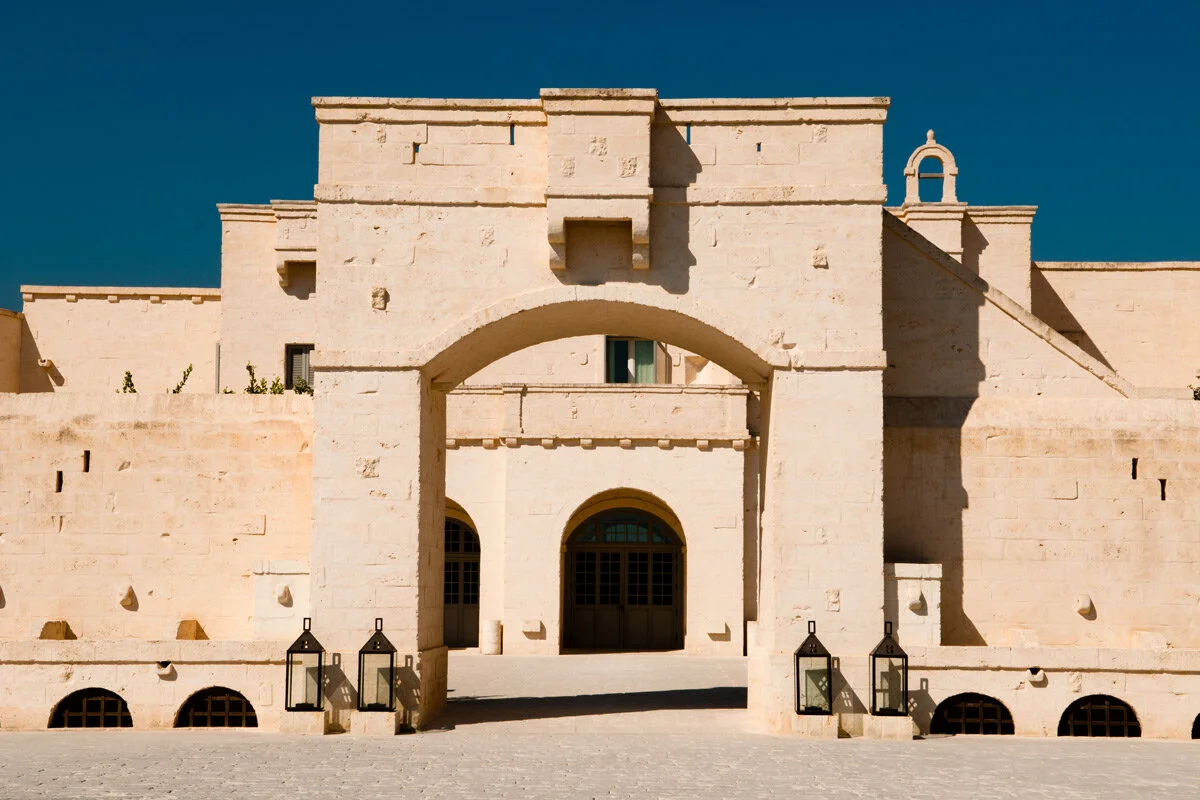
The entrance to the main building, La Corte.
What's New
Borgo focuses on "nowhere else" experiences and is always introducing something new. Recent offerings include Tarant spa treatments for women that are overseen by a local shaman; moisturizing oils and creams infused with local prickly pear, olive oil, and lemon developed by spa director Patrizia Bortolin; and beachy fashions from the concept shop, like chic caftans from UK-based niche brand Soler, tailored linen shirts custom-made for Borgo by Angelo Inglese, and the latest Allagiulia espadrilles. There is also a new pizza lunch spot and an ever-changing lunch buffet with fish crudo mixed to order.
The hotel also hosts Festa del Borgo three times each summer. The celebration features Apulian food and drink, local customs like the pizzica dance, a horse show that has steeds step in time to music (no joke), and demonstrations of beadwork and other local crafts. For kids, these nights are magical and worth planning a visit around. The luminaria-lighted central piazza and its surrounding streets twinkling with white lights make for the perfect place to stake out a table and savor the feast.
What's On Site
Literally everything you could wish for. Nothing has been overlooked by the Melpignano family, owners of Borgo Egnazia and the local boutique brand of San Domenico Hotels. The service is attentive and relaxed at the same time, from the moment you recieve a welcome drink in your spacious, light-filled room to the minute you want a spur-of-the-moment warm-stone Mascior massage.
There are several tennis courts and three pools — a swimming pool for families and two peaceful adult pools decked with sun loungers and shades and glasses of chilled Prosecco that seem to come out of nowhere. San Domenico Golf Course is across the driveway, and Cala Masciola beach club is a short bike ride away. The club is an ideal spot to spend a day in a cabana gazing out at the azure Adriatic. Water sports like paddle boarding, snorkeling, fishing, and kayaking are available to hotel guests, as are meals of grilled fish and pastas studded with sea urchin at Pescheria da Vito.
One major highlight at Borgo is Vair Spa, a sanctuary with soothing, tailor-made restorative treatments led by barefoot aestheticians. De-stress with herb-infused facials, cocooning cleansing rituals, and aromatherapies made from locally sourced ingredients. This is a destination spa, but guests are encouraged to try something as simple as a Roman bath, an Iyengar yoga class, or a relaxing pedicure. (No grueling workouts or deprivation here.)

One of two adult-only pools.
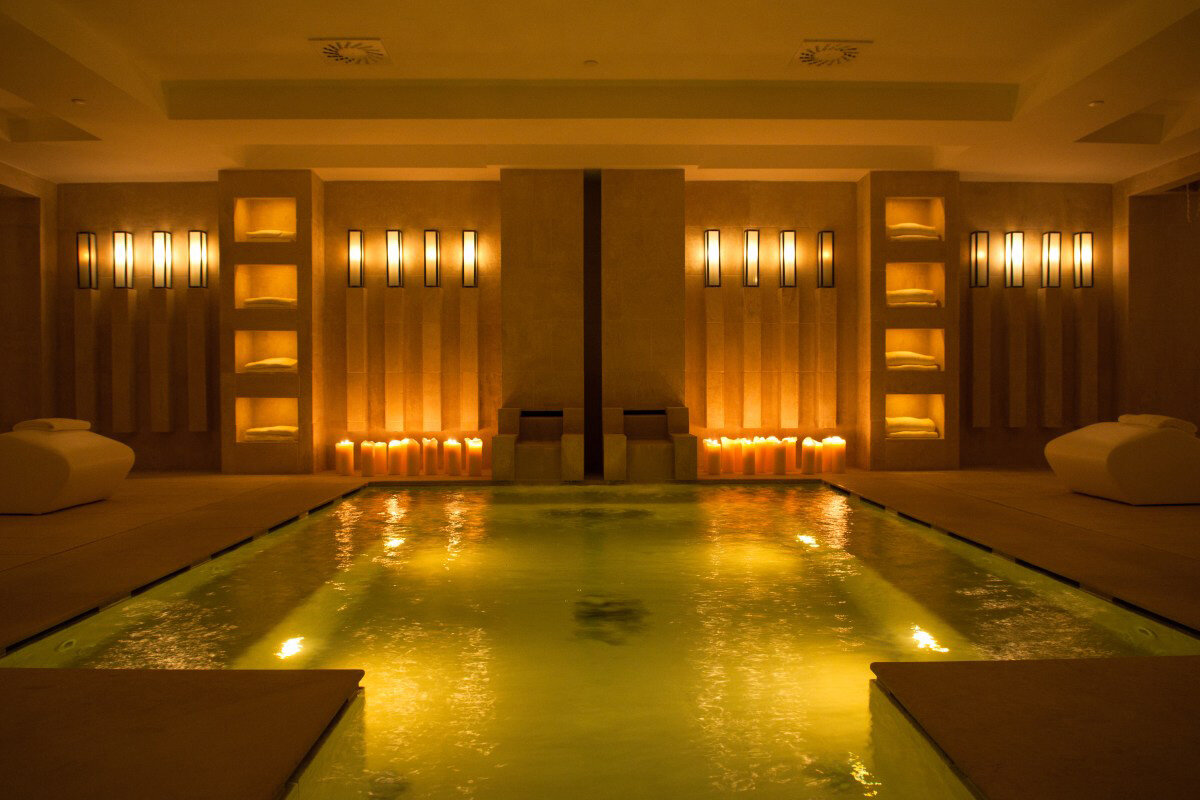
The Roman baths at Vair Spa.
The Food
It's impossible to find a bad meal in this part of the world, and this holds true for all of the restaurants at Borgo Egnazia. My favorites were the most relaxed: La Frasca for a casual breakfast buffet, Trattoria Mia Cucina for crusty, chewy pizza con prosciutto, and my top pick, the chic ocean-front Pescheria da Vito for billowing white linens and just-caught tuna tartare.
For a special evening, I highly recommend Due Camini. The hotel's fine dining option is so wonderfully designed that I barely focused on the cuisine, though it is excellent and traditionally Apulian. Neutral linens, local limestone, and exquisitely simple light fixtures create a magical backdrop reminiscent of a white-washed castle. Savor grilled octopus and house-made gnocchi with tomatoes grown on site, as well as glasses of local red and white wines. Verdeca house white and Negroamara Cabernet by Masseria Li Veli were among the highlights.
In the Room
There are 192 rooms — 63 in La Corte, the main house, and 92 in Borgo, which are sprawling, bi-level casitas. Most have patios or rooftops for sipping an Aperol spritz. Twenty-eight sumptuous villas, some with six bedrooms for all kinds of family configuration, round out the offerings.
Interiors are spacious and light-filled, but in no way showy or luxe: the epitome of understated elegance. Décor is perfectly muted — beige and cream-colored textiles, stone walls made of local materials (like tuff), sleek TVs, minibars with unlimited beverages, and terra-cotta tile bathroom suites.

La Corte Splendida.

A junior suite in Il Borgo.
Rooms with a View
I stayed in three different room types and loved them all. Bi-level room 37 in Il Borgo was perfect for our family of four (with two teens who need separate space), while room 52, a light-filled accommodation, was the ideal set up for two adults. Best of all was room 182 in La Corte, just off the central courtyard. The flowing space felt like a separate house and was in striking distance to the gym, adult pool, and subterranean spa. I'm coming back to stay at a villa. They look toned-down and tasteful, as with everything at Borgo Egnazia.
This Place Is Perfect For
Couples, families with children of all ages, stressed-out people in need of a relaxing spa experience. Also: foodies, sun-worshippers, lovers of the abundant UNESCO World Heritage sites surrounding the property, golfers, swimmers, chic shoppers. I could go on. The beauty of Borgo is that you can choose to see people or be completely, and I mean completely, alone.
But Not So Perfect For
Anyone averse to the heat or the sun. Both are seriously strong. And anyone who doesn't like fish. It's possible to subsist on pasta, but fruits of the sea are the name of the game.

Villa Magnifica.

The dining room at Due Camini.
CHECKING OUT
Neighborhood Vibe
One of the most wonderful things about Borgo Egnazia is its proximity to so much great culture (UNESCO World Heritage sites, medieval towns) and natural beauty (stunning blue grottoes, rocky beaches, and endless verdant rolling hills).
What to Do Nearby
Outside the hotel gates is Savelletri. It might not seem like much at first glance, but the fishing town is unbelievably charming at night. I especially loved dinner at the design-led Pescheria 2 Mari, with lots of glass and the freshest tuna crudo I've ever tasted. The restaurant is a wonderful place to watch the world go by on a summer evening, as is La Taverna di Umberto across the road.
Best of all was lunch at Ricciolandia (SP90, Torre Canne; +39-33-8357-3010), a massive outdoor spot serving freshly caught urchin prepared all sorts of ways. It's breezy picnic table dining that offers a glimpse into local life at very affordable prices. Ristorante Osteria del Porto is another winner for spaghetti alle vongole and grilled seafood served on a deck overlooking the harbor's fishing skiffs.
Just north of Borgo in the seaside village of Poliganano a Mare: incredible mussels and branzino at Da Tuccino, where the warm waitstaff is topped only by unparalleled people-watching from the terrace. The nearby fishing village of Monopoli is also worth an excursion, as is dinner at the atmospheric Porto Ghiacciolo (+39-34-6223-7762), which has white sandy beaches on either side. The embodiment of the Dolce Vita vibe.
No trip to this part of the world would be complete without seeing the trulli, conical stone houses, of Alberobello. It's touristy, so go in early in the morning, then visit the lovely centro storico in the quiet, sweet town of Cisternino.
Ostuni is another highlight, perched on a hillside overlooking the distant sea, where we had several of the most memorable meals of our trip: Casa San Giacomo (Via B. Continelli, 4; +39-32-8138-8457) for a cozy meal in a grotto-like setting, Il Bella Vista for stunning views of olive groves at sunset, and La Sommita for chic cocktails in a hip hotel atmosphere.
Last but certainly not least is Lecce, a historic city with exuberant Baroque masterpieces at every turn. Basilica di Santa Croce, Piazza del Duomo, and the stunning Museo Faggiano are all must-sees. A meal at the new boutique hotel at La Fiermontina is another reason to visit.

A classic combination. Photo courtesy of Osteria del Porto.
PLAN YOUR TRIP
How to Get There
Fly into Bari Karol Wojtyla Airport (BRI) or Brindisi-Salento Airport (BDS). The ride from either is an hour.
Getting Around
I highly recommend a rental car for day trips to nearby Polignano, Lecce, Ostuni, Cisternino, Alberobello, and Savelletri, the sweet seaside town right outside Borgo's front gates.
What to Pack
Bring sunscreen. The sun is searing. The highest SPF I could find was 25, which didn't do much for my pale skin.
Good to Know
The services of Emily Fitzroy, of London-based Bellini Travel, are incredibly useful when planning a trip to this part of the world. Emily is an insider and has access to hole-in-the-wall restaurants like Ricciolandia in Savelletri and scores of impossible-to-book tables at trendy spots like Masseria Cimino. Her incredible team handles everything from car transfers to cathedral tours in Lecce. Consider her the tasteful, connected Italian friend you wish you had.
BOOK IT
La Corte Bella rooms start at $831 per night. Click here for reservations.
BUT WAIT, THERE'S MORE
Do It Like an Italian: Escape to Puglia
A Little Corner of Hotel Heaven in Puglia
Holy Hotel! It's Pure Italian Magic at an Off-the-Grid Convent-Turned-Palazzo
Alice Temperley’s perfect weekend in Somerset and Dorset
The British designer is a champion of artisanal craft and embellishment and celebrated for her romantic ready-to-wear and bespoke bridal gowns
The British designer is a champion of artisanal craft and embellishment and celebrated for her romantic ready-to-wear and bespoke bridal gowns
After years of working at weekends, mine are now focused on enjoying family, food and music. I grew up in Somerset, and when the skies are clear this is the English countryside at its finest, with unspoilt views in all directions and space for the children – my son Fox, eight, and my boyfriend Greg’s two – to run wild. It is where days seem longer and silence envelops you. I think of my weekends here as la dolce vita Somerset-style; it’s a breathtaking place.
Our light-filled house is beautiful, wonderfully impractical and hopelessly romantic. It was previously owned by Lord Beaverbrook, who held secret war meetings here and played host to Winston Churchill. There’s also a folly that was built on the remains of a medieval castle; it contains the ruins of a Tudor bear pit and a dungeon, which I threaten the children with on occasion.
Saturday mornings often begin in my beloved disco bath, which is freestanding, mirrored and surrounded by gigantic windows. Then I’ll cycle down to Bridport to seek creative inspiration at the antiques and vintage market – it is full of diverse vendors and is a great place for bric-à-brac and the eclectic pieces I collect for the house. The Red Brick Café there serves delicious falafel and local greens.
This small town feels old-fashioned and otherworldly compared to London. I’ll pop into Bridport Old Books, which is good for stories about bygone Somerset and classic fairytales. I also like Malabar Trading for kilims and Indian silk shirts, and Samways, a fishmonger where I buy samphire en masse when it’s in season.
After I’ve had a good look around, I’ll try my hardest to cycle up the gruelling hills from Bridport to Lyme Regis to meet Greg and the children for lunch. We are regulars at Hix Oyster & Fish House, my friend Mark Hix’s Dorset outpost, where we’ll enjoy oysters and great rosé – particularly if Mark is in residence – which gives me a very good excuse not to cycle the 12 miles home.
Afternoons are usually spent in the garden, lounging on rugs, playing kiss-catch, making bonfires and watching the sun sink. I might spend a few hours playing old records and fiddling around with a painting I never have time to finish.
Later we’ll often go to Hauser & Wirth for a cocktail and some contemporary art before returning home for an evening of good friends, great wine and a mix of music. Thankfully Greg is a brilliant cook as we usually have 20 people around the table – an eclectic bunch of family, arty friends and kids – for a whole salmon or a big roast. In an ideal world I’m in bed by 9pm, but this rarely happens.
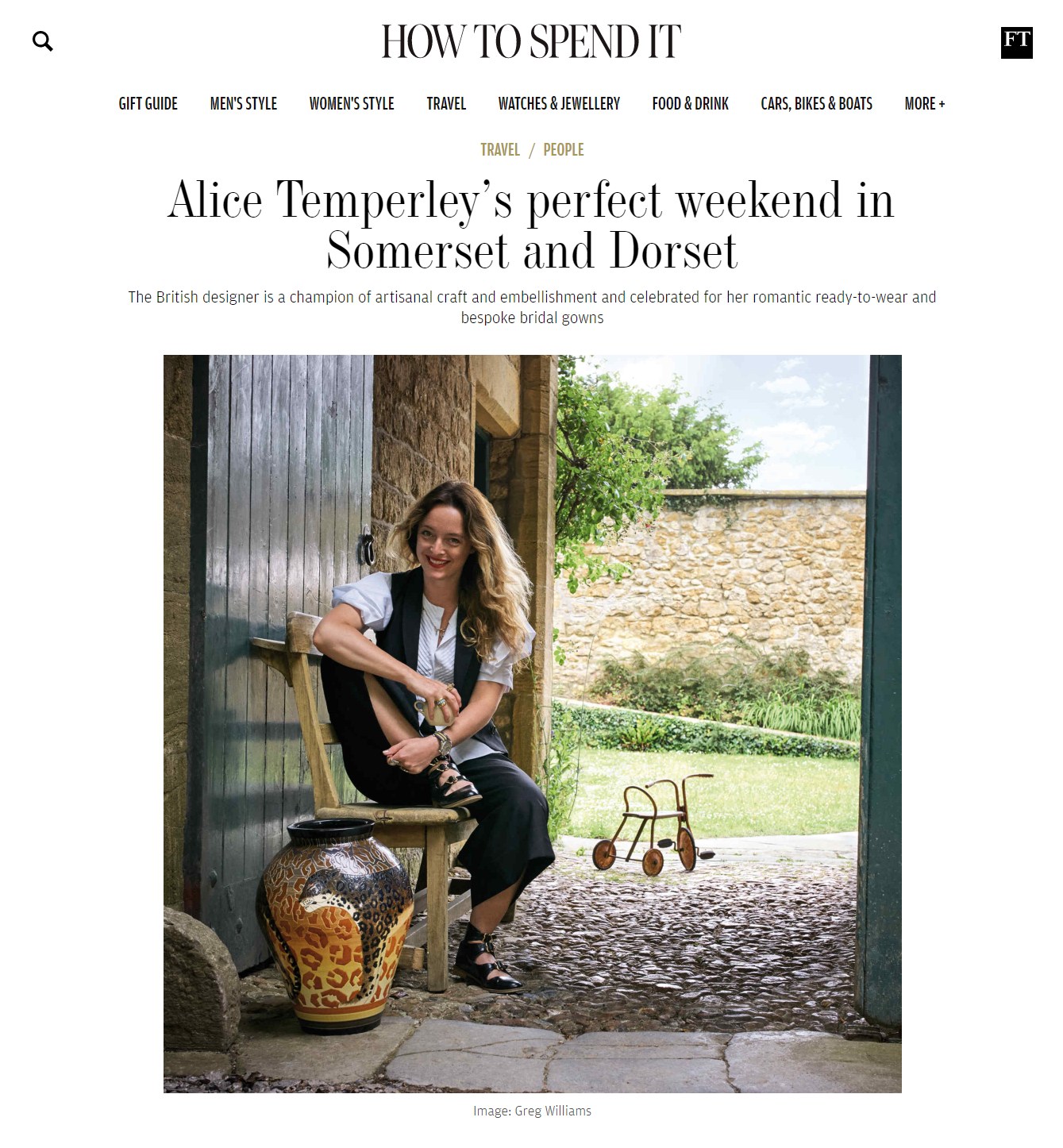
On Sunday mornings, after a flick through the FT and Sunday Times weekend supplements, we might go to Dennis China Works [pictured] up the road for breakfast. It has an amazing array of pottery that’s popular with collectors and is my favourite place to buy bespoke pots, plates and bowls for wedding presents.
Sunday lunches tend to be long and I have implemented a policy whereby friends and family each contribute a dish. My parents bring lamb, fresh pear cider, vegetables from their garden and my father’s amarelle cherries that have been soaked in eau du vie. My sister Mary lives in a converted chapel up the road and her family piles in too. The dining room is lively and inevitably finds the children having a breakdance contest.
Sunday evening still feels like a school night to me. We’ll stay in the country as long as possible before heading back to London with the kids in their pyjamas. Weekends in Somerset are like a tonic – a time to empty my head and enjoy the people around me. I always leave longing for one more day.

Minyatür Istanbul
This magical Istanbul emporium is packed to the gills with nautical antiques and attracts visitors from collectors to royalty
This magical Istanbul emporium is packed to the gills with nautical antiques and attracts visitors from collectors to royalty
In the heart of Istanbul’s labyrinthine Grand Bazaar is an Aladdin’s cave that seems to have been lifted from the pages of Jules Verne’s 1870 sci-fi classic Twenty Thousand Leagues Under the Sea. A magical emporium packed to the ceiling with an intriguing inventory of nautical antiques, Minyatür was founded in 1962 by Hasan Yedek and Halit Altuncu and is overseen today by Yedek’s son, Haluk, himself a passionate collector and seafaring historian.

Image: Mathias Depardon
“Every customer finds something different here, something special – objects for their homes, offices or restaurants. These are rare pieces that create a nautical ambience,” says Haluk of the enormous globes (from $500), sextants (from $1,000) and Soviet-era wall-mounted submarine phones (from $1,500) that have become a Minyatür speciality. The sheer scope of the stock – faded vintage postcards (from $20) bearing images of the Hagia Sophia and the Bosphorus, a c1790 English Dollond library telescope ($4,000) or sundials (from $1,000) of Chinese, Persian and Arab origin – attracts a wide range of visitors, from collectors to tourists to the King of Morocco.
“He bought several ships’ windows and a magnifying glass for his young daughter, but also spied a framed prayer on the wall that wasn’t for sale,” says Haluk. “He liked it so much I gave it to him. His consul later returned with a beautiful thank you letter from the king, and it now hangs in the prayer’s place.” This generous spirit is one of Minyatür’s draws, as Haluk enthusiastically shares his vast maritime know-how with all who come through the door. Indeed, many of Istanbul’s best guides bring their clients here for an intimate, museum-like experience that is both entertaining and educational.
These impromptu lessons in maritime history might focus on Haluk’s prized offerings from the Ottoman period – such as a brass compass ($1,000), pocket watch ($1,250) or ruler ($600) – which often feature exquisite inscriptions. Or they might examine some other still-functioning nautical instruments: wooden and folding cameras (from $200) by Voiglönder, Agfa and Leica; English wall clocks (from $500) by Smiths and Kelvin Hughes; and German microscopes (from $650) by Leitz, often in mint condition.
Were it not for Haluk’s guidance (lucky visitors might also find the founders in store, talking business over tea, as well as Haluk’s brother Faruk, who helps with restoration), the selection could seem overwhelming. As well as brass jewellery boxes (from $200) and even delicate Limoges tea sets ($150), all of which were once used on sailing vessels, there are collections of polished silver canes (from $300, some intricately filigreed, others sculpturally simple), delicate magnifying-glass necklaces (from $100) and ships’ bells (from $750) in varying sizes, all adding to the oceanic scene. “The way we curate the objects creates a unique experience that is part of the culture and heritage of Turkey, and specifically of Istanbul,” says Haluk. Minyatür may be in the buzzing bazaar, but it is also a portal to a bygone age of seafaring adventure.

Tour an Airy Hillsborough Home
The desire for streamlined, lighthearted living drew an active, outdoorsy family with three teenagers to this home in leafy Hillsborough, says interior designer Heather Hilliard. Built in the ’90s in a postmodernist style, the 7,800-square-foot house was transformed by Hilliard and architect Stephen Sutro from a warren of small, underutilized rooms into an elegant, light-filled space.
After taking the structure down to the studs, Sutro and colleague Brooks McDonald devised a new layout to maximize flow around a central axis, and the outdoors were drawn in via the addition of walls of glass doors to the family room, living room and kitchen. Modern stepped crown molding, millwork and new oak flooring were also added to create a “rich, layered look,” explains Sutro. Outside, the original yellow stucco was replaced by a warm gray hue “to make the corners crisp,” Sutro notes, a new metal roof was added, and landscaping updates included refreshes to the pool and tennis court.
Perhaps the most significant stroke is the new foyer, where a sweeping, circular staircase connects the first and second floors, creating a dramatic entrance. Hilliard hung sculptural, overscaled Tom Dixon Mirror Ball pendants in the 24-foot-high space. “The pendants connect the spaces, and their scale is unexpected,” says Hilliard. “It’s a rhythm we used throughout—beautiful pieces interspersed with ample negative space.” An oversized pivot door designed by Sutro also “creates a welcoming sense of arrival,” she adds.
Extending from the entry is a hall painted in Farrow & Ball’s crisp Wimborne White, a hue chosen to “create a gallery-like setting that offsets the couple’s art collection,” says Hilliard. The focal point of the space is Katy Stone’s Constellation—a wall-mounted work in metal that casts changing shadows throughout the day.
To accommodate the family’s preference for low-key entertaining, Hilliard and her associate Phebe Apgar Williams created two separate arrangements in the living room. One is a seating area anchored by a sofa in a textural bouclé weave from Zinc Textile that they paired with white Mongolian chairs and custom ottomans. The designers also showcased large-scale works by female artists including Cynthia Ona Innis, Amy Kaufman and Suzanne Caporael. The opposite end of the room features a gaming area centered on a custom billiard table and a custom leather cabinet for cue storage. Bold blue drapery panels in a Jim Thompson silk add a luxurious yet thoroughly modern feel to both spaces.
Just off the living room, the office is connected to bustling family activity, but glass pocket doors also afford it privacy. The cozy, clubby space has built-in cases lacquered in deep blue, and the walls are clad in blue tone-on-tone Phillip Jeffries grasscloth. Hilliard also designed a custom desk in varying shades of indigo. The blue story continues in the ever-so-slightly formal dining room, where C&C Milano linen sheers glow indigo when backlit, and a cloud-like Ted Abramczyk fixture seems to hover above an Antoine Proulx dining table.
One of the most dramatically altered spaces is the combined family room and kitchen, which now has 10-foot ceilings that maximize views of the terraces and plantings beyond. Many meals are enjoyed at an island topped with a Golden Laza slab. “This stone looks like a watercolor, with warm touches that are subtle and diffuse,” says Hilliard.
Upstairs, the relaxed sensibility continues. Giant Sea Urchin pendants from Coup D’Etat illuminate the playroom, where large swivel chairs, a homework table and a massive screen accommodate both studying and family movie night. Just down the hall are the children’s rooms and the master suite, a study in serene grays and blues.
“There is a lot of joy with this family,” says Hilliard. “I think this home reflects that spirit.” Adds Sutro: “The house is a balance of contemporary quality with friendly, modern elements. Above all, it isn’t too precious.”
A version of this article appeared in the June/July 2016 issue of SFC&G (San Francisco Cottages & Gardens) with the headline: Breathing Room.

Cookies for connoisseurs in Copenhagen
Leckerbaer’s sweet treats taste as good as they look
Leckerbaer’s sweet treats taste as good as they look
Everything is design-led in Denmark. And that includes the sweet treats at Leckerbaer in Copenhagen’s Østerbro district – a cosy, 16-seat patisserie housed in a former butcher’s shop that is among my favourite finds in this picturesque city. With fragrant smells wafting in from the bustling kitchen, its art-like small delicacies – from classic butter biscuits and little cakes to cream puffs, brownies and biscuits – are available in varying hues, shapes and flavour combinations (first picture), all meant to be savoured in two or three bites.

Founded in 2015 by chefs Jakob and Gabi Bär Mogensen, Leckerbaer translates their Michelin-starred training into sophisticated takes on traditional desserts. Sampling is the name of the game here, and the cookie creations can be bought singly (DKr15 each, about £1.70) or in boxes of eight (about £11, second picture), 12 (about £15) or 16 (about £18) – in streamlined brown packaging for takeaway customers.
We opted for a dozen treats – profiteroles bursting with creamy vanilla and salted caramel fillings; shortbread with hints of mint and chocolate; hindbærsnitte (raspberry slices) topped with thick marmalade and raspberry jam; and a featherweight, passion-fruit-infused meringue – all of which tasted as good as they looked. Leckerbaer also offers an elevated take on the classic Oreo cookie (mælk), which, with its crispy chocolate wafers and vanilla filling, was the perfect accompaniment to my seriously strong cup of coffee.
All of the spectacular concoctions here are made using the highest quality, sustainable ingredients such as Felchlin chocolate from Gabi’s native Switzerland. In addition to the smaller nibbles, proper puddings are on offer, including a lemon verbena sorbet – but raspberry and lemon-curd trifle beckoned.

This Kettal Executive Trusts Word of Mouth Above All Else
Alex Alorda's father launched the Barcelona-based outdoor furniture maker over fifty years ago but the young vice president has his eyes fixed on the future.
Alex Alorda's father launched the Barcelona-based outdoor furniture maker over fifty years ago but the young vice president has his eyes fixed on the future.
Your father founded Kettal in 1964 and is still the president. What did he teach you about running a business that has helped you in your role as vice president?
He taught me the enduring values of consistency and common sense, as well the importance of being humble. He also taught me—all of us at the company—how to manage and empower people. He’s no longer involved in the day-to-day running of the company, but he comes often to have lunch.
How has the marketing strategy changed from the 1960s when Kettal threw branded beach balls out of an airplane onto the crowded beach below?
Our marketing strategy today is entirely by word of mouth. The hospitality industry is a smaller world than people think, and one project often leads to the next with hotel groups, and with our other customers as well.
How important is it that Kettal products be made in Spain?
Our company is more of a “project” that’s by people, for people. Everyone who works here feels linked to the product. Our factory is set up to work directly with the designers, and because everything is produced in and around Barcelona, we can control the quality and explain our values—without anything getting lost in translation.
You’ve collaborated with design greats like Patricia Urquiola, Jasper Morrison, and Nanna Ditzel. How do you choose these partners?
We don’t collect designers. We work with people who share our passion and we help make their designs a reality. Patricia Urquiola is a godmother to us all and she helped transform the company from one that made garden furniture to one that makes design furniture for the outdoors. She changed our mentality and that was a great opportunity. Patricia’s a cat with nine lives—always reinventing herself—and we’ve been producing collections with her for more than 12 years.
What other lessons have you learned from your design partners?
One of my favorite Jasper stories happened at the Milan Furniture Fair. He came on a Sunday when five of us were setting up the Kettal booth. We were exhausted and he pointed out that this hands-on approach was actually our strength: We have fewer people doing things, but we do them right. This was a very important insight for me.
What, in your mind, is good design?
Jasper Morrison said it best: “A design that is still in production after 30 years is a good one.” You will never create a good design with only a good designer—you also need a good company to make good things. Good designs involve long-lasting materials and are still being made years after their original production. Chairs by Charles and Ray Eames and Jean Prouvé that are still being made by Vitra are prime examples of this.
Whom would you like to collaborate with?
It’s too bad the Eameses are dead, and Jean Prouvé, too, as I would have loved to collaborate with them. We are always looking for people with long-term vision, original ideas, and who understand our ethos.
What are some of your most notable recent projects?
It was an honor to be a part of the Fondation Louis Vuitton project [in Paris]: the architecture, the outdoor spaces—everything is stunning. A new project for JW Marriot Los Cabos is another very rational, timeless project, and the Oasia Hotel in Singapore that we recently did with Patricia [Urquiola] is cutting-edge and colorful.
In terms of the perfect outdoor setting, where might it be?
This is almost impossible to answer, but both Minorca and Formentera have some of the most beautiful beaches in the world.
In an ideal world, what products might be next?
The wheel has already been invented, we just need more good wheels.

Michele Bönan talks personal taste: Part Two
The architect and interior designer rounds up his list of likes with Hubert de Givenchy, Iranian caviar and David Bowie’s single, Lazarus
The architect and interior designer rounds up his list of likes with Hubert de Givenchy, Iranian caviar and David Bowie’s single, Lazarus
My style icons include the impeccable Gianni Agnelli, Hubert de Givenchy and the Duke of Windsor – all of whom were beautifully dressed and carried themselves with great ease. The restaurateur Arrigo Cipriani is another man of style who has the gift for making everyone feel perfectly at home.
I never leave home without one of the watches I like to collect and my grey New Balance trainers. I like to jog wherever I go in the world – from Taiwan to Los Angeles to London – as it’s a great way to explore. I am a bit like James Bond – a man of style – so I often travel with a tuxedo and a bathing suit. You never know… From £44; www.newbalance.com.

Tortelli being prepared at Clinica Gastronomica Arnaldo, Rubiera | Image: Nikoboi
A recent “find” is the restaurant Clinica Gastronomica Arnaldo in Rubiera, between Modena and Reggio Emilia. This simple spot serves the most delicious stuffed pastas such as cappelletti and tortelli, as well as bollito misto – the classic Italian meat stew – in a warm, familial atmosphere. Piazza XXIV Maggio 3, 42048 Rubiera (+3905-2262 6124; www.clinicagastronomica.net).
The sight that inspires me is the sunset as seen from our house in St Tropez. The flowers there – lavender, violets – are beautiful and perfume the surrounding landscape. At the end of the day, the light is gorgeous and this is the best place for me to relax and get new ideas.
My fail-safe jet-lag cure is a gin and tonic with cucumber – preferably at Claridge’s bar. Flying private helps a lot too… Brook St, London W1 (020-7629 8860; www.claridges.co.uk).
The last meal that truly impressed me was at our friend’s winery – Colle Bereto – in Chianti. This part of Tuscany is just spectacular and we sat outside under a pergola at a long, beautiful table. Everything we ate – from the mozzarella that was made before our eyes, to the tomatoes and salad from their garden – was so natural and flavourful, and, of course, the Chianti Classico and Il Tocco wines were wonderful as well. Radda in Chianti, Siena (+390577-738 083; www.collebereto.it).

The Goat, 1950, by Picasso, at Musée Picasso, Paris | Image: Tuul and Bruno Morandi/Alamy Stock Photo
An object I would never part with is a leather chair of my own design that is broken in and very comfortable. It is made of two types of leather – boar and cowhide – in natural colours, and is elegant and timeless. More importantly, I would never part with my wedding ring, which, in fact, is very difficult to take off. This simple gold band is now literally a part of my hand.
An indulgence I would never forgo is really good Iranian caviar with a little bit of tomato and blinis. Our whole family loves caviar, especially when it’s served at a special Sunday lunch at the Four Seasons in Florence. The food there is excellent and I go when I know chef Vito Mollica is cooking. Borgo Pinti 99, 50121 Florence (+3905-526 261; www.fourseasons.com).

Colle Bereto vineyard, Chianti | Image: Alessandro Moggi
The last item of clothing I added to my wardrobe was a handmade, cream-coloured cashmere sweater given to me by my aunt. It’s practical and goes well with the jeans I wear all weekend.
The people I rely on for grooming and wellbeing are Tomasso at Mario di Via Della Vigna Nuova salon in Florence for my monthly haircuts, and the masseurs at the Heurigen Spa at the Jagdgut Wachtelhof hotel in Hinterthal in Austria, where I enjoy a good, strong massage. My son Sky is my excellent personal trainer and he keeps me motivated. Da Mario di Via della Vigna Nuova, Via Vigna Nuova 22, 50123 Florence (+3905-529 4813; www.mariodiviadellavigna.it). Jagdgut Wachtelhof, Urslaustrasse 7, A-5761 Maria Alm - Hinterthal (+436584-23888; www.hotelwachtelhof.at).
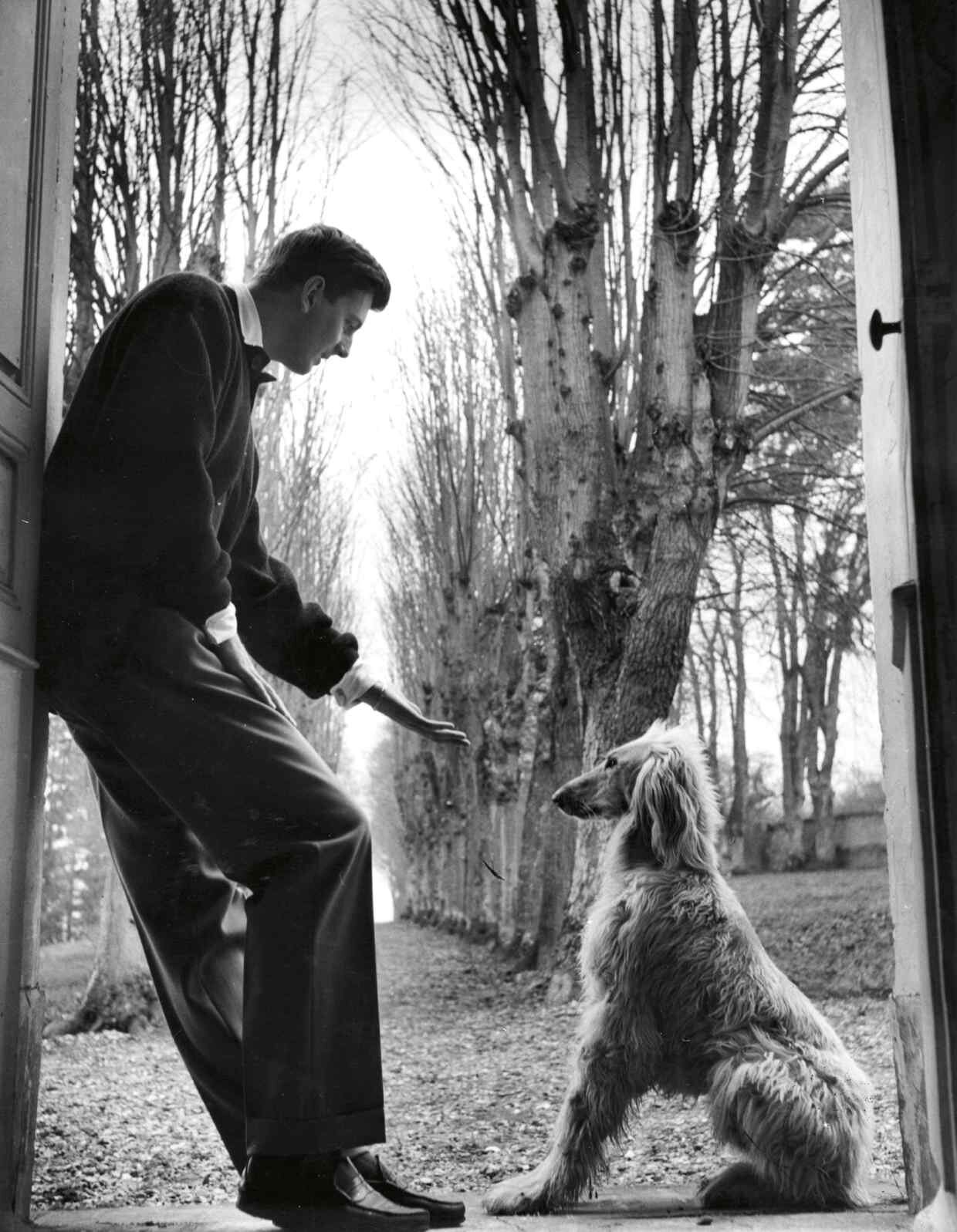
Hubert de Givenchy with his afghan hound | Image: Picture Post/Getty Images
The one artist whose work I would collect if I could is Alberto Giacometti. I love his drawings and sculptures, and since they are impossible for me to buy, I advise my clients to do so instead… I also love the white Concetto Spaziale works by Lucio Fontana – one can always dream.
If I didn’t live in Florence, the city I would live in is Paris. I love the Palais Royal and would like to own a house there, to be near the gardens. Every part of this light-filled city is a museum, but I’d like to spend more time at the Louvre, the Musée d’Orsay, the Musée Picasso and the area surrounding Le Marais. I love to hunt for unusual, difficult-to-find pieces for my clients at the Marché Paul Bert Serpette, and Chez L’Ami Louis is one of my favourite restaurants anywhere for both the food and the intimate atmosphere. Chez L’Ami Louis, 32 Rue du Vertbois (+331-4887 7748). The Louvre, +331-4020 5050; www.louvre.fr. Marché Paul Bert Serpette, 96-110 Rue des Rosiers (+331-4011 5414; www.marcheauxpuces-saintouen.com). Musée d’Orsay, 1 Rue de la Légion d’Honneur (+331-4049 4814; www.musee-orsay.fr). Musée Picasso, 5 Rue de Thorigny (+331-8556 0036; www.museepicassoparis.fr).
If I had to limit my shopping to one neighbourhood in one city, I’d choose the Oltrarno in Florence. Silversmith Argentiere Pagliai is a must for beautifully made picture frames and cutlery, while Laboratorio di Moleria Locchi is a centuries-old studio full of handblown crystal vases and tableware. For contemporary furniture I like Flair for one-of-a-kind and Danish modern pieces. The Vennari Gioielli showroom is another very special place full of jewellery and cufflinks that are made using materials like onyx, mother-of-pearl and enamel. Argentiere Pagliai, Borgo San Iacopo 41R (+39055-282 840; www.argentierepagliai.it). Flair, Lungarno Corsini 24R (+39055-267 0154; www.flair.it). Laboratorio di Moleria Locchi, Via Domenico Burchiello 10 (+39055-229 8371; www.locchi.com). Vennari Gioielli, Via de’ Tornabuoni 1 (+39055-291 832; www.vennarigioielli.com).
The last music I downloaded was David Bowie’s final single Lazarus. This song is particularly powerful as it was released shortly before his death. I have to credit my son with this one as I typically listen to classical music – mostly Mozart – while I work, or when I sketch and paint.
The books on my bedside table are often from Assouline and are focused on art and design. I am currently reading The Big Book of Chic by American interior designer Miles Redd. I also like the positive psychology of the Dalai Lama’s The Art of Happiness. More often than not, though, my nights are devoted to reading history books with my children. www.assouline.com.
If I weren’t doing what I do, I would be a painter. I love to draw and paint whenever I have spare time, and this carries over into a lot of the design work I do now. I love abstraction and brilliant colour, and in an ideal world, I’d paint like Picasso. Directing movies holds appeal as well…
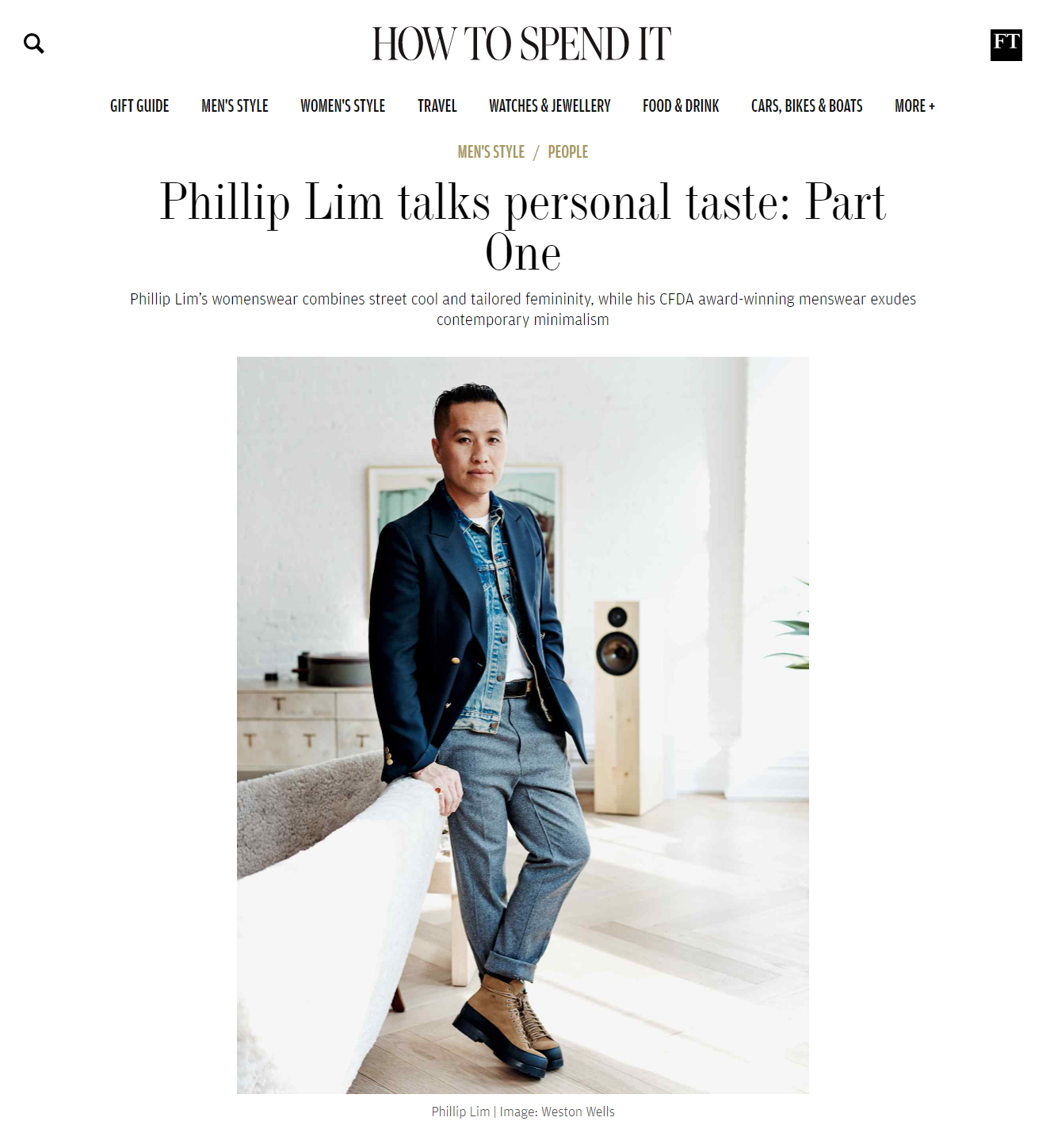
Phillip Lim talks personal taste: Part One
Phillip Lim’s womenswear combines street cool and tailored femininity, while his CFDA award-winning menswear exudes contemporary minimalism
Phillip Lim’s womenswear combines street cool and tailored femininity, while his CFDA award-winning menswear exudes contemporary minimalism
My personal style signifier is dressing in navy blue – whether that’s jeans, a jumpsuit or a tailored jacket – and I always have a scarf to hand. I like them for all seasons, in every fabric – wool, cashmere, silk and lighter linens; I collect them wherever I travel. I am a classicist at heart but always like to have an edge.

Lim’s brass Tibetan prayer bowl from a trip to the Himalayas | Image: Weston Wells
The last thing I bought and loved was a Santa Clara Pueblo vase from New Mexico. The beautiful redware pottery reminds me of the light on buildings in towns I visited there, like Santa Fe and Las Cruces.
And the thing I’m eyeing next is a Conoid bench [pictured] by American woodworker George Nakashima. I’m inspired by things that incorporate nature and show the hand of the artisan; this sculptural piece is a hefty plank of wood, the grain clearly visible, with a simple back and legs. It would look great in the living room of my loft. About $15,000; www.nakashimawoodworker.com.

Sound & Color by Alabama Shakes
The last music I downloaded was the Alabama Shakes album Sound & Color. It combines elements of jazz, blues and Southern rock into a totally modern sound. I equate them with someone like Amy Winehouse – a disrupter, a fresh voice on the contemporary music scene.

American black walnut Conoid bench by George Nakashima, about $15,000 | Image: George Nakashima Woodworker
A recent “find” is a store called Cowboys and Indians in Albuquerque, New Mexico. It is filled with antique treasures, from Navajo rugs to Cherokee baskets and jewellery. I bought some beautiful 1930s Mexican silver and turquoise bracelets. 4000 Central Ave SE, Albuquerque, NM 87108 (+1505-255 4054; www.cowboysandindiansantiques.com).

Bronze A Muse, 1917, by Constantin Brâncusi | Image: © Bridgeman Images © ADAGP, Paris and DACS, London 2016
The sight that inspires me is the Atlantic Ocean, as seen from the East End of Long Island. I call this stretch the “green velvet rage” because the combination of sand and rolling waves creates a particular colour. It clears my mind and fills me with gratitude.

Hermès Poivre Samarcande, £167 for 100ml EDT
The last meal that truly impressed me was a dinner en plein air at North Brooklyn Farms, a community green space in Williamsburg. The early fall night was magical and we ate with a view of the Manhattan skyline. The food was prepared by Williamsburg farm-to-table restaurant Marlow & Sons, and the burrata, poached bass with shaved fennel and peach-basil macaroons were very special. Everyone – even guests who have been all over the world and are hard to impress – was seduced by the meal’s simplicity. 320 Kent Ave, New York, NY 11249 (www.northbrooklynfarms.com).
The artists whose work I would collect if I could are Constantin Brâncus¸i – his sculptures often inform my designs – and Francis Bacon, whose work is classical yet savage, beautiful yet grotesque.
The best souvenir I’ve brought home is a brass Tibetan prayer bowl from when we shot our fall 2015 campaign in the Himalayas. It is traditionally used in monasteries to cleanse the atmosphere and makes a beautiful sound. It sits in my living room and reminds me of a trip that perfectly combined work and play.
The grooming staples I’m never without include Poivre Samarcande fragrance by Hermès, which I wear all the time; it is subtle yet distinctive, so I don’t smell like everyone else. I like the Eye and Lip Smoother from Australian skincare line Sodashi because it’s free from parabens and anything artificial, and Como Shambhala’s Invigorate Shampoo, which is very refreshing. Como Shambhala Invigorate Shampoo, £14 for 300ml; www.comoshambhala.com. Hermès Poivre Samarcande, £167 for 100ml EDT; www.hermes.com. Sodashi Eye and Lip Smoother, £90 for 30ml; www.sodashi.co.uk.
An indulgence I would never forgo is my triple black Porsche 911 Turbo. This is my fourth – I trade them in every three years – and I love to drive it out east at the weekend. It’s called Beyoncé.
My favourite websites are OliverGustav.com for this Danish designer’s made-to-order furniture; HavenShop.ca, a Canadian men’s streetwear site; TheEndofHistoryShop.blogspot.com for ceramics and gift ideas; and NYTimes.com for daily news.

Phillip Lim talks personal taste: Part Two
The fashion designer rounds up his list of likes with spicy sauces, a thirst for Buddhist knowledge and rebooting in his steam shower
The fashion designer rounds up his list of likes with spicy sauces, a thirst for Buddhist knowledge and rebooting in his steam shower
My style icons are people who have confidence in their looks combined with a slight eccentricity, such as designers Stefano Pilati and Phoebe Philo. Fashion blogger Leandra Medine – aka Man Repeller – carries herself with great style and confidence as well. These three look true to themselves; they’re not trying too hard.
An unforgettable place I’ve travelled to in the past year is Bhutan. This country is literally heaven on earth; it’s both geographically stunning and incredibly spiritual as it’s the last Buddhist kingdom. I stayed in a series of Aman Resorts and each one was individual and authentic. www.aman.com.

Image: Weston Wells
The last item I added to my wardrobe was a pair of suede hiking boots from my menswear line, for navigating the streets of New York in style throughout the seasons, and several handwoven scarves [second picture] embellished with tribal patterns that I picked up on a trip to Ethiopia.
In my fridge you’ll always find a variety of hot sauces – including Sriracha, Cholula and my mother’s very spicy, secret blend – which I use on vegetables and meat dishes; fresh fruit and veg; ginger for cooking; coconut water; and unpasteurised sake.
If I had to limit my shopping to one neighbourhood in one city, I’d choose SoHo in New York, where you can find everything in a tight radius. I love If for high-fashion labels you can no longer find easily elsewhere, and De Vera for rare objects and curiosities. Modernlink is great for Scandinavian furniture, while Double Knot is a wonderful shop full of vintage and one-of-a-kind carpets. The excellent local butcher, Japan Premium Beef, has the best cuts of meat. De Vera, 1 Crosby St (+1212-625 0838; www.deveraobjects.com). Double Knot, 13 White St (+212-966 9113; www.double-knot.com). If, 94 Grand St (+1212-334 4964; www.ifsohonewyork.com). Japan Premium Beef, 57 Great Jones St (+1212-260 2333). Modernlink, 35 Bond St (+1212-254 1300; www.modernlink.com).
The best gift I’ve given recently was a first birthday party for my godson. It was held at a children’s play centre called Kidville in Brooklyn and included a great group of people – both young and old. Turning one is a huge accomplishment and I was happy to celebrate with him. 808 Union St, Brooklyn, NY 11215 (+1718-569 2150; www.kidville.com/parkslope).

Image: Tadasu Yamamoto
And the best one I’ve received recently was a brass bangle from my guide on a trip to Ethiopia. He belonged to the Amhara and I admired his stack of bracelets that jangled to make music. He took one off and presented it to me. It was such a personal and meaningful gesture.
An object I would never part with is a black naga stone given to me by the queen mother of Bhutan, Gyalyum Sangay Choden Wangchuck. I was introduced to her on a recent visit through a mutual friend and we had a very special connection. She insists I must have been Bhutanese in a past life and gave me this very special holy stone from her garden. It now sits in my bedroom at my home in SoHo.

Image: Divine Light Photography
My favourite room in my house is my steam shower. It’s a spare, simple space and the place I go to relax and reboot.
If I didn’t live in New York, the city I would live in is Tokyo, where each neighbourhood has a distinctive feel; it’s a city of both chaos and convenience. From Aoyama to Daikanyama to Omotesando, I love the original street style and the diversity of architecture, the great food, vintage shopping and excellent hotels such as the Park Hyatt. And I’d like to spend more time exploring Naoshima’s “art island” with its incredible museums, including the Benesse House Museum [third picture] and Ando Museum, and high-tech installations. The Japanese treat everyone with respect and they all possess a certain elegance. Ando Museum, 736-2 Naoshima, Kagawa (+8187-892 3754;www.benesse-artsite.jp/en). Benesse House Museum, Gotanji, Naoshima, Kagawa (+8187-892 3223; www.benesse-artsite.jp/en).Park Hyatt Tokyo, 3-7-1-2 Nishi Shinjuku, Shinjuku-Ku (+813-5322 1234; www.tokyo.park.hyatt.com).
The people I rely on for personal grooming and wellbeing are Mark Bustos of Three Squares Studio [fourth picture] for my regular haircut – he’s a great stylist and gives haircuts to the homeless every Sunday, which I think says a lot about him; and my physio Dr Nina Figueroa of Base Physical Therapy, who keeps me aligned. Base Physical Therapy, 47 West 14th St, New York, NY 10011 (+1917-533 4535; www.basept.net). Three Squares Studio, 444 West 17th St, New York, NY 10011 (+1917-847 3384; www.threesquaresstudio.com).
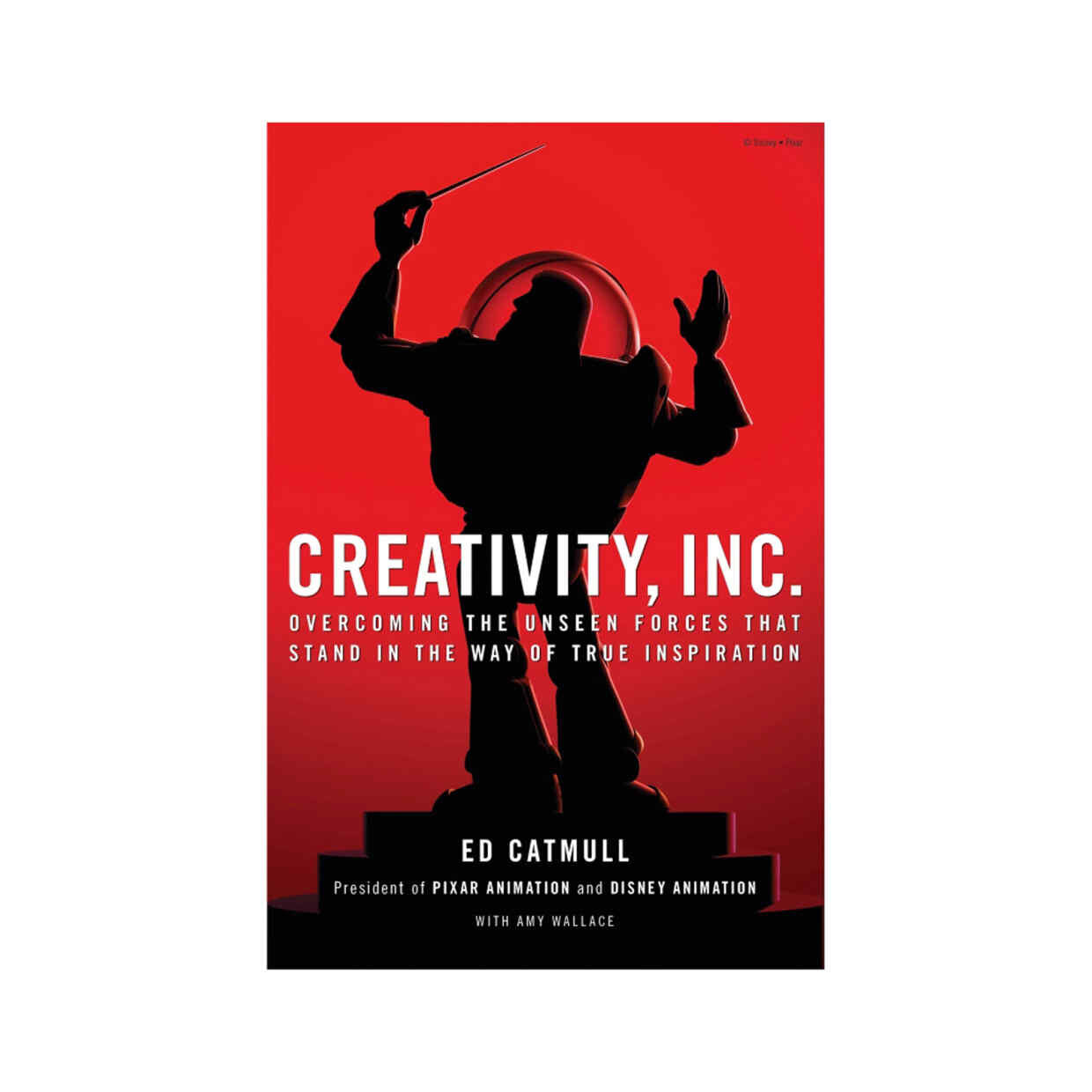
The books on my bedside table include Creativity, Inc. [fifth picture] by Pixar president Ed Catmull, and Start Where You Are by Pema Chödrön, which is all about developing compassion towards others. I also have The Diamond Cutter – a book that fuses Tibetan Buddhism with practical business strategy. I love self-help books and acquiring knowledge.
If I weren’t doing what I do, I would be a farmer with plenty of land to harvest and lots of sunshine. In an ideal world, I’d be a seaweed farmer in Thailand so I could be near the ocean as well.

The Nordic Approach of Index
Kigge Hvid, CEO of Index, promotes sustainable solutions to global challenges.
Kigge Hvid, CEO of Index, promotes sustainable solutions to global challenges.
You’re the head of “Index: Design to Improve Life.” How has it changed since its founding in 2002?
Index set out to be a big award for traditional design, but that wasn’t going to happen with me in the lead. We’ve grown organically and shifted the focus away from aesthetics and toward making life better for people all over the world. We began with the design award and have grown to include education programs for teachers, decision makers, and kids. We are now raising the world’s first venture capital fund to invest in Design to Improve Life. The initiatives were just formed in partnership with the Dansk OTC. Together we’ll identify designers and entrepreneurs who need access to capital and we’ll accelerate their great ideas.
After high school you worked as a visual artist before working in arts and culture. How did your background prepare you for the world of sustainable design?
I believe everything is possible and that you make your opportunities—formal education or not. I worked from a very young age—18 years—and it meant that I could do a lot of things that my peers couldn’t. I learned by doing, but sometimes I miss that university degree.
What do you look for in an award recipient, besides a great idea?
In the beginning we were looking at form, material, and color, but now impact is the single-biggest factor: How many people will be helped by this product or design? The new venture capital arm is different in that we’ll focus on proof of concept, the management team, and scalability. These awards and investments will be two independent processes.
You spend a lot of time traveling and lecturing around the world, whether as part of the Global Agenda Council for World Economic Forum, where you were a founding member, or keynoting the Service Design Global Conference in Sweden. How important are these engagements to spreading the Index message?
We all spend at least three months talking to other people, whether it be by Skype, at conferences around the world, or at universities. We need to understand what is happening around us, and this is the most effective way to do that.
Where do you see the greatest area of need right now?
We really need law enforcement across the world in places like West Africa, much of South America, and Asia, where people can be raped, murdered, or assaulted and there is no recourse. The refugee situation is also critical now: People are fleeing a life where nothing is good, and it would be amazing to form a think tank to solve the root of this problem. I also think big pharma needs to be rethought now. Often the person who needs the drugs can’t get them due to cost. All of these problems are about inequality.
If you were to host a dinner party with any product designers, artists, scientists, or innovators, living or dead, who would they be?
I’d love to chat with Beryl Markham, the first female to pilot a plane over Africa. I’d also invite architects, entrepreneurs, and artists including Daan Roosegaarde—an Index Award recipient and current jury member—and the curator of design and architecture at MoMA, Paola Antonelli, who is also on the jury. I’d include Reif Larsen, the author of The Selected Works of T.S. Pivet, which is about the adventures of a 12-year-old mapmaker, as well as behavioral economist, Dan Ariely.
What is the best piece of business advice you ever received?
Do not sue! Early in my career we had a business conflict with a sponsor, and my attorney said, “Sit down and find a solution.” We did just that, and I have a great relationship with those people to this day.
How would you describe your management style?
In the beginning, I was quite controlling, but now I try to lead by example, and I also empower people to do things the way they feel is best. My approach is very Scandinavian: There is no discussion of wages, overtime, or holidays, and people take time off when it works for them.
Is there a part of the world or a specific design community that is producing particularly exciting, game-changing products that will improve people’s lives?
Design-savvy Nordic countries continue to lead, and places like Holland and the U.S. are also very interesting in terms of sustainable innovation. In Norway, we’ve seen service innovation at the main Oslo hospital where the diagnostics of breast cancer have been cut from 12 weeks to just four days. Boston, Silicon Valley, and Denver—particularly the University of Colorado’s College of Arts & Media—are doing fascinating work.
You work with CEOs, academics, and innovators. Who is really moving the ball forward right now?
There are companies such as Airbnb that are helping to create a sharing, sustainable economy. This is a great equalizer and very inclusive. I’m finding that the people educated at design schools have been driving the development of the sharing economy; Pinterest and Kickstarter are great examples of this.
You’ve bestowed awards for clean drinking straws, affordable laptops, vertical farming systems, and fetal heart rate monitors. What are the impactful designs and products that really stand out for you?
We now have an archive of 5,000 sustainable designs, and I see exciting new concepts every day, so it’s hard to choose standouts. That said, the development in electrical cars and sustainable transportation as seen in the Tesla Roadster, as well as advances in smart highways, and advances in maternal and children’s health—from apps to educational programs—are all incredible.
Awards are given by category: body, home, work, play, community, and people’s choice. Is there one area that’s most popular now?
Lately we’ve seen an explosion in the play category with games for learning on the rise.

Inside a Stylish Healdsburg Getaway


Photographs by John Merkl
“This house is all about patterns and color, unexpected materials and unique works of art—but not in overwhelming amounts,” says Jeff Schlarb of the Healdsburg home that he and wife Tray have lovingly renovated. Designed as a weekend getaway for the couple and their two young daughters, the 16-acre Sonoma County compound is where the family relaxes and entertains with competitive bocce games, barbecues with friends and even tented affairs in the sprawling backyard that overlooks the valley beyond. “This is a country house—an exaggerated cottage, really,” says Schlarb, “and we created it to be a forever place for our kids.”
The duo behind San Francisco design firm Green Couch, the Schlarbs were drawn to the 1982 house with its a retro pool (“It’s early ’80s, but with a ’70s hangover,” says Schlarb) and light-filled guesthouse. The couple embarked on the year-long renovation project with the goal of “replacing things in kind,” says Schlarb, so that new windows and horizontal cedar siding, though used to create a modern architectural aesthetic, were in keeping with the original house.
As with any home, the kitchen is the epicenter of family life. “It’s an easy space to be in,” notes Schlarb, “whether we’re cooking breakfast or drinking Champagne with friends.” The adjacent great room is another favorite sunny gathering spot and is filled with meaningful pieces. The photograph, for example, was taken by a friend just outside of Schlarb’s hometown of Kansas City, Missouri. “It’s of a wicked funnel tornado that she could see from her front door, and she took it on her phone!” says Schlarb, who also loved the pixelated look of the photo when it was blown up to its current size.
The family’s dining room is a study in whimsy and color. “We wanted a cozy, intimate space with wood beams,” says Schlarb. The two-tone, wallpapered space features a unique mix—a classic hunt pattern by Phillip Jeffries coexists with an urban toile motif by Timorous Beasties in muted shades of blue. Zele chairs in buttery soft leather surround an industrially-inspired dining table, while geometric artworks by Bay Area artist Aleksandra Zee and a rope sculpture bought at the West Coast Art Fair spark lively conversations.
Upstairs, the master suite is more in keeping with Tray’s love of light, airy colors, and wide-plank oak floors set the stage for the soothing oasis. The couple’s all-white bedroom has a dreamlike atmosphere highlighted by a bed with turned-wood posts from Noir; thick Mark Alexander window treatments in Tunis Snow and a whitewashed brick fireplace. A woven cotton carpet and blue Brentano throw pillows add subtle touches of color, while rattan chairs paired with a trio of garden stools creates a sitting area that evokes outdoor living.
This serene atmosphere extends to the master bathroom where linen drapes “create a soft, romantic environment,” says Schlarb, while a bold Elitis wallcovering and a stark, black stone floor give the room drama. The stand-alone bathtub is original to the house, and the PentalQuartz sink and bathroom fixtures were custom made to match.
Every furnishing, finish and fabric has been lovingly considered by the Schlarbs, and the result is a highly personal retreat for their busy family. “In San Francisco, we are in close proximity to our neighbors, but in Healdsburg, we have endless land and space to work with. We often center around the fireplace, or jam with friends,” notes Schlarb. “This home was built for memory creation.”
A version of this article appeared in the April/May 2016 issue of SFC&G (San Francisco Cottages & Gardens) with the headline: Modern Pastoral.

Madonna! London's High-Fashion Hotel Is, of Course, Italian
If you walked past this high-end hotel, you might mistake it for one of the surrounding haute boutiques. And you wouldn't be far off. Fathom contributor Christina Ohly checks into one of the poshest addresses in Knightsbridge, London.
If you walked past this high-end hotel, you might mistake it for one of the surrounding haute boutiques. And you wouldn't be far off. Fathom contributor Christina Ohly checks into one of the poshest addresses in Knightsbridge, London.
LONDON – There's no place more special than London for celebrating a milestone birthday, a romantic anniversary, or a Power Ball payout. The historic city holds special charm for revelers: sublime scenery, culture galore, incredible food (who would have thought), and above all else, some of the most luxurious hotels on the planet. Among the most special and sumptuous is Bulgari Hotel London in Knightsbridge. Such a hotel experience isn't cheap, but here's what you get for your hard-earned pounds.
CHECKING IN
Overview
It makes sense that a hotel from the most luxurious jewelry brand in Italy would be just as stunning and opulent. Opened in 2012, the 85-room sleek spot in Knightsbridge is all polished cherry and mahogany and steel finishes, yet the atmosphere is incredibly warm and accessible. That's due to the staff, who are always attentive but never fawning and are clad in simple, streamlined outfits — plain cotton jackets, sensible outerwear, no white gloves or top hats in sight. Everything from your personalized butler to the crisp-filled minibar is incredibly high-touch and low-key at the same time.
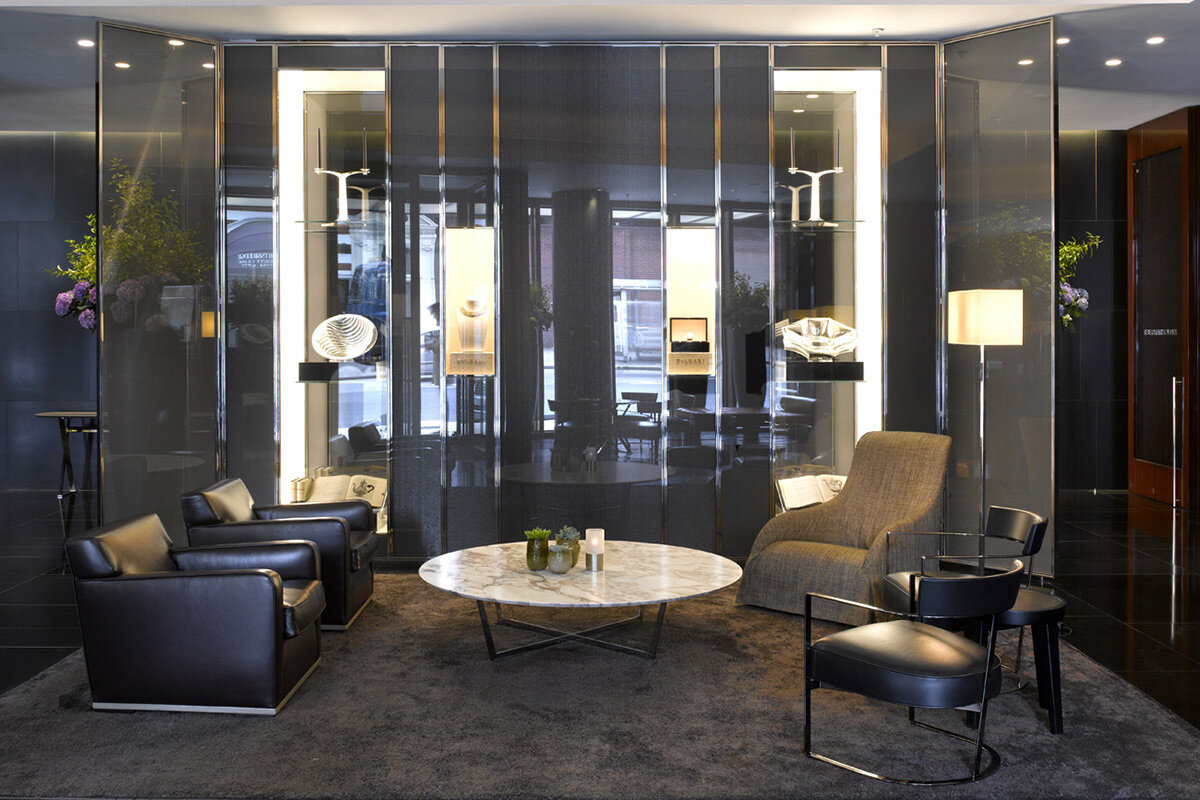
The lobby. All photos courtesy of Bulgari Hotel London.

The spa pool.
What's New
The Bulgari Spa is a stand-alone destination, home to one of the most beautiful pools in London. There's also an expansive menu of treatments ranging from bespoke facials to full-body Thai massages to emotional healing with modern wizard Andrew Wallas, who practices spiritual psychology. New this month are Mauli treatments, like insanely relaxing Sacred Indian Head Massages incorporating hand-crafted Ayurveda products that can only be found on-site.
What's On Site
Besides the spa and a chic restaurant serving Mediterranean tapas, you'll find the most outrageous minibars and wine refrigerators. There are no wants for amenities — as the room is already stocked with international electrical sockets, Nespresso machines, personalized stationery, Bulgari beauty products, fruit baskets of never-before-seen varieties, and excellent WiFi.
The Food
Rivea, the hotel's main fine dining restaurant, is now overseen by Alain Ducasse, and serves everything from perfectly poached eggs at breakfast to small dinner plates for tasting and sharing. Among the standouts are cep mushroom and ricotta ravioli, citrus marinated line-caught sea bream, a Provençal vegetable caponata, house-made lemon shortbread, and a tangy limoncello sorbet.
Room service is excellent, too, should you want to have a leisurely meal across from your massive flat-screen TV in the comfort of one of your many fluffy bathrobes.

Rivea restaurant.

A deluxe room.
The Rooms
There are 85 rooms, seven of which are indulgent, massive suites. Standard rooms have exquisite linens and fine wood finishes. Suites are something else entirely — expansive living rooms, kitchens with separate refrigerators for wine and food, a dining room that seats ten, and a closet bigger than most New York City apartments.
I stayed in Room 553, a decadent suite with floor-to-ceiling windows and three TVs, but a simple, 43-square-meter Deluxe Room would have worked just as well. I barely looked out the window because I was so focused on my exquisite surroundings — the king-size bed and sprawling living area. Sixth-floor suites have expansive terraces and gas fireplaces.
This Hotel Is Perfect For
Romantics, tourists who want to explore the shops and restaurants of Knightsbridge, and anyone who likes to be near Hyde Park.
And Not So Perfect For
Anyone on a budget. People who get annoyed by the occasional growl of Ferraris, Lamborghinis, and McLarens that pull up curbside.

The dining room in Bulgari Suite I.

The living room in Bulgari Suite I.
CHECKING OUT
Neighborhood Vibe
I've always thought of Knightsbridge as the part of London that's thronged with tourists flocking to Harrods, but I found it the perfect jumping-off point for exploring Mayfair, Notting Hill, and North London. The tube station is just steps away from the hotel; Fifth Floor at Harvey Nichols still has the best jams and conveyor belt sushi; and Brompton Road and High Street have everything a hotel guest could need — Boots, Carphone Warehouse for chargers, and the food hall at Harrods which, I must admit, is wonderful.
Things to Do Nearby
Head out the hotel front door to Hyde Park and Kensington Gardens before hitting the wonderful restaurants of Kensington and Notting Hill, like Sally Clarke's, The Ledbury, and E&O. For a scenic stroll, pass behind Harrods and walk down Chelsea's Walton Street to Brompton Cross for chic shops like Joseph and Chanel and lunch spots like Itsu (another conveyor belt sushi with great people-watching) and La Brasserie (excellent steak frites served by waiters with Continental attitude).
Steps from the hotel are concerts at Royal Albert Hall and permanent collections of fashion, furniture, jewelry, and decorative objects at Victoria & Albert Museum. Natural History Museum and the Science Museum is great for families, with its turbines, locomotives, and flight simulators. After a packed day, nothing beats robata-grilled tiger prawns with yuzu or sea bass with burnt tomato and ginger relish at Zuma on Raphael Street just behind the hotel.

Michael Govan’s Los Angeles
The Los Angeles County Museum of Art director has, during his 10-year tenure, propelled the museum to one of the city’s foremost arts institutions
The Los Angeles County Museum of Art director has, during his 10-year tenure, propelled the museum to one of the city’s foremost arts institutions

Image: Patrick Fraser
Perfect Saturdays begin at Santa Monica Airport, where I’ll have coffee at the nearby Spitfire Grill before flying my single-engine 1979 Beechcraft Bonanza to Malibu or Point Dume. Flying is my passion; I adore the emptiness of the sky.
If my wife Katherine, our daughter Gabrielle [11] and my daughter Ariana [21], who’s a student at UCLA and also a pilot, are with me, we’ll head to Catalina; the raw nature of the island and roaming buffalo make you feel very far away. We’ll rent a cabana at the cool Descanso Beach Club and have a bison burger at the mountain-top DC-3 Gifts & Grill.
In the afternoon I might stop by LACMA to give a private tour and see how people are interacting with the art, and then we’ll visit the light-filled James Turrell-designed Skyspace at the Kayne Griffin Corcoran gallery, or Regen Projects to see work by its excellent stable of contemporary artists, such as Catherine Opie, Toba Khedoori and Doug Aitken.
If my kids have their say, we’ll then head to The Original Farmers Market – it’s home to over 100 gourmet vendors. Ariana loves Light My Fire for the incredible selection of hot sauces and we all like Loteria Grill’s spicy pork tacos. We’ll also stop at Huntington Meats to buy New York strip steaks for Sunday night’s supper.
The whole family loves books, so we might visit Taschen to look at new art publications, and Barnes & Noble for its massive children’s section. If there’s time we’ll go to Griffith Observatory – one of the most exotic-looking buildings in LA – to hear director Ed Krupp talk about astronomy and the history of the cosmos.
Saturday evenings often involve an art opening, followed by dinner of oysters and steak frites at République in Hancock Park, or hamburgers and martinis at the lively Tower Bar. Dimitri is the ultimate maître d’ and always has a table for us.
On Sundays we’ll read the online papers in bed and look at Flipboard, my favourite app, with content from The New Yorker to Arts & Letters Daily. If Peter Zumthor – our architect on the new LACMA project – is in town, I’ll take him to the 1920s Spanish-style Los Angeles Tennis Club for a mid-morning game. When he signed on for this project it was one of his prerequisites. He plays every day and I’m just pleased I can hold my own.
If Gabrielle gets to choose our lunch spot it’ll be In-N-Out Burger – for the French fries – and we’ll usually stop at the smaller Larchmont Farmers Market to get some greens for dinner. The afternoons are often the only quiet time I have to write essays; currently I’m working on one for our upcoming Picasso and Rivera: Conversations Across Time show.
Sunday evenings we can always count on Ariana popping by for laundry night, and friends like Julian Sands or Jorge Pardo joining us for dinner. Meals usually end with one of Katherine’s delicious homemade desserts – apple crumble perhaps, or meringues with caramel.
On the rare Sunday night that we don’t cook at home, we’ll meet Eva and Michael Chow for a Korean barbecue at Chosun Galbee in Koreatown; nearly all the signs in this part of town are in Korean so the experience is totally transporting. We also love Chinatown’s Pok Pok for its great Thai food and cool 1970s tunes.
The end of the day is about catching up on the latest films and TV shows so I don’t sound like an idiot – in LA this is “required reading”. Right now we’re enjoying House of Cards and Amazon’s transgender series Transparent. Bedtime is late – 1.30am or so – as this is the only time I have before all hell breaks loose on Monday morning.

John Nollet: crowning glories
Statement-making handmade hair accessories
Statement-making handmade hair accessories
It was while working as a hair stylist to stars, including Nicole Kidman, Monica Bellucci, Uma Thurman and Vanessa Paradis, that John Nollet (fourth picture) had “the initial spark to create hair jewels”. The charming, Paris-based haute couturier of hair expanded his repertoire to include one-of-a-kind, handmade accessories that can range from feather-festooned barrettes (€600) to elaborate headbands and tiaras (€1,000-€7,000 and upwards), incorporating pearls, silk and raffia, often with the help of master embroiderers Métiers d’Art and Lemarié Ateliers.


Nollet delights in working with clients one on one – whether at his jewel-box salons at the Park Hyatt Paris Vendôme and Hôtel Cheval Blanc in Courchevel, or by email and phone. Most of his commissions are for special occasions – weddings, film premieres, black-tie soirées – and designed to enhance a specific outfit. For those interested in a subtle flourish, clips – or “sparks”, as Nollet calls them – can be created in hues of gold, silver and black to add a special flicker to cascading locks. Dramatic looks, however, are a Nollet strength; his Night Queen plume (€2,240, first picture), for example, is a statement-making accent to a traditional ponytail crafted in real hair of varying shades. Feathers (second and third pictures) are another signature, often embellished with intricate beadwork, and designs cost between €1,200-€5,000, depending on the complexity of the piece.


Manus x Machina: Fashion in an Age of Technology
The exhibition is set to wow – but so is the gift shop
The exhibition is set to wow – but so is the gift shop
The Costume Institute’s annual spring exhibition is a highlight of the New York cultural/couture calendar, and this year’s show – Manus x Machina: Fashion in an Age of Technology – promises to be one of the most exciting yet. Opening on May 5 and running until August 14, Manus x Machina will explore the impact of technology on fashion – from the founding of haute couture in the 19th century to today’s ready-to-wear. The exhibition will be preceded by the Met Gala on May 2 – a star-studded celebration overseen by co-chairs Idris Elba, Jony Ive, Taylor Swift and Anna Wintour, as well as honorary chairs Nicolas Ghesquière, Karl Lagerfeld, and Miuccia Prada – which will raise funds for the Institute’s programming and acquisitions.

“Traditionally, the distinction between haute couture and prêt-à-porter was based on the handmade and the machine-made, but recently this distinction has become increasingly blurred as both disciplines have embraced the practices and techniques of the other,” says Andrew Bolton, curator of The Costume Institute. Manus x Machina will include over 150 handmade (manus) and mass-produced (machina) garments that will illustrate the relationship between these two very different modes of production.

Designers featured in the exhibition include greats from Cristóbal Balenciaga to Yohji Yamamoto, Gabrielle “Coco” Chanel to Rei Kawakubo (Comme des Garçons), and Madame Grès to Mary Katrantzou. Displayed in galleries that evoke a traditional couture atelier (complete with petites mains workshops for embroidery, feather and lacework and braiding) will be pairings of exquisitely embellished haute couture gowns and garments – such as an embroidered Chanel wedding ensemble (second picture) from autumn/winter 2013/2014 and a 1969/1970 Yves Saint Laurent feather evening dress (first picture) – and their machine-made, ready-to-wear counterparts. In contrast are ensembles created using cutting-edge technologies such as 3D printing, laser cutting, thermo shaping and ultrasonic welding – to name but a few.

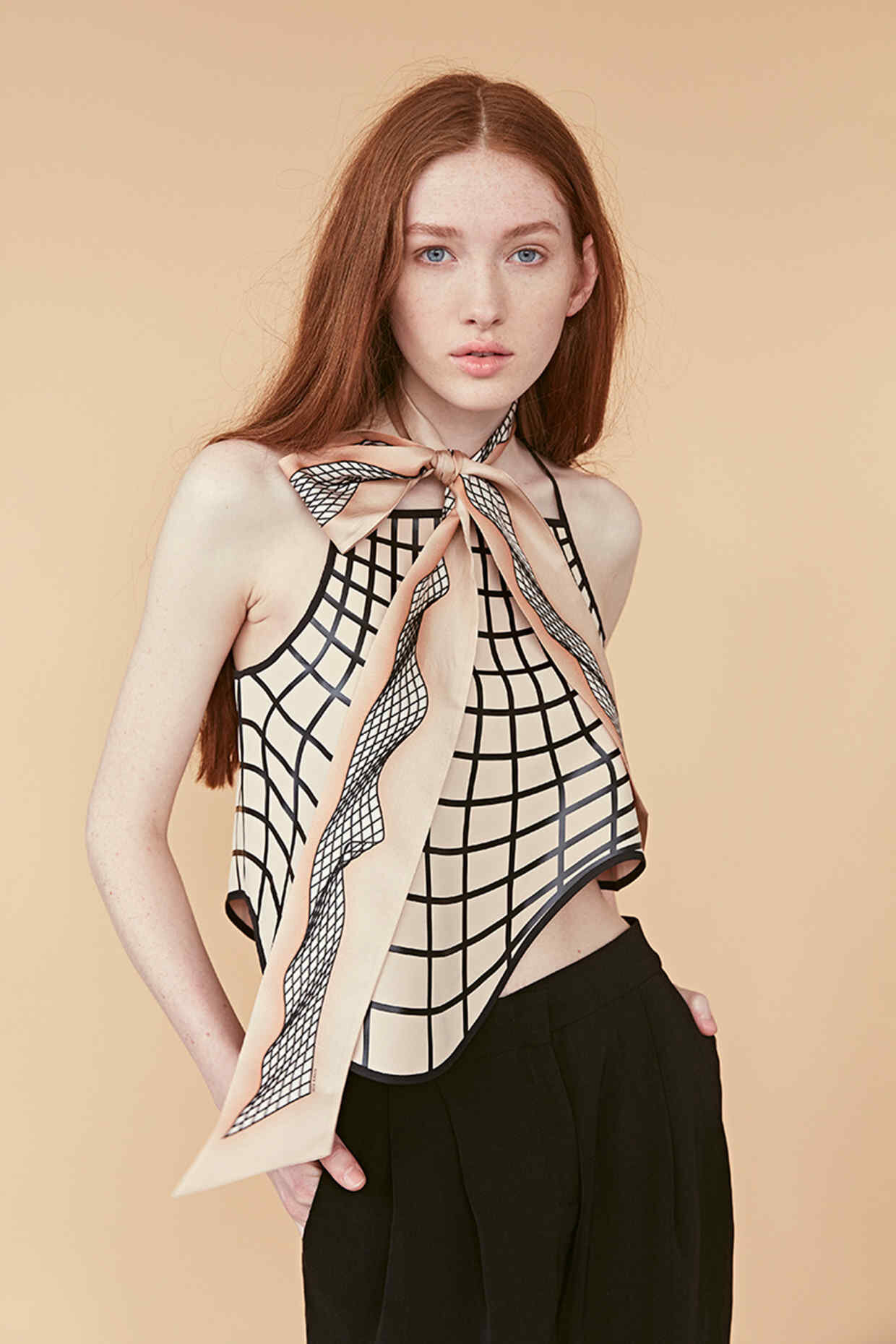
In addition to the stunning fashion on display, a Shohei Shigematsu/OMA-designed pop-up shop will feature covetable merchandise – some of it limited edition (such as three prints of images of the show, $75 each). Highlights include an organically inspired Endo clutch by Flowen (from $3,950) and scarves ($480, third picture) by Israeli 3D designer Noa Raviv, and vibrant Issey Miyake Bao Bao bags ($450-$925, fifth picture) as well as his Pleats Please scarves ($215, fourth picture). I have my eye on colourful silicone jewellery inspired by sea life from Paris’s Tzuri Gueta (rings from $95-$445), glasses-cum-magnifying glass ($90) by Maison Margiela, and a sumptuous limited-edition exhibition catalogue ($295).
“Both the automated and handcrafted process require similar amounts of thoughtfulness and expertise,” says Jony Ive, Apple’s chief design officer. “There are instances where technology is optimised, but ultimately it’s the amount of care put into the craftsmanship that transforms ordinary materials into something extraordinary.” Manus x Machina promises to be The Met’s most extraordinary spring spectacle…
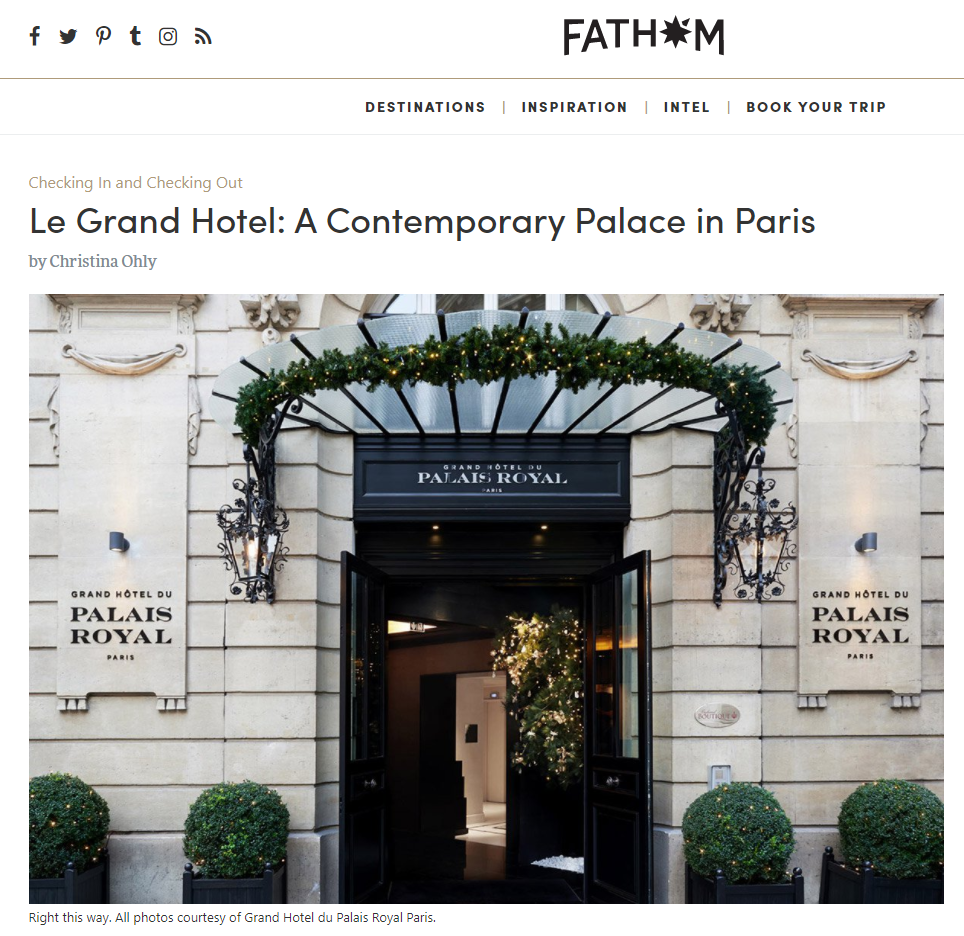
Le Grand Hotel: A Contemporary Palace in Paris
Fathom contributor and hotel critic Christina Ohly checks into a spectacularly grand boutique hotel in the heart of Paris.
Fathom contributor and hotel critic Christina Ohly checks into a spectacularly grand boutique hotel in the heart of Paris.
CHECKING IN
Overview
Set in an 18th-century building partly designated as a historical monument, Grand Hotel du Palais Royal Paris is a true gem in a city bursting with wonderful hotels. The chic boutique bolthole has all the advantages of a large, luxury hotel, but at just 68 rooms, is the only five-star of its kind in the well-situated Palais Royal area.
A soothing, sumptuous escape, the hotel is a study in neutral hues and minimalist aesthetics. Best of all, it is literally feet away from the gardens of Palais Royal — just stroll through the colonnade across the street from the hotel's lobby and you're transported to another time. Also in striking distance are the Tulleries, the Louvre, and wonderful shopping on both Rue Sainte-Honoré and in St. Germain-des-Pres across the Seine.

The hotel lobby.

Beautiful detailing.
What's New
Noted French interiors guru Pierre-Yves Rochon renovated the rooms and common spaces, including Le Lulli restaurant and a cozy bar. The idea is to make you feel like the Palais is your maison away from home. A Carita spa and a reasonably well-outfitted gym (it's Paris after all, this isn't a priority) have also been updated, and great focus has been put on the concierge team, who work tirelessly to secure everything from Paris Saint Germain football tickets to hard-to-score reservations at restaurants such as Frenchie and Semilla to in-room doctor visits for sick children in need of antibiotics. (It wouldn't be a holiday without this added diversion, would it?)
What's on Site
You have all the amenities of one of the palace hotels found in the 8th and the 16th (gym, spa with hammam, delicious restaurant, spacious rooms with terraces), but the whole experience feels more intimate. Excellent WiFi, international newspapers, and plentiful adapters are pluses. The staff is willing to source anything — groceries, pharmacy finds, advance tickets to the Picasso Museum.
The Food
I'm a huge fan of breakfast, and I can't say enough good things about the complimentary spread in the conservatory restaurant, Le Lulli. The bright setting — brilliant green plants and a design-led Bertoia vibe — starts the day off right, and the selection of freshly baked breads, salads, fruit, cheeses, and excellent coffee are well beyond your typical, all-inclusive fare. Omelettes made to order are another highlight. The staff is attentive to every wish, sometimes before you've identified the need for more thé vert or jus d'orange. Lunch is also lovely, with light pouring into the restaurant and exquisitely prepared fish dishes and refined takes on the classic chicken Caesar salad.
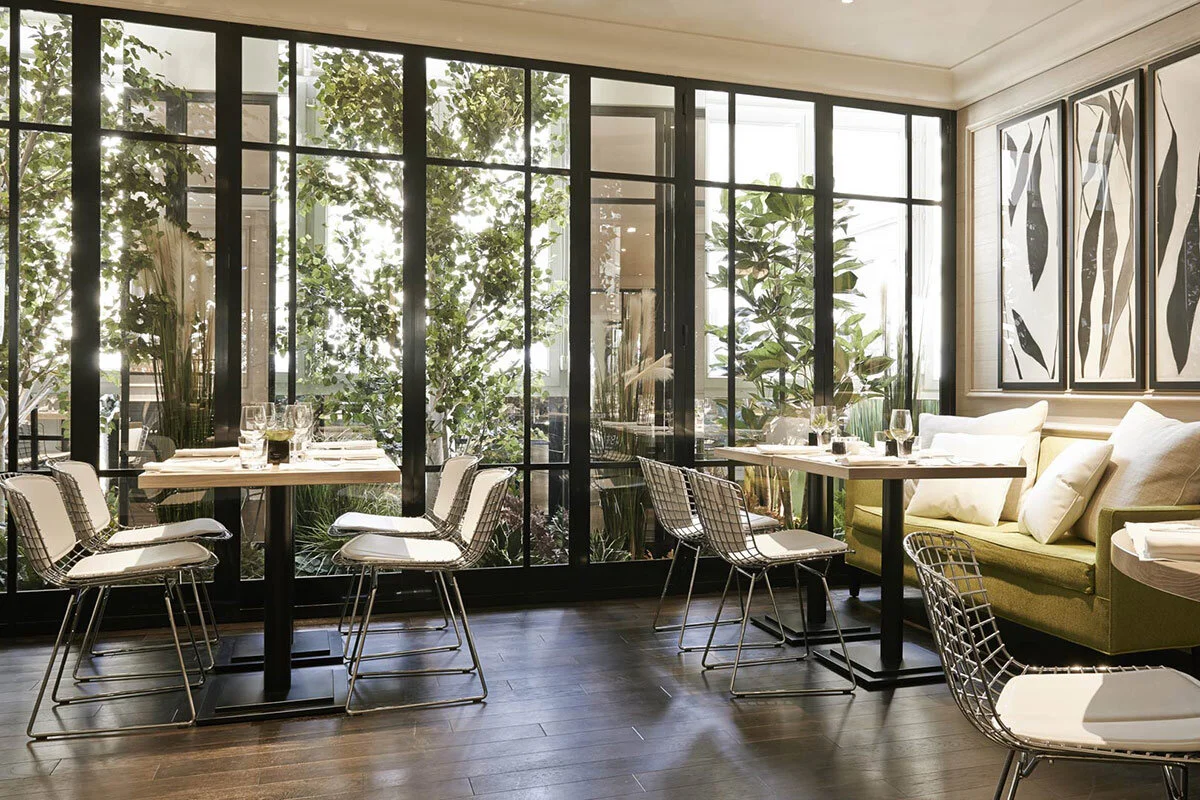
The dining room at Le Lulli.

A superior room.
n the Room
There are 57 rooms and eleven suites across the hotel's five floors, and each is elegant and filled with light. The rooms feel both warm and modern — beige and cream with leather and wood finishes, desks, and gleaming marble bathrooms — and are wonderful places to return to after a day of work or sightseeing. Minibars are stocked with beverages but little else, so ask for additional supplies or stock up at the nearby Franprix just down Rue St. Honoré. There are flat-screen TVs with umpteen channels in all languages, as well as strong, hot showers, thick towels, and enormous robes which all coalesce to ease the pain of long-haul flights.
Room with a View
Our family of four occupied two interconnecting rooms (308 and 309) overlooking quiet Rue du Valois and the entrance to Palais Royal. Bright even on slightly dreary days, these rooms work incredibly well for children of all ages, but next time I will stay in one of the terrace or panorama suites. Both are on the top floor, accessible by private elevator. Some have views of Palais Royal, while others have vistas of the Eiffel Tower, Montmartre, and Opera Garnier.
This Place Is Perfect For
Families, business travelers, fashionistas who want access to the nearby shops and ateliers of Paris' leading designers, and anyone who has a thing for the loggias and ambience of the Palais Royal. This is simply a rare gem.
But Not So Perfect For
Anyone who wants the big, shiny Parisian hotel experience. For this, head straight to the impressive new Peninsula on Avenue Kleber (also lovely, just a different experience).

The Palais Royal suite.

The bathroom in the Panorama Suite.

The view from the Panorama Suite.
CHECKING OUT
Neighborhood Vibe
Real life is happening here. You're not on a polished street in the Golden Triangle, but rather in the heart of the working city. Commuters come out of Palais Royal metro and scurry by, while tourists pass en route to the side entrance and the pyramids of the Louvre.
What to Do Nearby
There are no shortage of activities. Louvre, Musee D'Orsay, and the Opera are nearby. Excellent restaurants, of which there are many, include Café Marly in the colonnades of the Louvre, a perennial favorite for lunch and people-watching.
My favorite eateries are further afield, like the new Kinugawa Matignon in the 8th, which shines for both excellent sashimi and chic ambience. Ralph's in Saint Germain-des-Pres is wonderful for spring and summer lunches en plein air, as is a spread of Poilâne tartines at the casual Bar de la Croix Rouge (2 Place Michel Debré; +33-1-4548-0645), more toned down than nearby Café de Flore (172 Boulevard Saint-Germain; +33-1-4548-5526) and Les Deux Magots (which will always be mainstays).
Semilla, also in the 6th arrondissement, is an excellent choice for both the design-led space and small plates of grilled shiitake mushrooms and enormous bowls of cake and ice cream drizzled with caramel sauce — dishes meant for sharing that add to the relaxed, convivial vibe.
The high-end shops (YSL, Prada, Hermès...) are on Rue Saint-Honoré, while smaller gems are hidden across the Seine in St. Germain-des-Pres. L/Uniform is hands-down my favorite shop for stylish, practical canvas and leather bags by the daughter-in-law of the Goyard family. Muriel Grateau is a beautiful, spare space full of exquisite linen napkins, minimalist ceramics, and strong, statement-making crystal jewelry. Basics like Le Bon Marché and Du Pareil au Même (the French answer to/or a cooler version of Baby Gap) are both in this area of the 6th.
Lovers of good design should flock to 107Rivoli (part of Musee des Arts Décoratifs), which is full of incredible accessories, books, lighting, jewelry, and more. It's a short walk from the hotel next to the Louvre.
PLAN YOUR TRIP
Good to Know
Book directly through the hotel so that upgrades and changes are handled directly with the front desk. The owners of this hotel are all about happy customers and will upgrade whenever possible. Don't be shy about asking. Ditto for early check-ins and bag storage. Both are helpful after a red-eye flight.
Uber is big in Paris: Cheaper, faster, nicer drivers (generally) who dole out sweets and bottled water make rides a win-win.
How to Get There
The hotel is approximately 45 minutes from Charles De Gaulle airport (CDG) by car (depending on the time of day) and 30 minutes from Paris Orly airport (ORY), which services much of Europe. The Palais Royal Metro is around the corner from the hotel and is by far the easiest way to get around, particularly during Fashion Week when the area becomes gridlocked.

The cool retro vibe of Hotel Alexandra, Copenhagen
The cool retro vibe of Hotel Alexandra, Copenhagen
The cool retro vibe of Hotel Alexandra, Copenhagen
I grew up with grandparents that celebrated all things Scandinavian; Georg Jensen and Arne Jacobsen were common names around their house, and I inherited from them a love of all things midcentury. So when I stayed at Copenhagen’s Hotel Alexandra earlier this year I was in design heaven, for this authentic and affordable 61-room boutique gem – situated just steps from the Tivoli Gardens and bustling City Hall Square – is a passionate, authentic recreation of this fertile era of Danish design.
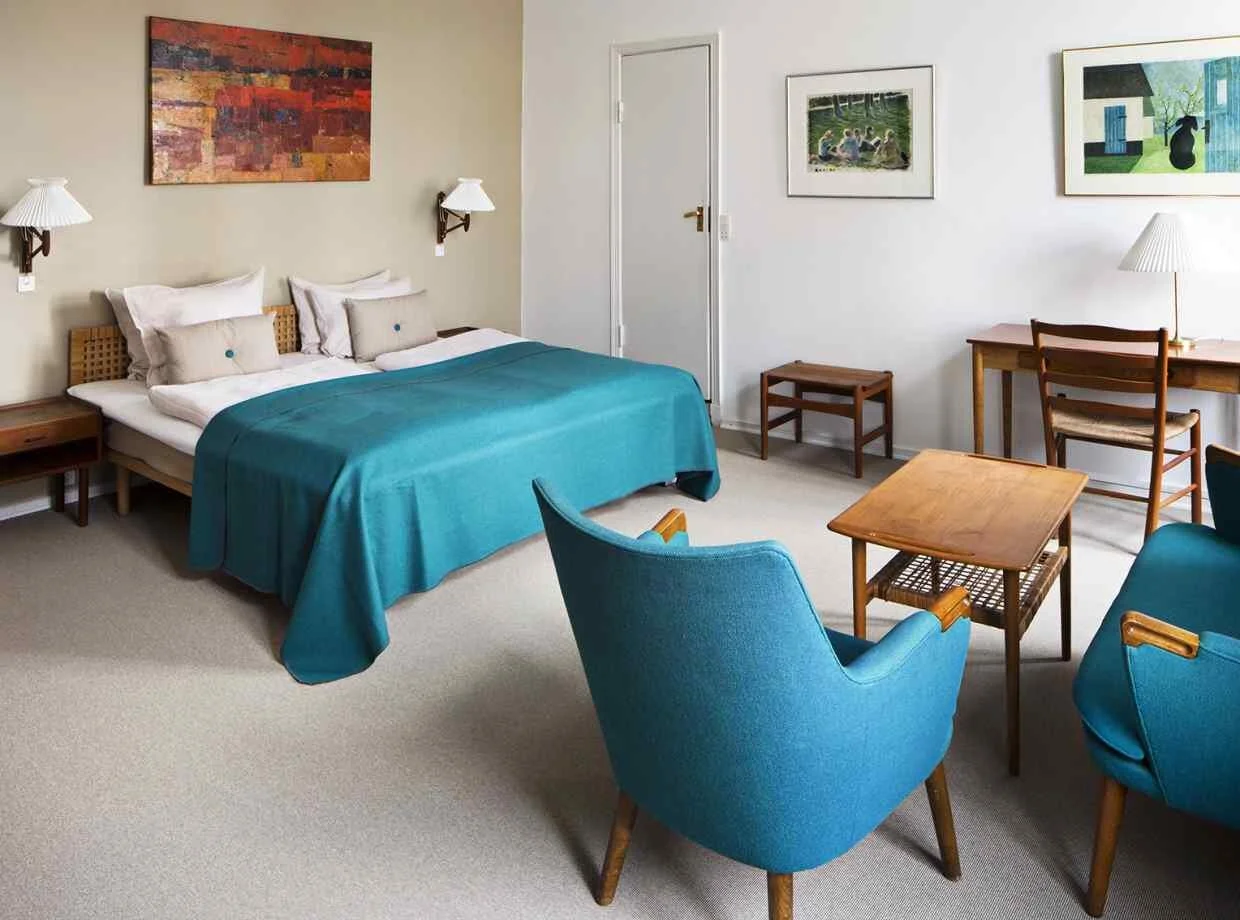
The retro vibe begins in the chic lobby space (first picture) and is carried throughout the hotel, where all the furniture and light fixtures, fabrics and artworks are genuine midcentury articles (with the welcome additions of flatscreen TVs and WiFi), chosen with vintage furniture expert Anders Petersen – and virtually every object is also for sale. The standard rooms (from €180) are small yet quite special, as no two are exactly alike, but it is the deluxe versions and suites (from €240) dedicated to specific designers – from the calmly minimal Hans J Wegner room (second picture) to the psychedelic 1960s-style Verner Panton suite (third picture) – that really stand out.
The most recent addition to the mix is the 35 sq m Collector’s Suite (from €240 per night, fourth picture) – an exquisite rosewood-panelled space that overlooks the hotel courtyard and Studiestræde below, and which will be reconceived several times each year by Petersen. The furnishings – an early Wegner Sawhorse chair (€2,546), a sculptural coat rack by Adam Hoff and Poul Østergaard (€697), and the black leather upholstered couch by Hans Olsen (€5,200) – are all, in my opinion, worthy of the Museum of Modern Art.

“The point of the room is to make guests feel like they are in a time capsule,” says Petersen – and it works, helped along by the early-1970s ceramics and carefully selected tomes devoted to Panton and Jacobsen that grace the suite’s minimalist dark wood shelving system by Kai Kristiansen (€1,300).
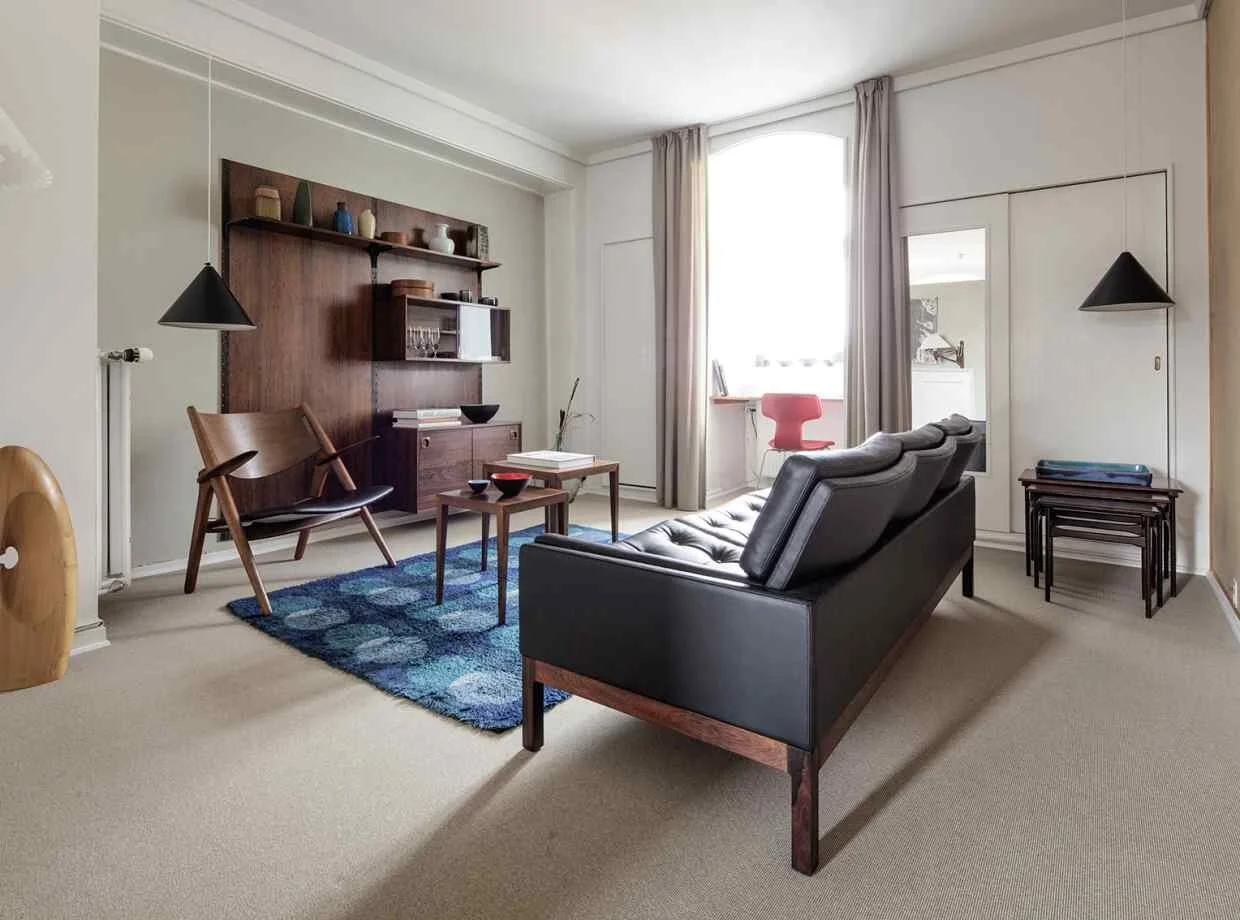
“Our next interior will be dedicated to Poul Kjærholm, one of the most iconic Danish furniture architects of all time,” explains Petersen. “With the help of his daughter, Krestine, we will be producing a bed he originally designed for his own home and of which there are currently only three in existence.”
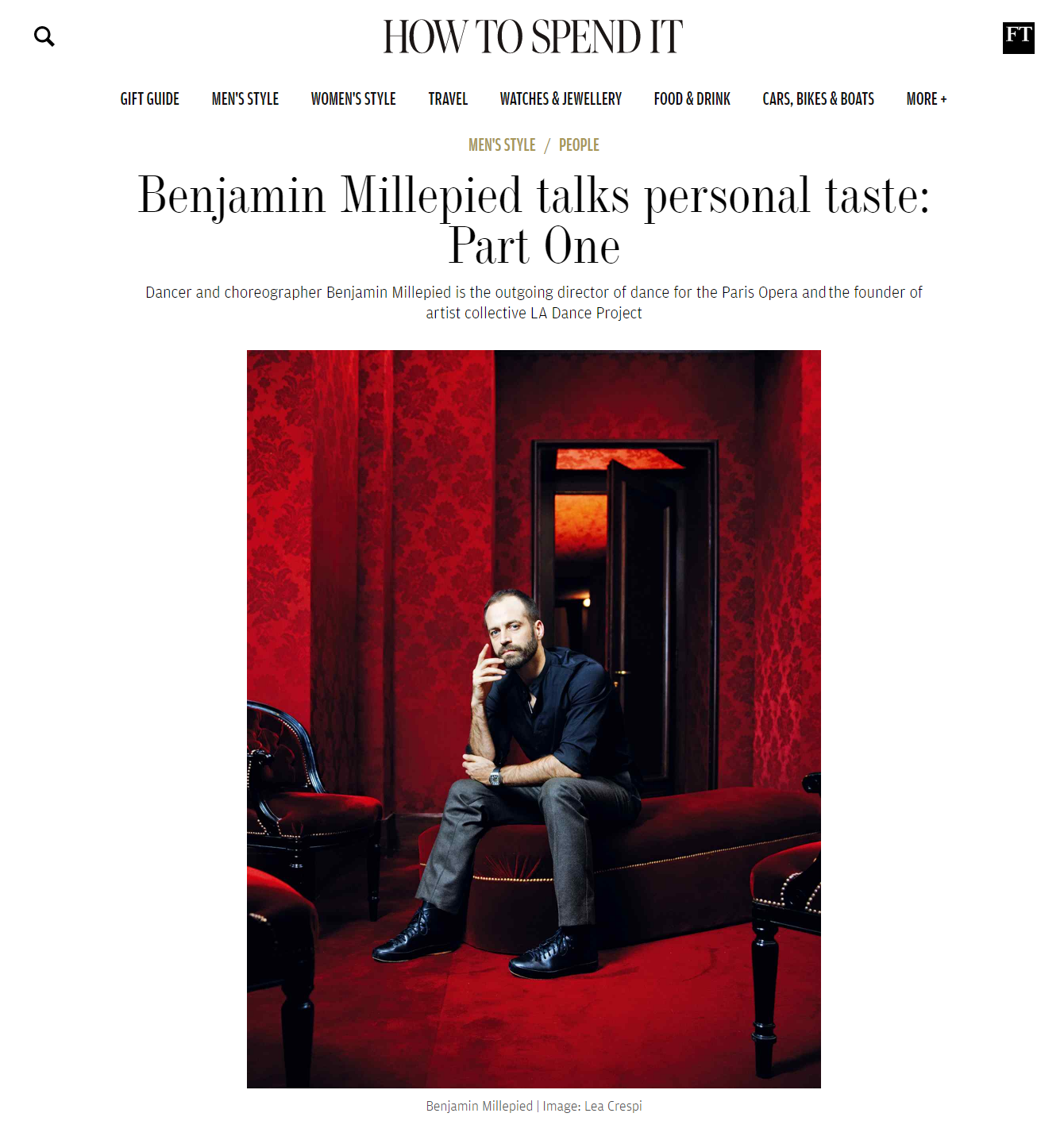
Benjamin Millepied talks personal taste: Part One
Dancer and choreographer Benjamin Millepied is the outgoing director of dance for the Paris Opera and the founder of artist collective LA Dance Project
Dancer and choreographer Benjamin Millepied is the outgoing director of dance for the Paris Opera and the founder of artist collective LA Dance Project
My personal style signifiers are Christophe Lemaire trousers and shirts by Acne – usually in dark colours; my clothes, even if fitted, have a sense of comfort and ease of movement. I tend to wear everything with a pair of black leather lace-ups by Feit: the craftsmanship is impeccable, they’re beautifully designed and they’re very minimal, which is in keeping with my overall style. From £130; www.acnestudios.com. From €540; www.feitdirect.com. From €355; www.lemaire.fr.

Frenchie To Go café in Paris
The best gift I’ve given recently was a first edition of Gertrude Stein’s What Are Masterpieces?. I love old books and think anything by Stein is interesting, but this particular edition is very special. I bought it at Shakespeare and Company, where shopping is always a wonderful experience. 37 Rue de la Bûcherie, 75005 Paris (+331 4325 4093;www.shakespeareandcompany.com).
An unforgettable place I’ve travelled to in the past year is Iceland. The areas we visited were almost uninhabited and some of the most beautiful places I’ve ever been to. I loved the combination of natural landscape, pure air and absolute quiet. We stayed at the ION Luxury Adventure Hotel [pictured] in Selfoss, where the scenery and food were both outstanding. I’d love to go back and see the Northern Lights there next year. Nesjavellir vid Thingvallavatn 801 (+354‑482 3415; www.ioniceland.is).

Kiehl’s Midnight Recovery Concentrate, £36 for 50ml
And the best souvenirs I’ve brought home are six Bauhaus-style chairs from the depths of a flea market in Jaffa, Tel Aviv. This is the largest Bauhaus city in the world – many architects fled here during the second world war – and one of the chairs I found is from a traditional kibbutz. The others are made of a light-coloured wood and are quite angular. All six now feature prominently at our home in Paris.

The modernist Oliver House, Silver Lake, LA, designed by Rudolf Schindler
A recent “find” is the incredible area around the Rue du Nil in the second arrondissement of Paris. You can source wonderful organic vegetables, cheeses and meats from Terroirs d’Avenir and enjoy Paris’s best Reuben sandwich from the café Frenchie To Go [pictured]. It’s all there on a single street. Frenchie To Go, 9 Rue du Nil, 75002 Paris (+331-4026 2343; www.frenchietogo.com). Terroirs d’Avenir, 6-8 Rue du Nil, 75002 Paris (+331-8170 9798; www.terroirs-avenir.fr).

Undefeated x Converse trainers
The sight that inspires me is the light at around 5pm as it pierces the streets of LA. Whether I’m in Silver Lake or Koreatown, I love that you can see so many decades in one street’s architecture – from art deco to modernism – all bathed in this beautiful light.

The ION Luxury Adventure Hotel in Selfoss, Iceland
The last music I listened to was James Blake’s latest songRadio Silence. I love his voice and the complexity of his rhythms.
An indulgence I would never forgo is a great steak. At Mario Batali’s Osteria Mozza in LA they do a truffle-crusted rib eye that is crazy, and the flat-iron steak at The Factory Kitchen is also outstanding. The Factory Kitchen, 1300 Factory Place, CA 90013 (+1213-996 6000; www.thefactorykitchen.com). Osteria Mozza, 6602 Melrose Avenue, CA 90038 (+1323-297 0100; www.osteriamozza.com).
The last items of clothing I added to my wardrobe include a pair of Japansee-style loose black cashmere trousers from a new clothing line I’m developing with Berluti; a Saint Laurent tailored overcoat; and sweatshirts, sweatpants and trainers [pictured] by Undefeated that I wear when I’m in LA. www.berluti.com. www.undefeated.com. www.ysl.com.
The grooming staples I’m never without are Kiehl’s Midnight Recovery Concentrate [pictured], a nighttime facial oil, and Christophe Robin’s Delicate Volumising shampoo and conditioner, which is very moisturising. Christophe Robin shampoo, £28 for 250ml; conditioner, £32 for 250ml; www.net-a-porter.com. Kiehl’s Midnight Recovery Concentrate, £36 for 50ml; www.kiehls.co.uk.
My favourite websites include Medium.com for excellent, forward-thinking articles, and Lefigaro.fr, Lemonde.fr and Nytimes.comfor news and opinion. Economist.com is great for world politics and business, and Theartnewspaper.com is my go-to for the latest about the visual arts.

Benjamin Millepied talks personal taste: Part Two
The choreographer concludes his list of likes with the sartorial elegance of Jimmy Stewart, the passion of Anselm Kiefer and the cultural abundance of LA
The choreographer concludes his list of likes with the sartorial elegance of Jimmy Stewart, the passion of Anselm Kiefer and the cultural abundance of LA
My style icons are Jimmy Stewart and Fred Astaire, who wore clothes elegantly and carried themselves with a nonchalant confidence; American movie stars like these are rare today. And Alain Delon, because his style is never over-thought.
The best gift I’ve received recently is a photograph by Dutch artist Pim Van Os called Untitled (Light Abstraction). It’s a beautiful silver gelatin print from the 1950s and was a present from my wife [Natalie Portman].

Jimmy Stewart | Image: Getty Images
The last thing I bought and loved was a really fitted elastic shirt by Acne. It has a very high neckline and is suitable for work but elegant enough to be worn to an evening performance at the ballet. www.acnestudios.com.
And the thing I’m eyeing next is a pair of black Berluti loafers [from £530]. They look traditional but they’re made of the finest, thinnest leather so they feel almost like a ballet shoe. They’ll work well with everything from loose-fitting cashmere trousers to a suit. www.berluti.com.
The last meal that truly impressed me was at Septime in Paris’s 11th arrondissement. It’s industrial yet slightly rustic and has an imaginative menu and combinations of ingredients. I love vegetables and a recent beautifully minimalist supper included white asparagus, mountain spinach and steamed cod, all paired with natural wines. 80 Rue de Charonne, 75011 Paris(+331-4367 3829; www.septime-charonne.fr)
The one artist whose work I would collect if I could is Anselm Kiefer. There is such great depth and passion in his brushwork, and I particularly love his very large paintings of flower fields that seem inspired by Van Gogh. His aquarelles are beautiful too, and I’ve been lucky enough to visit his studio and see him at work; it was an unforgettable experience.

Septime restaurant in Paris | Image: François Flohic
The people I rely on for personal grooming are Philippe at the Christophe Robin salon at Hôtel Le Meurice – he often comes to me and knows exactly how to cut my hair – and any of the stylists at Rudy’s Barbershop on Sunset Boulevard, where the atmosphere is always lively. Christophe Robin, Hôtel Le Meurice, 228 Rue de Rivoli, 75001 Paris (+331-4020 0283; www.christophe-robin.com). Rudy’s Barbershop, 4451 W Sunset Boulevard, CA 90027 (+1323-661 6535; www.rudysbarbershop.com).
My favourite room in my house is the kitchen. It’s where we spend most of our time as a family and we love to cook and really use the space. It’s modern with lots of natural light and the atmosphere is always very alive.

An Anselm Kiefer restrospective at the Royal Academy of Arts | Image: Ukartpics/Alamy stock photo
If I didn’t live in Paris, the city I would live in is LA. There is so much to do culturally and I particularly love the Los Angeles County Museum of Art, hearing the LA Philharmonic at the Hollywood Bowl and watching movies under the stars at the Hollywood Forever Cemetery. A great day starts with an Intelligentsia coffee, which is so much better than anything in Paris, followed by a walk in Griffith Park and around the Observatory. I also like the creative Spanish-fusion cuisine at Bäco Mercat downtown and the Sunset Tower Hotel and Soho House for their vibrant atmosphere. From the Frank Lloyd Wright houses to Pasadena City College flea market, there is so much to see and do in this magical, fascinating and colourful city, and yet its potential for growth seems limitless. Bäco Mercat, 408 S Main Street (+1213-687 8808; www.bacomercat.com). Griffith Park, 4730 Crystal Springs Drive (+1323-913 4688; www.laparks.org). Hollywood Forever Cemetery, 6000 Santa Monica Boulevard (+1323-469 1181; www.cinespia.org). Intelligentsia Coffee, www.intelligentsiacoffee.com. LA Philharmonic at the Hollywood Bowl, www.laphil.com. Los Angeles County Museum of Art, 5905 Wilshire Boulevard (+1323-857 6000; www.lacma.org). Pasadena Flea Market, 1570 E Colorado Boulevard (+1626-585 7906; www.pasadena.edu). Soho House West Hollywood, 9200 Sunset Boulevard (+1310-432 9200; www.sohohousewh.com). Sunset Tower Hotel, 8358 Sunset Boulevard (+1323-654 7100; www.sunsettowerhotel.com).
In my fridge you’ll always find hummus; assorted organic berries, milk and yoghurt for my son; a selection of cheeses from Terroirs d’Avenir, including a good blue and a Camembert; and whatever wild mushrooms are in season. I like cooking and mushrooms are a real favourite; I sautée morels or fry porcinis and often make fresh mushroom sauce for pasta. 6-8 Rue du Nil, 75002 Paris (+331-8170 9798; www.terroirs-avenir.fr).

Dancers, Buildings and People in the Streets, by Edwin Denby
The books on my bedside table include Dave Eggers’s A Heartbreaking Work of Staggering Genius; Rainer Maria Rilke’s Letters to a Young Poet; Jennifer Homans’s Apollo’s Angels: A History of Ballet; and Dancers, Buildings, and People in the Streets by dance critic Edwin Denby. Sergei Diaghilev’s biography is always there as well. I love it all – history, fiction, poetry – but I especially like reading about dance.
The objects I would never part with are a series of Irving Penn photographs of dancers that I’ve collected over time. They’re from his Ballet Society series in the 1940s and have a ghostly quality; the dancers look like angels. To me, these images embody ballet and I would love to add to them over time.
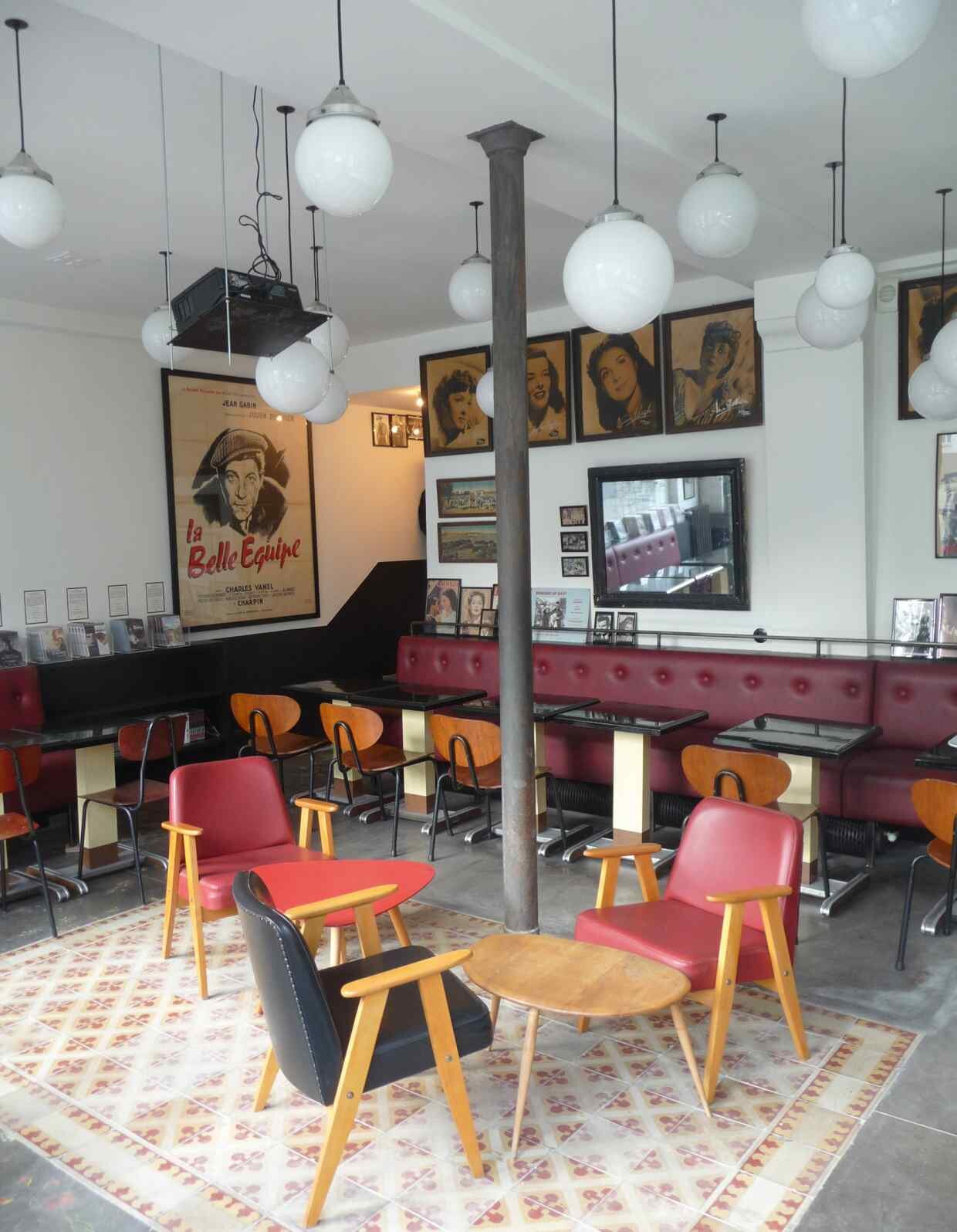
Merci boutique in Paris
If I had to limit my shopping to one neighbourhood in one city, I’d choose the fourth arrondissement in Paris. This area in the Marais is packed with smaller stores including Christophe Lemaire’s boutique in a former pharmacy, which is full of the minimalist clothing I like. Then there’s Acne Studios and concept store Merci, which is an incredible place to find emerging designers, housewares and virtually everything else, plus I love its philanthropic angle. The vibrant Café Français – a brasserie facing the Opéra – is a great place for lunch. Acne Studios, 3 Rue Froissart (+331-4996 9691; www.acnestudios.com). Café Français, 1-3 Place de la Bastille (+331-4029 0402; www.cafe-francais.fr). Christophe Lemaire, 28 Rue de Poitou (+331-4478 0009; www.lemaire.fr). Merci, Boulevard Beaumarchais (+331- 4277 0033; www.merci-merci.com).
If I weren’t doing what I do, I would be an architect, pianist or conductor. Each discipline relates to what I do now, and I would love to conduct and interpret a score.