
The Ascendance of Joseph Altuzarra
Exquisite tailoring and embellishment are the hallmarks of the young designer's ever-evolving aesthetic.
Exquisite tailoring and embellishment are the hallmarks of the young designer's ever-evolving aesthetic.
An acute eye for detail, texture, and color place Joseph Altuzarra in a league of his own. With ready-to-wear collections inspired by everything from 18th-century dandies, to Truman Capote’s stylish “swans,” to circa 1950 American railroad workers, New York–based Altuzarra is the thinking woman’s designer. His refined pieces—in a wide range of fabrics and finishes, including linen, leather, burlap, and velvet—all tell a visual story, and often incorporate parts of the designer’s Franco-American background, as well as his love of literature, film, and dance.
Raised in Paris by a Chinese-American mother and a French father, Altuzarra studied ballet before heading to the U.S. to pursue a degree in art history at Swarthmore College. It was through these studies that his eyes were opened to the world of fashion, one that he went on to learn about from the ground up, working at maisons on both sides of the Atlantic. With early experiences at Marc Jacobs and Proenza Schouler in New York, followed by an apprenticeship with patternmaker and former Rochas head Nicolas Caito, and after a role as first assistant to Riccardo Tisci at Givenchy, Altuzarra launched his eponymous line in 2008.
In just eight years the brand has become synonymous with feminine tailoring and a sophisticated-yet-playful aesthetic, with expansion continuing beyond the designer’s signature thigh-high slit skirts, vibrant silk blouses, flowy dresses, and fitted jackets. A minority investment by Kering in 2013 helped fuel the addition of a handbag line that includes a mix of casually structured shapes in everything from smooth calf to Sfumato leather to luxurious crocodile. It all culminated in 2014, when he was awarded the Council of Fashion Designers of America’s prestigious Womenswear Designer of the Year award.
Altuzarra’s spring/summer 2016 collection marks the next chapter in the designer’s multicultural, artistic exploration. It was the discovery of a book, Wilder Mann by Charles Fréger, featuring photographs of pagan rituals from the Basque region of France, that spurred the creation of this latest assortment of effortless, dip-dyed linen dresses and coats—as well as the exquisite mother of pearl and broderie anglaise embellishments that adorn them. Surface recently met with Altuzarra at his Soho atelier to discuss the influence of his banker parents, whom he credits with his pragmatism; his favorite campy films; and the role his husband, Seth Weissman, as well as friends including Alexander Wang and Vanessa Traina, play in his creative process.
You were born to a Chinese-American mother and French-Basque father. How does your background inform your design aesthetic?
It’s central to how I think about fashion and clothes and also my process. There is a duality between my French and American sides: I grew up in Paris surrounded by film and dance, so I have that French sensibility. On the other side, I’ve always been fascinated by American culture and the pragmatism, ease, and comfort it embodies. The marriage of these two sides of my personality is the Altuzarra brand.
I’ve read that you love film. Are there any movies that have been particularly impactful for you?
My parents love movies, and I grew up surrounded by all genres. One film that was particularly important was Si Versailles m’était conté [Royal Affairs in Versailles (1957)]. I watched this sprawling epic about life at Versailles over and over again, and the campy evolution of the costumes fascinated me. I also loved anything with Audrey Hepburn—Sabrina (1954) was a favorite—and tended toward less mainstream films as a teenager. Orlando (1992) had a huge effect on me because it was more ambiguous in its narrative.
Why did you choose to study at Swarthmore, and why art history?
Growing up bilingual with a Chinese-American mother, I always knew I wanted to study in the U.S. None of my classmates were going abroad for university at that time, and there were no SAT prep classes. I happened to see the film Ten Things I Hate About You (1999) in which the star ends up at Sarah Lawrence College. I looked it up online, and a box popped up saying, “If you like this school, you’ll also like Swarthmore, Amherst, Williams, Brown, and Haverford.” I applied to many of them, and one of my father’s colleagues suggested I go to Swarthmore. It was an incredible experience, as it was the first time I found my community—I was always nerdy in high school, and I finally felt free and surrounded by people like me. I loved studying art history: the analytical side of it, and the subjective way of looking at the world. I wrote an essay linking fashion advertising to classical art iconography, specifically about the influence of Toulouse-Lautrec on the Yves Saint Laurent Opium perfume advertisement with a naked Sophie Dahl. Art history spurred my love for fashion.
You had a very impressive CV prior to starting your own company. Did those experiences have an effect on the way you run your label?
When I worked at Proenza Schouler, there were just six people there, and I had no formal training or technical skills. I also apprenticed at Marc Jacobs just out of college, where I was lucky to be a part of that busy process. I went on to apprentice for Nicolas Caito at Rochas, where I learned the technical side of fashion design—pattern-making, draping—and this boosted my confidence greatly. Nicolas encouraged me to go back to Paris, where I met Riccardo [Tisci, creative director of Givenchy] and became his assistant for two years. I was so young and under-qualified, and he believed in me. He was a great mentor. I’m still incredibly grateful to him.
Your parents were both bankers and have been your biggest supporters. How did their business acumen help to launch the Altuzarra brand?
They made me a business-minded person, and I have always loved that side of the Altuzarra brand. My goal is success in design, but I always strive for financial success as well. Their involvement from the beginning—in the recession of 2008, no less—created a culture of frugality and an awareness of what we were spending. My mother, Karen, was the CEO of the brand for the first four years, before transitioning to our current CEO, Karis Durmer. My mom is still the chairman of the board and is actively involved in all aspects of the brand.
What was the inspiration for your first collection? Did you see a void in the market?
My first collection [spring/summer 2009] was born out of my wanting to create clothes that were sophisticated yet sexy, for a changing consumer. I was seeing women who were aging differently—through different nutrition and exercise—who wanted to be seductive and strong, but in an adult way. I saw women identifying with Meryl Streep, for example, who wanted to be the romantic lead in their own lives. That thought process has been the through-line for every collection since. Bottom line: Women want to be beautiful, not frumpy.
You create sophisticated, sexy clothes that combine a French and American sensibility. Is there a core customer? A muse?
[Stylists] Vanessa Traina and Melanie Huynh have been supporters since the very first season and represent the Altuzarra woman to me. These are women in their 30s, balancing full lives, who have an exacting, sophisticated sensibility. These women continue to inspire me, as do women like Julianne Moore and Nicole Kidman, who possess inherent style and self-confidence.
Who were your earliest champions?
Carine Roitfeld [former editor of Vogue Paris] has been an incredible mentor from the very beginning, even before my first collection. Mark Holgate is a great mentor and friend who set up my first meeting with Anna Wintour [editor of Vogue]. Funny story about my initial meeting with Anna: I was supposed to meet and present my collection to her the day after flying from Paris to New York, but the airline lost everything. She was gracious about rescheduling and has been an incredible supporter ever since. She called and got us into places like Barneys and Dover Street Market and really helped to launch the Altuzarra brand.
You’ve been the recipient of numerous awards: the CFDA Swarovski Award for Womenswear Design in 2012, the CFDA/ Vogue Fashion Fund Award in 2011, the CFDA Womenswear Designer of the Year Award in 2014. Which one has been the most meaningful?
The CFDA/Vogue Fashion Fund Award in 2011 was a huge moment for me because it was a competition: months of work and dedication went into the process, and ultimately, it put us on the map.
You’ve designed costumes for the New York City Ballet. Would you like to do more theatrical design?
That collaboration came about through a summer share in Fire Island several years ago. My husband and I were in a house with choreographer Christopher Wheeldon, who was working with the New York City Ballet at the time. I’ve always loved ballet and studied dance throughout my childhood, so when he asked if I might be interested in designing costumes I jumped at the chance. I went to all of the rehearsals and saw the choreography in progress, and we came up with a very American, casual look for this piece, one that was all about light, flirty garments that would highlight the movement of the dancers.
You’ve collaborated with Target and J. Crew, among other brands. What makes such projects interesting?
As the winner of the CFDA/Vogue Fashion Fund Award, I was invited to collaborate with J. Crew on a collection of six pieces—a dress, shirts, sweaters, shoes—that were inspired by a preppy American aesthetic, but also by Breton stripes and French gingham. I wanted to play with the codes of prep, and also introduce Brigitte Bardot shapes and 1950s styling to a wider audience.
What made the sale of a minority stake to Kering particularly interesting to you?
I was approached by [Kering CEO François Henri] Pinault, who is a wonderful person and has respect for designers and their process. I felt that he loved our brand and could add value, and the partnership has been hugely beneficial to us. From the logistics of production teams in Italy, to helping with the development of our handbags, to expertise in margins and world geographies, we’re always learning from Kering.
Last fall saw the launch of your first collection of handbags, inspired by bull riding whips from the American Southwest. What do you love about their hand-woven details?
It was our first product extension, so it had to embody the core values of Altuzarra. I wanted the bags to have a French/American duality, and also to be sexy with an easy sensibility. I didn’t want them to be hard or structured, and I was focused on incorporating folkloric craft. I found the braided whips while researching online and fell in love with the handcrafted aesthetic, as well as their sturdiness and practicality.
What was the inspiration for the hardware and the handles? Do these elements fuse your love of things both French and American?
The ends of cigarette lighters were the inspiration for the gold hardware on the bags, and this is definitely the French influence. The closures and handles were inspired by equestrian life, specifically American horse culture. I have incorporated elements of the New Mexican riding whips into everything from hobo bags to cross-body versions.
With a bag, form follows function—what makes your elegant yet utilitarian bags work?
I wanted the bags to be beautiful, but ultimately they have to work for today’s busy, professional, stylish woman. The braiding of the straps needs to be soft and malleable, handles need to fit over bulky coats, and they often need to hold heavy things like laptops, so they need to be sturdy. And I was adamant about them being easy to open and close with one hand. The bags feature inside/outside zips, light linen insides so that finding keys is easy, and covered magnet closures that actually work but also look good.
What bag shapes will we see next and in what leathers?
The first bags were less structured, more casual, while the next version will be a more formal shoulder bag in smooth calf.
What has been the most challenging part of handbag design? Was there something you didn’t know going in?
When designing clothes, you aren’t always thinking about functionality first. With handbags, however, you can’t design unless you know how the person will use it. Will it hold an iPhone? A computer? Papers? I also didn’t know much about attaching handles and the importance of a swivel feature.
Your husband works in property development in New York. How did you meet?
We met 10 years ago, were friends for five years, and we married in 2014. One anecdote that gives insight into his personality is the story of our engagement. Every Saturday morning we walk our dog, Bean, and one of us goes for coffee and the newspapers. On this particular Saturday, Seth went out, changed into a tuxedo, and put a “Will you marry me?” collar on the dog. I said yes, of course, and was greeted by the Swarthmore a cappella group singing “A Whole New World.” From there we went to Soho House for a surprise engagement brunch for 100 friends. The entire day was spectacular.
While you aren’t particularly part of a flashy fashion party set, many of your friends—Alexander Wang, Christopher Turnier, Vanessa Traina—are involved in that world. How were these friendships formed, and why do you choose to lay low?
Part of it comes from knowing that the fashion world is fickle. I want my happiness to be predicated on things outside of the industry. I think it’s important to have deep, real, long-lasting friendships that I don’t have to put on Instagram. I’m lucky to have friends who are true and constant.
If you had to pick three items you would never part with, what would they be?
My platinum engagement ring by James de Givenchy engraved with the lyrics to “Come Rain or Come Shine,” which was our wedding song. Another precious object is a Hermès diary given to me by mother when I was 18. It’s embossed with my initials and is now full of sketches. The last thing isn’t an item or an object, but is Bean, our almost-8-year-old mini-schnauzer.
What’s next for you?
I’m a slow and steady person. I believe you have to be careful and deliberate about what you put out there. That said, our next area of focus would likely be shoes, where I’d like to expand dramatically.

Rebecca Vizard: upscale upcycling
Ornate antique textiles reinvented as chic cushions
Ornate antique textiles reinvented as chic cushions
“I love taking something intricate and frilly and paring it down to make it sleek and contemporary,” says textile designer Rebecca Vizard of the exquisite pillows she creates using antique fabric fragments – from Aubusson tapestries and Fortuny damasks to Flemish ecclesiastical vestments and Ottoman gold embroideries.
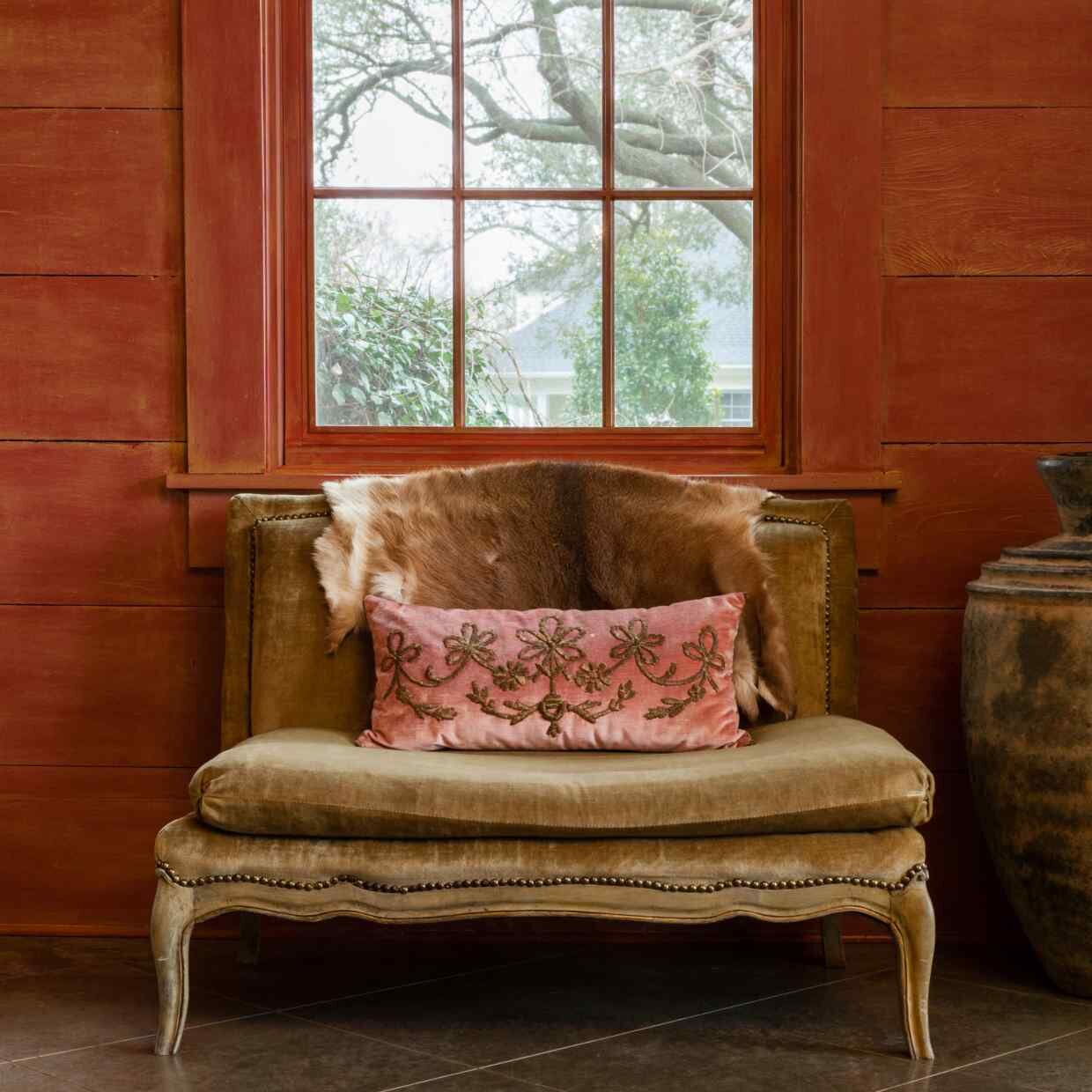
It’s a passion that began with a visit to the Porte de Vanves flea market in Paris, where she was introduced to dazzling fabric remnants from Holland, Belgium and Italy. “I’m in awe of Renaissance textiles. I salvage pieces, restore them using threads with the right patina, and then rearrange them into different compositions and patterns,” she explains.
From her studio in northern Louisiana, Vizard – along with her team of seamstresses – makes bespoke pieces that grace chic apartments in Manhattan and London, as well as royal residences in Abu Dhabi. Her commissions for private clients and high-profile decorators such as Bunny Williams take many forms, including bolsters in shades of French blue, rose and ochre, all embellished with vintage thread.

It is her pillows, however, that are most sought-after – in particular her elongated designs (examples in first picture, from $2,000, and second picture, $1,825), often 1m or more in length, that accent couches and beds. Simpler decorative squares (example in third picture,$2,175) in muted velvets and rich, nubby linens are handcrafted using long, narrow strips from Italian vestments. Some cushions (from $3,600) even feature extremely rare, fragile fabrics such as a 17th-century Italian fragment depicting an Ionic column – beautifully framed for posterity.

Striking straw marquetry: Christophe Pourny
Cultivating a big voilà! moment upon walking into a room
Cultivating a big voilà! moment upon walking into a room
“Straw marquetry is so unique, so precise, that no two pieces will ever be the same,” says French-born, Brooklyn-based furniture designer and restorer Christophe Pourny, “which makes it an attractive prospect for the person who wants a truly bespoke finish, texture, and surface.”

Inspired by the midcentury work of French interior designer Jean-Michel Frank, Pourny’s talent for lacquer work, inlay and traditional straw marquetry – working in handcut rye straw sourced from Burgundy and Brittany – is realised both through close collaborations with interior designers such as David Kleinberg, Jamie Drake and Thierry Morali, as well as by working on commissioned pieces for private clients – from cigar boxes ($1,000) to entire rooms (from $100,000).
The process typically takes two to three months, depending on the size and scope of work. Popular requests are for accent tables and consoles ($15,000), entertainment centres ($25,000) and night stands ($5,000) with exquisite, iridescent patterns in chevrons, fans, circles, sunbursts and, in the case of bespoke boxes, monograms or crests – in hues that range from the palest gold to rich, dark brown. Larger projects have included a foyer in Bratislava, a powder room ($20,000) in New York, and elevator doors and wall panelling for one London client “who wanted that big voilà! moment upon entry”, says Pourny.

He has also seen an uptick in requests from yacht owners who appreciate the “enduring finish that requires no maintenance. Straw is coated in silica that makes it naturally water resistant so no varnish or oil is required.”
For Pourny, the joy comes from “transforming what might be an ordinary piece of furniture into a stunner using an unexpected finish”. Indeed, the unexpected is what drives him to imaginative new heights: “My passion for such historical methods has taught me how to take creative licence when a piece merits it.”

Not the Georgetown of Your Youth: The Very Grown-Up Capella Hotel
Capella is a charming new addition to the Washington, DC, hotel scene. Guest services are at a premium, and the staff knows how to make a stay feel special but never ostentatious.
WASHINGTON, DC – It had been years since I’d spent any real time in Georgetown, the quaint Washington, D.C., neighborhood of cobblestone streets and picturesque row houses, and I was pleased to see that it has retained its charm even as it’s been spiffed up in recent years. I went in expecting the M Street of my youth — a main drag cluttered with chain stores and tourists — and instead found a contender for my new favorite urban hotel, excellent restaurants, and quiet, atmospheric side streets at every turn.
CHECKING IN
Overview
It used to be that a luxury stay in Georgetown was synonymous with The Four Seasons, a hotel long considered a DC power breakfast spot with a killer, central location. Now there is a new, design-led addition to the five-star hotel scene, the quietly cool Capella Hotel just down the street.
With 49 sumptuously appointed rooms, the high-touch, boutique escape is tucked away next to the historic C&O Canal Towpath. It feels like a luxurious homestay — albeit one with an excellent restaurant, a rooftop terrace with sweeping views of the Potomac, a state-of-the-art fitness facility, and a staff of knowledgeable personal assistants at your beck and call. I spent 24 blissful hours here and I can’t stop raving about it to anyone who will listen.
Claims to Fame
There are so many special touches at Capella, and they begin from the minute you check in at — get this! — whatever time you choose. There is no need to request an early check-in or a late check-out because the management believes that their customer wants flexibility above all else. I tested the system by arriving at 11 a.m. and was whisked to my room without delay. There is no traditional registration. Guests are somehow knowingly greeted curbside and all paperwork is handled in a discreet, pleasant way in a casual living room setting.
The property’s sleek, modern finishes, courtesy of designer Peter Sillig, include exquisite marble floors and paneling, parquet floors reclaimed from a European schloss, and a stellar contemporary art collection with works by abstract expressionists Edvins Strautmanis and Markus Lupertz and sculptures by English artist, Collin Reid, to name a few.
From the Living Room, with its eighteen-foot ceilings, to the Grill Room, a destination restaurant, to the clubby, cozy Rye Bar that draws a discreet, local crowd, the Capella feels like a hidden gem. Yet it is mere steps from the bustling intersection in the heart of Georgetown, M Street, and Wisconsin Avenue.

The private rooftop lounge at the Capella Hotel.

The indoor/outdoor rooftop pool at Capella.
What’s on Site
The area is culturally rich — Georgetown University, The Kennedy Center, the Smithsonian museums — so, of course, you must leave the premises, but you will be hard-pressed to do so. Capella is just so peaceful, so cossetting, that it makes for a perfectly self-contained 48-hour stay.
The private rooftop lounge has an indoor/outdoor pool and a fire pit. Rye Bar on the first floor offers an excellent selection of craft cocktails and rare whiskeys to whet the appetite for the Grill Room next door. The soothing dining room — all hues of grey and aubergine — serves breakfast, lunch, brunch (that must be booked well in advance), and formal dinner.
I found the fitness facilities to be sufficient — an elliptical machine, a treadmill, and a bike overlooking the spires of Georgetown University and the National Cathedral. The truly motivated can go to a yoga studio and a more comprehensive gym nearbby.
There is no spa by design, as the management decided that in-room services were preferable for their clientele, but everything, from a simple pedicure to a haircut by noted stylist Luigi Parasmo, can be arranged with a few hours notice. Resident stylist April Yvonne is at the ready if the need arises for a frock to wear to the Kennedy Center or for after-hours access to Neiman Marcus. A personal assistant on staff specializes in cultural experiences like walk-on roles for children at The Washington Ballet and behind-the-scenes tours of Mount Vernon. In short, every request can be accommodated.
Perhaps the biggest on site asset is Jason Denby, director of guest relations, who is incredibly attuned to his guests’ needs and knows how to make a stay feel special but never ostentatious.

The Grill Room restaurant at Capella.
The Food
One of the stars of the show at Capella is The Grill Room, a modern European restaurant with floor-to-ceiling windows overlooking the C&O Canal. Outdoor seating (with wool blankets and heat lamps when it’s chilly) lend it a European vibe, and executive chef Frank Ruta (formerly of the White House) creates everything from a terrific burger with shoestring fries to a refined Dover sole with passionfruit sabayon, leeks, and pea shoots. Familiar comfort foods — a wedge salad, thick cut pork chops — are thoughtfully tweaked and paired with delicious sides like oven-roasted potatoes and root vegetables drizzled with a warm anchovy balsamic vinaigrette.
A private dining room that seats up to eighteen guests is set like a glass-walled library at the center of the restaurant and would be a wonderful place to host a special event. Light bites — plates of salumi to share, artisanal cheeses, and freshly baked chocolate chip cookies — are available in The Rye Bar. Oh, and room service delivers a mean pasta Bolognese, as confirmed by my hungry teen who ordered it at an insane hour.
In the Room
All the rooms and suites have a separate sitting area with desk, a soaking tub, flat screen TVs, plush beds, and comfortable furnishings in shades of cream and grey.
Spacious bathrooms have two sinks, plentiful mirrors, and rainfall showers and some have canal views. Other thoughtful touches include free WiFi, beverages, and newspapers of choice, as well as coffees, teas, and Keurig machines for brewing at all hours.
Room with a View
I stayed in a superior king room, a spacious 420 square feet overlooking 31st Street and the hotel entrance. This doesn’t sound lovely, but it was surprisingly quiet and there was abundant light. I liked seeing the small Italian restaurant across the street and the Potomac River in the distance.
In an ideal world, I’d love to stay in one of two 1,200 square-feet Presidential Suites ($7,000 per night) for the full living rooms, stocked pantry areas, fireplaces, and, yes, the expansive views.
This Place Is Perfect For
Business travelers, parents dropping kids off at Georgetown University, foodies, families who need large suites and interconnecting rooms, and couples looking for a romantic getaway. Capella has seriously wide appeal, and can work for a solo traveler as well as it did for the multi-generational family celebration that prompted my visit.
But Not So Perfect For
Anyone looking for a scene or travelers who like a sprawling hotel with all the bells and whistles.
Rates
Superior king rooms start at $495 a night.

The superior king room.

Presidential suite inspiration.
CHECKING OUT
Neighborhood Vibe
Georgetown is a bustling, walkable, college town. Get out and enjoy it.
What to Do Nearby
One block from the hotel is busy M Street, which has all the basics: pharmacies, Dean & Deluca (excellent spot for picnic provisions), lots of shops. A few more blocks away are N and O Streets, with their sweet, historic brick homes and well-manicured trees. Still further is Dumbarton Oaks, a stately house museum with gardens that makes for a great wander before hitting the Georgetown University campus at the corner of 37th and O Streets.
DC’s biggest annual events are the Cherry Blossom Festival, which begins at the end of March and is an occasion for an array of cultural activities as well as beautiful blooms, and the Fourth of July fireworks from the Mall, which some of the best in the country. July 4 guests will have a perfect, calm vantage point — cocktail in hand — from the Capella’s rooftop terrace.
Food is a major area focus. Nearby Fiola Mare in Georgetown Harbor serves incredible Italian seafood along the Potomac. Chez Billy Sud is a lovely spot for an intimate French meal. Café Milano is the go-to for all kinds of crudi. Obelisk in nearby Dupont Circle serves simple Italian fare in a charming townhouse setting. Sushi Taro offers a traditional kaiseki experience. Gourmands should take advantage of Capella’s ability to score a reservation at Minibar, molecular gastronomist José Andrés’ superb but tiny restaurant that offers a multi-course, fully immersive dining extravaganza.
Good to Know
Consult the Georgetown University schedule to avoid Parent’s Weekend and graduation. Also, get comfortable with taxis and walking everywhere, as the DC Metro doesn’t stop in the vicinity.
PLAN YOUR TRIP
How to Get There
The Capella is a fifteen-minute taxi ride from Union Station (Amtrak) and Washington Reagan International Airport. The hotel’s personal assistants are very good at gauging traffic patterns and arranging taxis accordingly. When possible, they will have you driven in the hotel’s complimentary car that waits outside.
Getting Around
Parking in this part of Washington is a nightmare, so it’s best to explore the area on foot. Excellent restaurants, the scenic C&O Canal, the Georgetown University campus, and the particularly lovely N and O streets are all just a few blocks away.
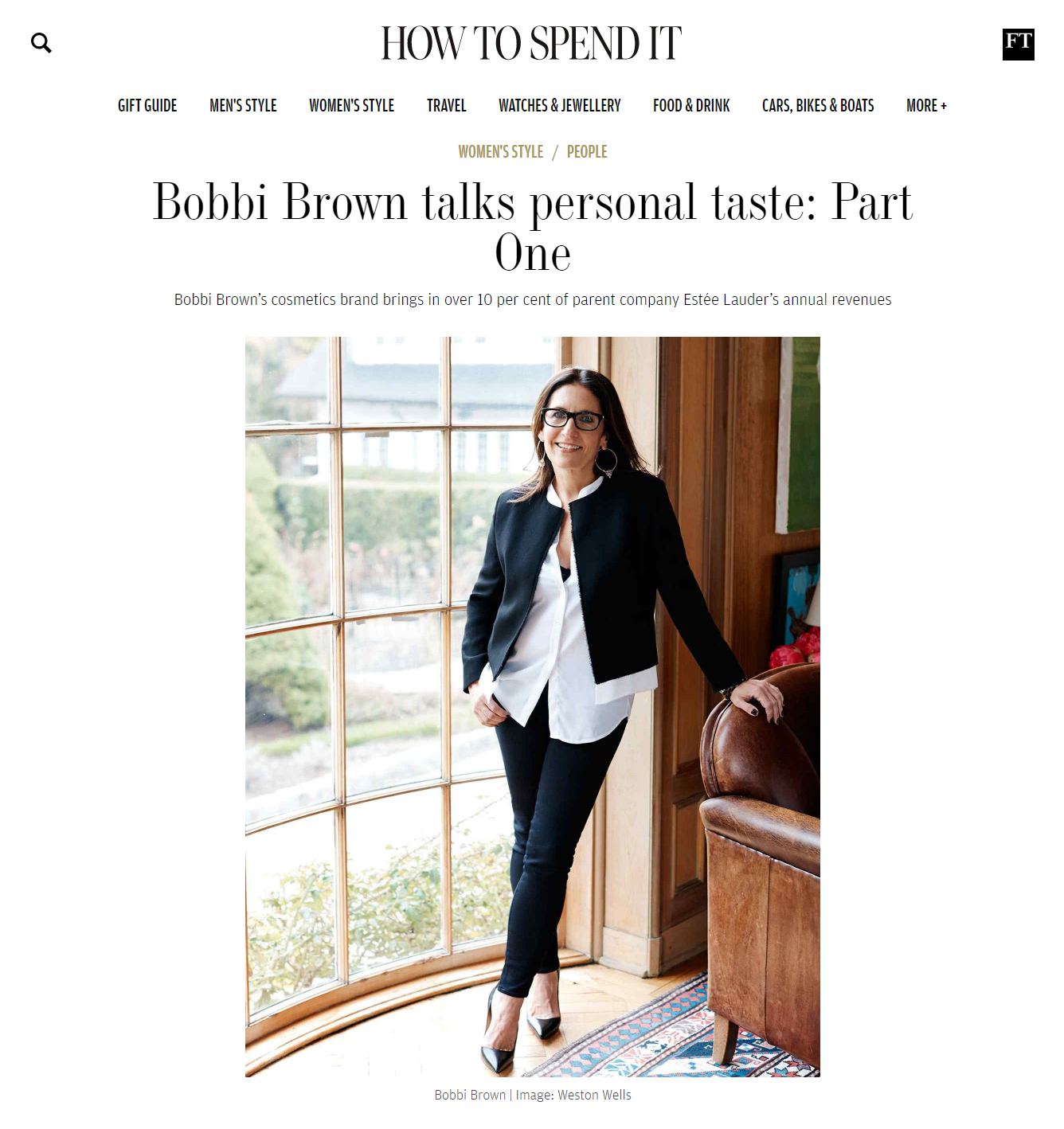
Bobbi Brown talks personal taste: Part One
Bobbi Brown’s cosmetics brand brings in over 10 per cent of parent company Estée Lauder’s annual revenues
Bobbi Brown’s cosmetics brand brings in over 10 per cent of parent company Estée Lauder’s annual revenues
My personal style signifiers are dark-framed glasses of my own design worn with a black jacket – Chanel or Barneys own label – and tailored black jeans; I have more than 30 pairs and like Rag & Bone. I also always wear a watch – a sporty Cartier on a black strap or my new Apple Watch by Hermès.www.apple.com. www.barneys.com. www.chanel.com. www.hermes.com. www.rag-bone.com.
An indulgence I would never forgo is really good Casa Dragones Joven tequila [pictured]. It’s made from pure blue agave and comes in a beautiful crystal decanter – but at $275 a bottle it’s definitely an indulgence. www.casadragones.com.

Baker’s Bay, the Bahamas | Image: © The Islands of the Bahamas
The last music I downloaded was for my upbeat playlist that I listen to when I run – Pitbull’s Time Of Our Lives, Jay Z’s Magna Carta Holy Grail, Biggie Smalls’ Mo Money Mo Problems and Jeremih’s Don’t Tell ’Em. I love rap and hip hop.
The last thing I bought and loved was a Lanvin navy cardigan with rhinestone buttons. I found it at Jeffrey, a boutique in New York’s Meatpacking District; it was the only piece that called my name. It is one of Alber Elbaz’s last designs for Lanvin – part of design history. 449 W 14th St, New York, NY 10014 (+1212-206 1272; www.jeffreynewyork.com). www.lanvin.com.
And the thing I’m eyeing next is a red buffalo and pebble-leather tote with detachable clutch by Seattle-based Ampersand As Apostrophe. I have a bag obsession – lightweight ones without obvious logos – and like to support niche brands. $609; www.ampersandasapostrophe.com.
The site that inspires me is Baker’s Bay [pictured] in the Bahamas. We are building a home there and the peaceful surroundings, turquoise water and white sandy beaches are very calming.

A Chance in the World by Steve Pemberton
The books on my bedside table are often memoirs and currently include At Liberty: From Rehab to the Front Row by Liberty’s managing director Ed Burstell, and A Chance in the World [pictured] by Steve Pemberton, the story of a man who rose from broken foster home to Fortune 50 executive. It’s inspirational.
The best souvenir I’ve brought home is a vintage Louis Vuitton trunk [pictured] from Grays antiques in London. My husband and I bought it on the way to the airport with no time to overthink its price or practicality. It is one of my favourite pieces and serves as a coffee table in our living room. 58 Davies St, London W1 (020-7629 7034; www.graysantiques.com).
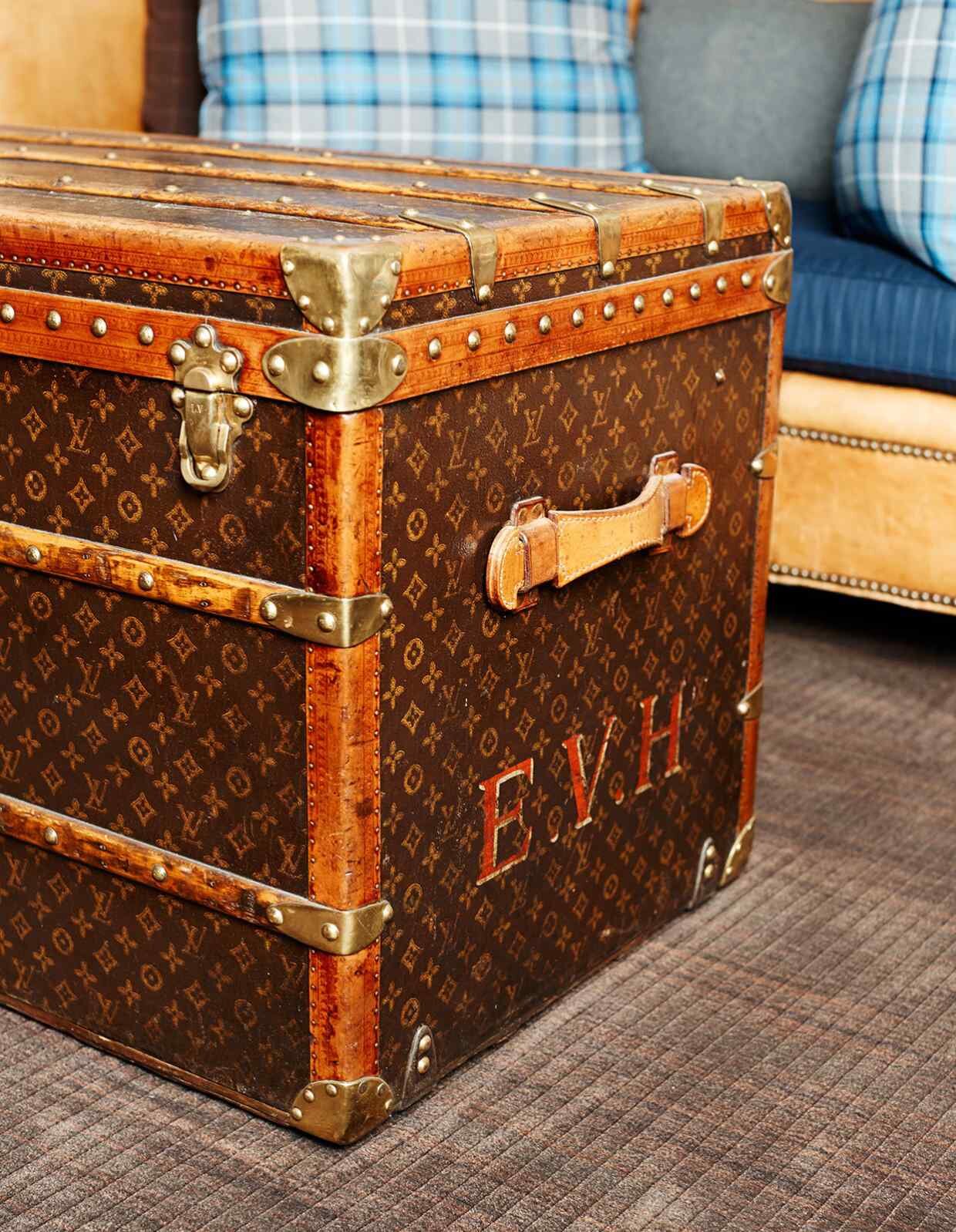
Brown’s vintage Louis Vuitton trunk | Image: Weston Wells
Objects I would never part with are framed photos of my sons – Dylan [25], Dakota [23] and Duke [17] – given to me by my husband for Mother’s Day. The beautiful silver frames hold the first picture taken of each child – they’re incredibly special.
The beauty staples I’m never without include my own Intensive Skin Serum Concealer, my “desert island cosmetic” that leaves my skin looking like I’ve had eight hours sleep; Bumble and Bumble’s Mending Shampoo and Conditioner, excellent for colour-treated hair; Tweezerman tweezers for their precision; and fragrance – one of my own, or Chanel No 5 or Cristalle, which are light and fresh. Bobbi Brown Intensive Skin Serum Concealer, £28 for 7ml; www.bobbibrown.co.uk. Bumble and Bumble Mending Shampoo, £23 for 250ml, and Conditioner, £25 for 250ml; www.bumbleandbumble.co.uk. Chanel Cristalle, £52 for 50ml EDP, and No 5, £68 for 50ml EDP; www.chanel.com. Tweezerman tweezers, £19; www.tweezerman.co.uk.

Casa Dragones Tequila, $275 for 75cl
The last meal that truly impressed me was at RL in Chicago. The decor is perfect – clubby with rich fabrics and oil paintings. We had oysters with mignonette granité, followed by incredible Dover sole; they make a mean martini too. Chicago is my hometown and I’m friends with the Lauren family, so this place is very special to me. 115 E Chicago Ave, Chicago, IL 60611 (+1312-475 1100; www.rlrestaurant.com).
My favourite websites include NYTimes.com, WSJ.com and FT.com for hard news, and Thecoveteur.com for the latest beauty products and trends. Twitter is my first check of the day; if any news is breaking, I’ll learn about it here. www.twitter.com.

Bobbi Brown talks personal taste: Part Two
The cosmetics doyenne concludes her compendium of passions with shopping in SoHo, her love affair with London and the wellbeing treatments she can’t live without
The cosmetics doyenne concludes her compendium of passions with shopping in SoHo, her love affair with London and the wellbeing treatments she can’t live without
My style icon is Phoebe Philo. I like her simple aesthetic: a shirt is a shirt and a pair of trousers is a pair of trousers, but with her flawless design and fabric choices these pieces become special. She carries herself beautifully too and I think she is a wonderful role model – a working mother who puts her family first. To me, she embodies effortless, timeless style.
The best gift I’ve given recently was a series of portraits by photographer Henry Leutwyler, to my friend John Demsey [group president of Estée Lauder]. Leutwyler photographed his four-year-old daughter as a surprise. www.henryleutwyler.com.

Bobbi Brown’s Flamingos suede boots, £300 | Image: Weston Wells
And the best one I’ve received recently was a pair of delicate hoop earrings with clusters of dangling pearls by my favourite jewellery designer Ted Muehling. I have an incredible collection of his things – strands of pearls in rosy pink and opalescent colours; simple brushed-gold earrings – and they often inspire my make-up colours and collections. www.tedmuehling.com.
An unforgettable place I’ve travelled to in the past year was Biarritz with my whole family, including my three grown sons and their girlfriends. There is nothing better than a beachy vacation with French food and we ate delicious seafood in atmospheric seaside restaurants like Le Surfing. It was a very relaxing, special trip. 9 Boulevard Prince de Galles, 64200 Biarritz (+3355-924 7872; www.lesurfing.fr).
The people I rely on for personal grooming and wellbeing include my osteopath, Dr Erik Steiner, whose bi-weekly sessions keep me perfectly aligned with just 45 minutes of gentle manipulation. Then there’s my manicurist, Roza Israel, who comes to our offices weekly and is available to all our staff, and my hairstylist Marissa Martoni at Marie Robinson; she’s been cutting my hair for years and I trust her completely. I also have regular Chinese massages at a small and non-descript salon near my house; I love the low-key atmosphere and the fact that I don’t have to book it in advance. Dr Erik Steiner, 41 Union Square West, New York, NY 10003 (+1212-227 6967; www.eriksteinerwellness.com). Marie Robinson Salon, 10th floor, 40 W 25th St, New York, NY 10010 (+1212- 358 7780; www.marierobinsonsalon.com). Roza Israel, rozaisrael@yahoo.com.
A recent “find” is Sant Ambroeus restaurant on Lafayette Street near our offices in New York. It’s been open for a while but is only now coming onto my radar. I love everything about the place – the warm atmosphere, the simple-yet-delicious food, the excellent people-watching. The owner is an amazing host. 265 Lafayette Street, New York, NY 10012 (+1212-966 2770; www.santambroeus.com).

Phoebe Philo | Image: David Sims
If I didn’t live in Montclair, New Jersey, the city I would live in is London because I am something of an Anglophile. I would love to live in Mayfair, at the Connaught, with its wonderful bar and special fresh-ginger tea. I like the beautiful architecture in this area and its proximity to Hyde Park, where I’d go running. Scott’s is one of my favourite restaurants in the world and I love the beautiful salads and grains at both The Detox Kitchen and Ottolenghi. I’m also a big fan of the theatre and living here would make seeing the latest plays much easier. The Connaught, Carlos Place (020-7499 7070; www.the-connaught.co.uk). Detox Kitchen, 10 Kingly Street (020-7439 9386; www.detoxkitchen.co.uk). Ottolenghi, 13 Motcomb Street (020-7823 2707; www.ottolenghi.co.uk). Scott’s, 20 Mount Street (020-7495 7309; www.scotts-restaurant.com).
The last thing I added to my wardrobe was a pair of black suede platform boots by Flamingos. I’m typically a sneaker girl and love comfortable footwear, but sometimes I need a bit of height. These boots have a thick rubber sole and can be worn with everything from Acne jeans to black Nili Lotan pants. £300; www.fwrd.com.

London at dusk | Image: Getty Images/Robert Harding World Imagery
In my fridge you’ll always find almond milk for my morning espressos and freshly squeezed lemon juice for my husband’s hot-water infusions. There’ll be eggs, all kinds of berries for smoothies and, typically, the makings of a casual dinner – a roast chicken from Whole Foods, Rao’s pasta sauce, kale for a salad – and San Pellegrino grapefruit soda, which the whole family likes mixed with sparkling water. www.raos.com. www.sanpellegrinofruitbeverages.com. www.wholefoodsmarket.com.
My favourite room in my house is my bedroom. It’s a soothing space – very open and full of serene whites and greys. I like to retreat here to read and watch TV, usually at the same time, before drifting off to sleep.

Sant Ambroeus in SoHo | Image: Bruce Buck
The artists whose work I would collect if I could include Banksy, Jean-Michel Basquiat and Andy Warhol. I love the colour, composition and openness of pop art, and while the vibrancy isn’t in keeping with my personal aesthetic, I find their work very stirring.
If I had to limit my shopping to one neighbourhood in one city, I’d choose SoHo in New York; I love the street life in this area and the high-low mix of stores. There’s Acne Studios and Maison Margiela for shoes and Steven Alan for its clothing edit. The spare Céline store on Wooster Street is my go-to for timeless pieces and I like J Crew for basics such as cashmere sweaters. Equinox has an excellent selection of freshly squeezed juices and raw foods and Balthazar is the best for delicious take away salads. Acne Studios, 33 Greene Street (+1212-334 8345; www.acnestudios.com).Balthazar, 80 Spring Street (+1212-965 1414; www.balthazarny.com). Céline, 67 Wooster Street (+1212-226 8001; www.celine.com). Equinox, 69 Prince Street (+1212-334 4631; www.equinox.com). J Crew, 99 Prince Street (+1212-966 2739; www.jcrew.com). Maison Margiela, 91 Grand Street (+1646-781 7852; www.maisonmargiela.com). Steven Alan, 230 Elizabeth Street (+1212-343 7974; www.stevenalan.com).
If I weren’t doing what I do, I would be a chef. I like simple, great-tasting food that makes you look and feel good and I’d love to be able to cook on a regular basis. This is a huge area of interest for me, so much so that I’m signed up for cooking classes with Lily Kunin, founder of Clean Food, Dirty City, where I hope to learn to make delicious, plant-based meals. www.cleanfooddirtycity.com.