
Jon Batiste: How To Spend It in New Orleans
The musician and bandleader of The Late Show with Stephen Colbert celebrates the laidback charm of his Louisiana birthplace
The musician and bandleader of The Late Show with Stephen Colbert celebrates the laidback charm of his Louisiana birthplace
I was raised in and around New Orleans and associate the city with my grandparents and my extended family. Growing up, I went to St Augustine, a historically all-black high school known for its rigorous academics and athletics, as well as for the Marching 100, a band that is renowned in the South. I also attended the New Orleans Center for Creative Arts (NOCCA), Louisiana’s premiere arts conservatory. My cousin, Alvin Batiste, was the creative director, and the jazz training is at the level of Juilliard.
The historic intermingling of cultures here encourages creativity: there is no place quite like it. The 1700s are still felt in Congo Square – sacred land – and in the French Quarter with Jackson Square, Bourbon Street and the monuments that are both beautiful and problematic. New Orleans is the ground zero of the cultural explosion that came out of the stain of slavery.

Liuzza’s by the Track Lounge & Grill © William Morgan/Alamy

NOCCA winter jazz festival
The citizens here have a built-in expectation that we will live through rising tides and climate change. Hurricane Katrina tested our strength with devastating force and then, on the 16th anniversary of that storm, Ida struck the city. The levees held better this time, but we still haven’t done enough to draw attention to global warming and to help the many who have been displaced.
The key to New Orleans is how understated everything is; the unadorned spots are always the best. Verti Marte in the French Quarter is like a convenience store that sells the best po-boys – it’s the French bread that makes the difference. Mahony’s fried shrimp version is great too. Liuzza’s by the Track is another favourite for BBQ shrimp, and I go to Dooky Chase’s for all the New Orleans classics: red beans and rice, étouffée and seafood gumbos. The city is known for beignets – fried dough sprinkled with sugar – and my favourites can be found at Café du Monde on Decatur Street, which is an institution. But Tastee Deli-Donuts in the Seventh Ward is fantastic as well. And then there is Manchu Kitchen – a Chinese restaurant infused with all the flavours of New Orleans. Food is central to experiencing the city and you have to go all in – it isn’t about being healthy.

Jon Batiste in New Orleans © Rambo Elliott

The Ernest Hemingway suite at Hotel Monteleone
For great places to stay, I like the Hotel Saint Vincent in the slow-paced Lower Garden District, in part because it was inspired by music: hotelier Liz Lambert came up with the idea on a night out with musician St Vincent. Built in the 1860s, it feels very cool, with a beautiful courtyard and a French-Vietnamese café. The Hotel Monteleone in the heart of the busy French Quarter is a historic property run by the fifth generation of the same family. It has a rich literary past, having hosted Truman Capote, Ernest Hemingway and Tennessee Williams.

Hotel Saint Vincent in the Lower Garden District

Beignets and chicory coffee at Café du Monde © Robert Harding/Alamy
Music is a huge focus everywhere but, for me, one of the best venues is Preservation Hall. I love to go here and listen to drummer Shannon Powell, aka “the king of Tremé”, the New Orleans neighbourhood where he grew up. For fantastic jazz and Creole jambalaya, Snug Harbor on Frenchmen Street is the spot, although you can’t go wrong with any of the clubs along that strip. And the New Orleans Jazz Museum in the old US Mint gives a comprehensive look at the birthplace of jazz, as well as live performances.

Jon Batiste in City Park, New Orleans © Rambo Elliott
New Orleans is such a small city that I recommend getting a bike and just riding through the Garden District, along Chartres Street and ending up at the Mississippi River. The whole tour will take you three hours – between breakfast and lunch. Mardi Gras in spring is very particular to New Orleans, and the jazz festival in May is another special time. Founded by my mentor, George Wein, this celebration of music, art and culture is set to take place in spring 2022. And an unmissable holiday moment is the Christmas Eve bonfires on the levee. This is a Cajun tradition where elaborate structures are set ablaze, lighting up the sky and the Mississippi River. Jon Batiste’s latest album We Are is available on Verve Records

Franco Loro Piana: How To Spend It in Piedmont
Franco Loro Piana – the founder of activewear label Sease – offers a tour of his ‘true home’ in the Italian Alps
Franco Loro Piana – the founder of activewear label Sease – offers a tour of his ‘true home’ in the Italian Alps
My Dutch-German grand-mother escaped to the Valsesia valley, near the Swiss border in the western Alps, in the second world war. It was here that she met my grandfather, Franco, a second-generation wool merchant and manufacturer. Together with their sons, Sergio and Pier Luigi, and my aunt, Lucia, they developed our family business, Loro Piana, in this authentic, rugged part of Italy. The area is my true home and where I lived until I went to university. I grew up skiing after school here, and it’s where I made my lifelong best friends. The setting is beautiful – in the shadow of Monte Rosa yet an easy escape from Milan and Turin – and the pace of life is slower and simpler. It’s also perfect for hardcore ski touring, mountaineering, ice climbing and biking.

Rimasco, one of the region’s lakes © Lea Anouchinsky
The main Valsesia valley branches off into secondary valleys and in one lies the little village of Rima. My grandmother’s house – a typical stone and wood structure in the Walser style – still stands, and it is one of 50 or so original buildings. I spent my summers here hiking, swimming in the rivers and learning to sail in the nearby lake. Autumn is equally beautiful, with foliage that is so dramatic it’s like being in Japan. The mountainous trails are steep and challenging – regardless of the season – so whether you are deer hunting or climbing up for virgin powder runs, I highly recommend a guide to help navigate the challenging terrain.

Loro Piana in the Heidi restaurant © Lea Anouchinsky
Rima is magical and you can completely disconnect from the rest of the world; it’s one of the few places left that are so far removed. I love to stop by Ristorante Alpino (+39 347 416 0781) in the main piazza to eat la miaccia – flatbread stuffed with local Toma cheese and pancetta. On the way down the valley, stop at the restaurant Il Giacomaccio if you want a hearty dinner – they serve the area’s speciality, polenta with deer, as well as the local Travaglini wines. I bought my first mountain bike here at Locca and love to ride the 100-mile trail almost year-round. It’s likely you’ll never run into anyone along the Balmuccia-Alagna trail that runs along the valley of the river Sesia. This is also a top-notch spot for rafting and fly fishing. In fact, Yvon Chouinard, the founder of Patagonia, came here to learn from local fly-fisherman Mauro Mazzo. He uses a very specific technique called Tenkara, using just a rod and a fixed line, and makes special reels. There are rustic, family-run places to stay nearby including Locanda Margherita in Rassa and the Ristorante Residence Giardini in Piode. But for real local colour, try one of the remote refugios – some are accessible only by helicopter. One of the most spectacular is the Margherita Hut, at 4,600m. You can hike up – it takes at least nine hours – and spend the night in Europe’s highest refugio, then ski down at dawn. For something a little more comfortable, try the chalet-style MH Cristallo.

The Heidi restaurant in Rassa...

... and Loro Piana on its terrace © Lea Anouchinsky
On the west side of the valley, the village of Mera is set right on the slopes and reachable only by walking or by cable car. Sleeping on the slopes in a mountain hut is a unique feeling. I learned to ski here, and have had magical winter nights ski-touring with the full moon lighting the way. In the past few years, I’ve returned to ski touring and I like to hike up – with the deer, foxes, rabbits and birds – before descending from 2,000m at the top of the mountain down to the village that sits at 1,000m. After a full day of skiing, you can’t miss a sunset aperitivo on the slopes at Il Baretto (+39 328 908 9493) – just grab a beer and enjoy the majesty of the Monte Rosa, which sits right in front of you in multiple shades of pink.

At 4,600m the Margherita Hut is the highest refugio in Europe
Keep going up the valley, along the river Sesia, and you’ll find the towns of Scopello, Piode and Riva Valdobbia, all leading up to the main village of Alagna, where the road ends. Alagna is the most important ski area in the western Alps, with more than 95km of amazing slopes and a cable car that takes you up to the glacier at 3,000m. The area is known for its very technical, off-piste terrain that draws skiers from as far afield as Sweden and Norway.

A suite at Villa Crespi, where there is also a two-Michelin-starred restaurant © Francesca Pagliai

A fresco at Sacro Monte di Orta © Alamy
Malfatta is one of the best lines here and a guide is a must for the 50-degree chutes. There are some legendary guides like Silvio Mondinelli, who has hiked up K2 and Mount Everest, but Guide Alpine Alagna will also find you an expert who knows every corner of this complicated terrain. The legendary La Balma is another favourite run for fresh powder on the glacier. For a nice ski break, stop at a slopeside hut called Der Shoppf (+39 348 330 7292) to enjoy local food and get some sun on the terrace. There’s also a little bar for the end of the day – Caffè delle Guide (+39 0163 923 209) – where the guides hang out. Or try Cà Nosta in the piazza for a simple dinner before heading to Da Mario (+39 0163 910 28) for an epic gin and tonic to end the night.

The family-run Locanda Margherita
At the bottom of the valley is Lake Orta. It’s west of Lake Maggiore and about one-eighth the size of Lake Como, but there is still so much to do, including exploring the town of Orta San Giulio, which is full of piazzas and cafés but with few cars. Don’t miss a meal at Villa Crespi’s two-Michelin-starred restaurant, helmed by chef Antonino Cannavacciuolo – it’s worth booking well ahead.

Loro Piana in the Valsesia valley © Lea Anouchinsky
In the middle of the lake is the Isola di San Giulio, an island that is home to a 12th-century basilica and a 19th-century monastery. One of the most amazing things here is the Sacro Monte di Orta (part of a Unesco World Heritage Site of 20 chapels) that has incredible frescoes and overlooks Lake Orta and the town. This part of Piedmont is blossoming, with a new generation coming in and supporting growth. Like many regions in Italy, it is still under the radar, but its beauty and authenticity, as well as its proximity to the cities, makes it very special.

Gary Tinterow: How To Spend It in Houston
Gary Tinterow, director of Houston’s Museum of Fine Arts, on the pioneering spirit of America’s third-largest city
Gary Tinterow, director of Houston’s Museum of Fine Arts, on the pioneering spirit of America’s third-largest city
Houston is a can-do city, a port city, so it has always welcomed the world – and it will soon be the third-largest city in the US. There is a culture here of optimism and possibility. That spirit drew me back to my hometown after 29 years at The Metropolitan Museum of Art in New York.
After the oil boom at the turn of the century there was great wealth generated here, and with that came civic-minded families focused on creating their own cradle of culture. As a result we have outsized arts institutions: The Museum of Fine Arts (Mies van der Rohe’s only museum in the US), The Hobby Center for the Performing Arts, the Houston Ballet, the Houston Grand Opera, the Houston Symphony. This commitment to artistic patronage continues today, and it’s the reason it’s easier to get things done here; in just a few years at the MFAH we’ve put up buildings by Steven Holl Architects and commissioned works by Ai Weiwei and Olafur Eliasson.

The Nancy and Rich Kinder Building at the Museum of Fine Arts
Olga Merson, 1911, by Henri Matisse, at the MFAH © Succession H. Matisse/Artists Rights Society (ARS) New York
The Menil Collection, not far from us, is another treasure. This Renzo Piano-designed museum with its Cy Twombly Gallery, as well as vast collections of abstract expressionist and pop art, is a must see. For a quick bite after a visit, I love Lua Viet Kitchen, just across from the museum, for excellent “Shaking Beef” – seared steak, watercress, jasmine rice and scallion oil.

Tinterow in the Lillie and Hugh Roy Cullen Sculpture Garden at the MFAH © Bryan Schutmaat
I spend a lot of my time in the Museum District, but for a green escape I’m drawn to the Buffalo Bayou Park Cistern. Alongside biking and running trails, the former cistern is now full of art installations. Galleries are another strength here; Hiram Butler is a MoMA alum whose gallery features modern American art by well-known and emerging artists alike. Sicardi Ayers Bacino is devoted to avant-garde modern and contemporary Latin American art, while McClain is very international in focus but with many Texan artists represented as well. The Project Row Houses – a series of shotgun-style houses that have been restored in Houston’s historic Third Ward – are an experimental art and enrichment community centre.

The Project Row Houses in the Third Ward © Peter Molick
Because of our diverse culture – from Mexican-Americans to people who come here from Central Asia – the cuisine in Houston is fantastically varied. When people think of “Mexican food” they’re often really talking about Tex-Mex. True Mexican food, which I adore, is exquisite and famous for its balance of flavours and moles – the thick, aromatic sauces made of ground up dried chillis and poured like a ragu over fish, fowl or vegetables. Two of my top spots for this are Hugo’s – where the baby pig is outstanding – and Cuchara, which is known for its Oaxacan mole made by female chefs. Ninfa’s is my favourite Tex-Mex joint and then Picos which specialises in regional Mexican cooking, which makes it a great place for experimenting with both cuisines. Outside of Mexican, I’m a huge fan of BCN – as in the Barcelona airport code – where chef Luis Roger, a student of Ferran Adrià, cooks refined Catalan cuisine.

The Menil Collection © Kevin Keim
I’m not much of a shopper, with two exceptions: good food and good books. At Phoenicia Specialty Foods in west Houston, you’ll find everything you need to make Middle Eastern and central Asian dishes, from spices and breads to pots and pans. For books, I go to Brazos Bookstore, Houston’s best independent bookseller, where you’ll often find University of Houston and Rice professors leading discussions. Some say there are two seasons in Houston: wet and dry. For six to nine months the weather is favourable, while in the summer, temperatures and humidity are in competition. From late-September through early-May, everyone is outdoors, exercising in the parks and verdant neighbourhoods. One winter highlight I try not to miss is the Houston Livestock Show and Rodeo at the NRG Stadium. It’s touching to see the young competitors with their livestock – and where else can you eat fried Oreos?

The Houston Livestock Show and Rodeo © Mark Felix/Getty

Tex-Mex at Ninfa’s © Becca Wright
When people come to stay, I often recommend the five-star Post Oak Hotel. I advised its owner, Tilman Fertitta, on the acquisition of works by Frank Stella and Alex Katz. In the Museum District there is Hotel ZaZa, with its spectacular skyline views. Then the Montrose area is home to a new boutique hotel, La Colombe d’Or, which fuses historic architecture with contemporary art. I’ve always been curious about lives different than my own and so I moved away for a time, but Southern politeness and manners drew me back. The crowd I’m seeing at the MFAH is much more diverse than what I saw at The Met in New York, so it feels like a dynamic time; Houston has really grown into its big city shoes.

Vive La France
After a long, pandemic-induced slumber, the City of Light is starting to twinkle again with a slew of stunning hotel, restaurant and retail openings this fall and beyond. From the lush grounds at Versailles to the Côte d’Azur, the latest hospitality experiences outside the French capital also make visitors feel cosseted as never before. We suggest booking a ticket on all-business class boutique airline La Compagnie, which flies daily from New York to Paris and Nice.
What’s new in the French capital and beyond
Written by Christina Ohly Evans


After a long, pandemic-induced slumber, the City of Light is starting to twinkle again with a slew of stunning hotel, restaurant and retail openings this fall and beyond. From the lush grounds at Versailles to the Côte d’Azur, the latest hospitality experiences outside the French capital also make visitors feel cosseted as never before. We suggest booking a ticket on all-business class boutique airline La Compagnie, which flies daily from New York to Paris and Nice.
RITZ PARIS LE COMPTOIR
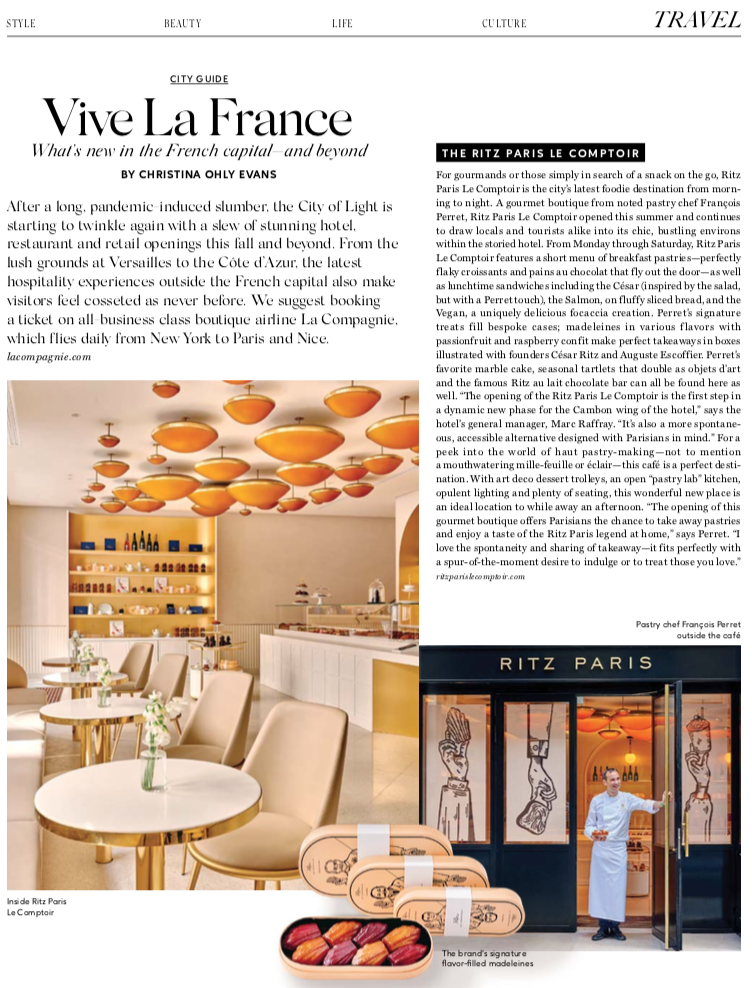
For gourmands or those simply in search of a snack on the go, Ritz Paris Le Comptoir is the city’s latest foodie destination from morning to night. A gourmet boutique from noted pastry chef François Perret, Ritz Paris Le Comptoir opened this summer and continues to draw locals and tourists alike into its chic, bustling environs within the storied hotel. From Monday through Saturday, Ritz Paris Le Comptoir features a short menu of breakfast pastries—perfectly flaky croissants and pains au chocolat that fly out the door—as well as lunchtime sandwiches including the César (inspired by the salad, but with a Perret touch), the Salmon, on fluffy sliced bread, and the Vegan, a uniquely delicious focaccia creation. Perret’s signature treats fill bespoke cases; madeleines in various flavors with passionfruit and raspberry confit make perfect takeaways in boxes illustrated with founders César Ritz and Auguste Escoffier. Perret’s favorite marble cake, seasonal tartlets that double as objets d’art and the famous Ritz au lait chocolate bar can all be found here as well. “The opening of the Ritz Paris Le Comptoir is the first step in a dynamic new phase for the Cambon wing of the hotel,” says the hotel’s general manager, Marc Raffray. “It’s also a more spontaneous, accessible alternative designed with Parisians in mind.” For a peek into the world of haut pastry-making—not to mention a mouthwatering mille-feuille or éclair—this café is a perfect destination. With art deco dessert trolleys, an open “pastry lab” kitchen, opulent lighting and plenty of seating, this wonderful new place is an ideal location to while away an afternoon. “The opening of this gourmet boutique offers Parisians the chance to take away pastries and enjoy a taste of the Ritz Paris legend at home,” says Perret. “I love the spontaneity and sharing of takeaway—it fits perfectly with a spur-of-the-moment desire to indulge or to treat those you love.”
CHEVAL BLANC
Completed just before lockdown in 2020, this bijou boutique hotel—the fifth in LVMH’s luxury Cheval Blanc portfolio—finally opened on September 7 to much fanfare. Set within the art deco department store La Samaritaine, the building has been reimagined by architect Edouard François with subtly sumptuous interiors by frequent LVMH collaborator Peter Marino. With just 72 accommodations (26 rooms and 46 suites), the maison promises to be an intimate Parisian home away from home, complete with sweeping views of the Louvre, Notre-Dame and the dazzling Eiffel Tower beyond. In addition to the finest linens, signature scents by Maison Dior’s perfumer, François Demachy, and sprawling marble baths, rooms include butler services to satisfy that midnight madeleine craving and more. The Quintessence Suite promises to be the pinnacle of opulence with a dedicated swimming pool, sauna and hammam as well as a light-filled fitness studio.
Food, of course, takes center stage at Cheval Blanc Paris with four restaurants including a fine dining concept helmed by Chef Arnaud Donckele of La Vague d’Or at Cheval Blanc St-Tropez. A vibrant terrace brasserie, Le Tout-Paris, promises casual cuisine with breathtaking city views. The Dior Spa Cheval Blanc is a study in serene white onyx with luxe treatments like sapphire crystal microdermabrasion. And kids are welcome, too, with dedicated areas offering oceanic themes complete with an enormous technicolor fish tank. From the fashion crowd to travelers en famille, Cheval Blanc Paris offers this season’s ultimate grand escape.
BVLGARI HOTEL
Location, location, location! The latest offering from Bvlgari Hotels & Resorts—a Parisian outpost set on the glamorous Avenue George V—is set to open in late 2021 and will offer prime access to some of the city’s finest shopping, culture and dining just steps from the iconic Arc de Triomphe. The 76 rooms are being designed by the Milanese architectural firm Antonio Citterio Patricia Viel, in concert with Parisian architects Valode & Pistre, and much like the seven other Bvlgari properties in cities including Shanghai, London and Dubai, the design aesthetic promises to be richly modern and very, very Italian. As with other Bvlgari hotels, the spa will take pride of place with a 25-meter swimming pool—in central Paris!—drawing sybarites and fitness fanatics alike. For those in search of a proper aperitivo, the as-yet-unnamed bar, restaurant and a hidden courtyard garden will offer ideal convivial settings for that late-day Aperol spritz, in close proximity to the Champs Elysées.
Two properties worth escaping Paris for:
For a truly regal experience, book one of the 14 exquisitely appointed rooms at Airelles Château de Versailles, Le Grand Contrôle, the first hotel to open within the grounds of the Château de Versailles with direct access to the Orangerie and rare views of the Pièce d’Eau des Suisses and the sprawling palace. Spread across three buildings designed by Jules Hardouin-Mansart—Le Grand Contrôle, Le Petit Contrôle and the Pavillon des Premières Cent Marches—the hotel is a faithful, uber-luxe restoration that recreates an 18th-century ambience, right down to the staff uniforms. No expense has been spared with finishes including gilded furnishings, parquet wood floors and period tapestries. A 50-foot pool, Valmont spa and formal, haut-cuisine restaurant helmed by Alain Ducasse are also on offer. Best of all, however, is the private access to the palace and gardens that a stay here affords. Not only can you have the dazzling Hall of Mirrors to yourself after hours, but dedicated early-morning tours promise to illuminate the ghosts of Versaille and unlock the secrets of André Le Nôtre’s formal gardens and The Trianon. Le Grand Contrôle promises a hotel stay unlike any other; it’s a completely immersive experience for history buffs, epicures and aesthetes alike.
Set high above the picturesque town of Roquebrune-Cap-Martin with coastline views of Italy to the west and Monte Carlo to the east, you’ll find The Maybourne Riviera, the fifth hotel from the hospitality experts behind such iconic London properties as Claridge’s, The Connaught and The Berkeley. A sleek, modernist perch comprising 69 rooms—all with stunning sea views—the hotel has been designed with the help of local artisans as well as world-class designers including Andre Fu, Bryan O’Sullivan and Pierre Yovanovitch, to name but a few of the stellar talents. Guests will be treated to gustatory delights courtesy of chef Mauro Colagreco—of three-Michelin-starred Mirazur in nearby Menton—whose seafood-centric menu is set to be served atop the hotel, with panoramic Mediterranean views to match. Jean-Georges Vongerichten will launch a concept—his first in the South of France—inspired by its location on the French-Italian border, while Japanese chef Hiro Sato will prepare the finest sushi. Surrounded by acres of gardens and fragrant citrus orchards, guests can expect restorative spa treatments, indoor and outdoor pools and access to the chic Maybourne Riviera Beach Club. “The location of the hotel rich in art and history begs to be explored and discovered, but, equally, we believe we have created a place that if our guests just want to check in, sit back with a glass of rosé, admire the view and never leave, that will make us happy, too,” says Paddy McKillen, co-owner of the Maybourne Hotel Group. This might just be the ne plus ultra place to park it this fall.

An Italian Renaissance
After a difficult 18 months, Italy is back and better than ever with these exciting new hospitality offerings.
In the heart of northern Italy’s Piedmont region, overlooking 100 acres of working vineyards and rolling hills, is Casa di Langa, a new 39-room boutique hotel. From a commitment to carbon neutrality to the use of 100 percent recycled water for irrigation, geothermal heating throughout, zero single-use plastic and solar panels, the property’s owners are dedicated to offering a sustainable and luxurious experience. Fàula Ristorante, overseen by chef Manuel Bouchard, focuses on traditional cuisine and innovative creations utilizing local ingredients sourced from their own gardens and local producers. At Sorì Cocktail Bar, guests can indulge in wines from around the world and neighboring vineyards, including rare bottles from its sister wineries Vietti and Enrico Serafino.
After a difficult 18 months the country is back and better than ever with these exciting new hospitality offerings.
Written by Christina Ohly Evans and Natasha Wolff


Piedmont: Casa di Langa
In the heart of northern Italy’s Piedmont region, overlooking 100 acres of working vineyards and rolling hills, is Casa di Langa, a new 39-room boutique hotel. From a commitment to carbon neutrality to the use of 100 percent recycled water for irrigation, geothermal heating throughout, zero single-use plastic and solar panels, the property’s owners are dedicated to offering a sustainable and luxurious experience. Fàula Ristorante, overseen by chef Manuel Bouchard, focuses on traditional cuisine and innovative creations utilizing local ingredients sourced from their own gardens and local producers. At Sorì Cocktail Bar, guests can indulge in wines from around the world and neighboring vineyards, including rare bottles from its sister wineries Vietti and Enrico Serafino.
Liguria/The Italian Riviera: Villa della Pergola
Overlooking the Gulf of Alassio but far from the crowds of the Italian Riviera, Villa della Pergola is an intimate 15-suite property. A Luxury Relais member under the Relais & Châteaux umbrella, the hotel, surrounded by the botanical garden Giardini di Villa della Pergola, has been lovingly restored by architect Ettore Mocchetti. Each room boasts a unique look with a different aesthetic, color palette and furniture. Nove, run by chef Giorgio Servetto, offers three tasting menus and a la carte offerings echoing traditional flavors of Liguria and Piedmont with a contemporary and refined approach.
Umbria: Hotel Castello di Reschio
Autumn in Umbria is set to be spectacular with the opening of Hotel Castello di Reschio, a 10th-century castle turned sumptuous Italian escape. Set on 3,700 acres of rolling hills, gardens and vineyards, the intimate 36-room property (with nine additional villas) is the multigenerational passion project of the Bolza family, who have meticulously restored the estate to its original splendor with the help of local artisans. Enormous carved stone fireplaces, intricate stucco details and exquisite trompe l’oeil paintings adorn the spacious suites and public areas, along with bespoke furnishings and lighting designed by the family architect, Count Benedikt Bolza. A subterranean spa in the original wine cellar, an idyllic pool shaded by umbrella pines and an equestrian center complete with elegant dressage horses are all unique draws, as are cooking classes—often with truffle hunting and foraging excursions involved. Given Reschio’s location on the Umbria-Tuscany border, gastronomy is central to any stay here, and the terraced Ristorante Al Castello is the place for refined Italian fare at sunset, while the Ristorante Alle Scuderie—with its buzzy Centrale Bar—is perfect for wood-fired pizzas and an aperitivo. The glass-ceilinged Palm Court is the spot for afternoon tea, while Il Torrino in the former watchtower serves the best post-swim sandwiches, cocktails and homemade gelato. For a mix of medieval history and architecture with stunning contemporary design and unparalleled attention to detail, Hotel Castello di Reschio is your best bet.
Sicily: Villa Igiea
One of summer’s most exciting openings is Villa Igiea, an historic art nouveau palazzo-turned-boutique bolthole that’s part of the Rocco Forte Hotel collection. Their seventh property in Italy—and second in Sicily—has been meticulously renovated and restored by hotelier Sir Rocco Forte and his design director sister, Olga Polizzi, with the help of interior designers Paolo Moschino and Philip Vergeylen of London’s Nicholas Haslam. The result of their painstaking attention to detail is a stunning 100-room grand hotel overlooking the Gulf of Palermo where guests are transported back to a stunning belle epoque era. Rooms are richly appointed in tapestries and velvet, with locally produced ceramics and frescoes found in libraries and niches throughout. A spa visit is central to any stay here with signature treatments and Sicilian products by Irene Forte administered in a light-filled sanctuary adjacent to the hotel’s magnificent gardens. Equally enticing are Villa Igiea’s dining options: Chef Fulvio Pierangelini oversees three restaurants, including the more formal Florio, with its terrace overlooking the Tyrrhenian Sea. The vaulted Terrazza Bar is the place for an aperitivo, while Alicetta Pool Bar serves light bites, wood-fired pizzas and housemade gelato. Palermo is often overlooked as visitors make beelines for the beaches and Taormina, but Villa Igiea is the perfect perch for exploring this vibrant Sicilian city.
Sicily: San Domenico Palace, Taormina, a Four Seasons Hotel
With just 111 guest rooms and suites (19 have private plunge pools), the San Domenico Palace, Taormina, a Four Seasons Hotel is built on the site of a 14th-century Dominican convent. Perched on a rocky promontory high above the Ionian Sea, the Taormina property boasts spectacular views in every direction. Set amid lush gardens reimagined by acclaimed Italian landscape architect Marco Bay, the interiors pair contemporary art with antiquities and architectural relics. “Everything past guests have always loved about San Domenico Palace has been restored, with familiar faces and vistas at every turn,” says the hotel’s general manager, Lorenzo Maraviglia, who has returned to his home country following years abroad to introduce Four Seasons to Sicily for the first time. “It’s been a meticulous evolution that honors the site’s past while elevating every aspect to a new level of personalized service, extraordinary experiences and the opportunity to create memories to last a lifetime. We are incredibly grateful to Gruppo Statuto for their investment and proud of the fact that it’s an Italian company that undertook this massive renovation project using only local craftspeople. This is Italy at its best.” With executive chef Massimo Mantarro at the helm of the hotel’s four signature restaurants, Principe Cerami, Rosso, Anciovi and Bar & Chiostro, the best of Sicilian cuisine is yours for the taking. Savory pastas like marinated cuttlefish tagliatelle over homemade spaghetti with cuttlefish ink and a zucchini blossom fondue and a penne alla Norma with eggplant and ricotta cheese are two of the must-try dishes on the mouth-watering menu.
Florence/Tuscany: The Place Firenze
First opened in 2003 as part of the J.K. Place brand, the Place Firenze is the brainchild of Italian entrepreneur Carlo Babini and his family. Years later, it was time for a new look and new offerings to appeal to modern travelers. “The time has come to embark on a new adventure, celebrate what makes us different and recognize the contribution of talented general manager Claudio Meli in forging such a unique identity in the world of Italian hospitality,” explains Babini. Studio Luigi Fragola provided a serene, contemporary new design concept for this elegant Florentine home on the historic Piazza Santa Maria Novella. “The aim was to create an urban design scheme with a contemporary feel that was nevertheless immersed in the historical context of the hotel’s location,” says Luigi Fragola, “to enact an alchemical fusion of old and new in order to rejuvenate a much-loved classic.” The Terrace all-day restaurant located right on the piazza is shaded by parchment-hued parasols with red fringe, offering a breezy new look for al fresco dining. The Kitchen & The Bar indoors serves Tuscan cuisine by chef Asso Migliore that is simple yet divine.
Florence/Tuscany: Helvetia & Bristol Firenze
Just steps from the majestic Duomo and the galleries of the Uffizi, the reimagined Helvetia & Bristol marries 19th-century glamour with contemporary design after a restoration that has been six years in the making. The original Helvetia palazzo has been seamlessly joined with the adjacent Bristol wing—a building that once housed Banco di Roma—and its beautiful parquet oak floors, sumptuous velvet curtains and enormous canopy beds are reminiscent of a bygone Grand Tour era. The hotel’s 25 new rooms and suites have been designed by Anouska Hempel, whose flair for luxurious fabrics and finishes is in full effect. Together with the finest Italian craftspeople—Moleria Locchi, glassmakers from Murano; Antico Setificio Fiorentino, local makers of tapestries and silks; to name but a few—the 89 rooms of this Starhotels Collezione property have gone from good to positively sublime. The recently completed Bristol Winter Garden, with its art deco skylight, walls of mirrors and chinoiserie detailing, is the place for a formal yet festive meal, while Cibrèo Caffè is the casual, convivial spot for breakfast or an evening aperitivo. The hotel’s spa—soon to be the largest in central Florence—is built on the site of former Capitoline thermal baths of the Roman Florentia and promises to entice sybarites and history buffs alike. For a romantic step back in time, book now to marvel at this meticulous makeover that is clearly a labor of love.

Boston Uncommon
If ever there was a city synonymous with fall, it would have to be Boston, with its many academic institutions, stately brownstones lining the leafy streets of Back Bay, the sweeping Charles River and a generally tweedy vibe. This autumn, there are even more reasons to return—and rest—in sumptuous style with the reimagining of several of the city’s storied properties. Here are just a few of the best places to perch before setting off to see this year’s stunning New England foliage.
What’s new in the Bay State
By Christina Ohly Evans

If ever there was a city synonymous with fall, it would have to be Boston, with its many academic institutions, stately brownstones lining the leafy streets of Back Bay, the sweeping Charles River and a generally tweedy vibe. This autumn, there are even more reasons to return—and rest—in sumptuous style with the reimagining of several of the city’s storied properties. Here are just a few of the best places to perch before setting off to see this year’s stunning New England foliage.
Mandarin Oriental
After a long closure for COVID-19 and a $15 million renovation overseen by Alexandra Champalimaud of Champalimaud Design, the Mandarin Oriental is back and buzzier than ever. It has always benefited from a great location in the heart of Back Bay, steps from the Prudential Center and minutes away from the area’s many colleges and universities. Embracing its popularity with families and long-stay guests, the hotel’s 126 spacious, light-filled rooms and suites have been reimagined with a residential feel in mind. Looking ahead to late fall, the hotel will see the opening of Ramsay’s Kitchen by Gordon Ramsay—a bustling all-day dining destination featuring the chef’s iconic recipes like beef wellington and an elevated take on fish and chips, with nods to Boston’s rich culinary history. For those in search of lobster and clam bouillabaisse with a Back Bay twist, be sure to book this November.
The Newbury
Opened in 1927 as one of the original Ritz-Carlton hotels, The Newbury was an iconic property from the start. Set at the edge of the historic Boston Common at the intersection of Arlington and Newbury Streets, the hotel’s 268 rooms and suites—as well as its public spaces—have been massively renovated, restored or reimagined by a trio of design talents: architect Jeffrey Beers (entrance and public spaces, including the cozy library and bustling Street Bar), Champalimaud Design (guest rooms) and Ken Fulk (the rooftop restaurant Contessa). The results of this collaboration are a seamless mix of old-world elegance and colorful modernity. On the roof, you’ll find Contessa, a 140-seat bustling trattoria with stunning views of the Back Bay and grilled Mediterranean branzino to match. Overseen by Major Food Group, Contessa will serve breakfast, lunch and dinner as well as a robust bar for that perfect afternoon aperitivo. Highlights include wood-fired pizzas that are perfect for sharing, spicy lobster capellini and a signature 40-ounce Bistecca Fiorentina for two.
The Langham
Following a $200 million, two-year renovation, the iconic Langham is once again offering classic American elegance, albeit with state-of-art fitness facilities, elevated culinary offerings and a world-class art collection. Set in the heart of downtown, the storied property—built in 1922 as the Federal Reserve Bank of Boston—is rich in New England history, but with modern twists including in-room Peloton bikes upon request and a rare (for any city) indoor lap pool. The 312 rooms have been reimagined in muted shades of gray and blue, while the dining spaces, including Grana and the cocktail bar, The Fed, promise to be lively destinations for tourists and locals alike. From the luxurious lobby to bilevel Loft Suites that are perfect for lengthier stays, the Langham offers a one-of-a-kind experience for art aficionados, finance fiends and anyone interested in hotel history.
Welcome to Napa 2.0 — The New Provence
Welcome to Napa 2.0 — The New Provence
If your dreams of spending the summer in the Mediterranean feel a little too complicated this year, look to Napa, which is fast becoming the New Provence. Contributing editor Christina Ohly has a look at the area's best new offerings.
If your dreams of spending the summer in the Mediterranean feel a little too complicated this year, look to Napa, which is fast becoming the New Provence. Contributing editor Christina Ohly has a look at the area's best new offerings.
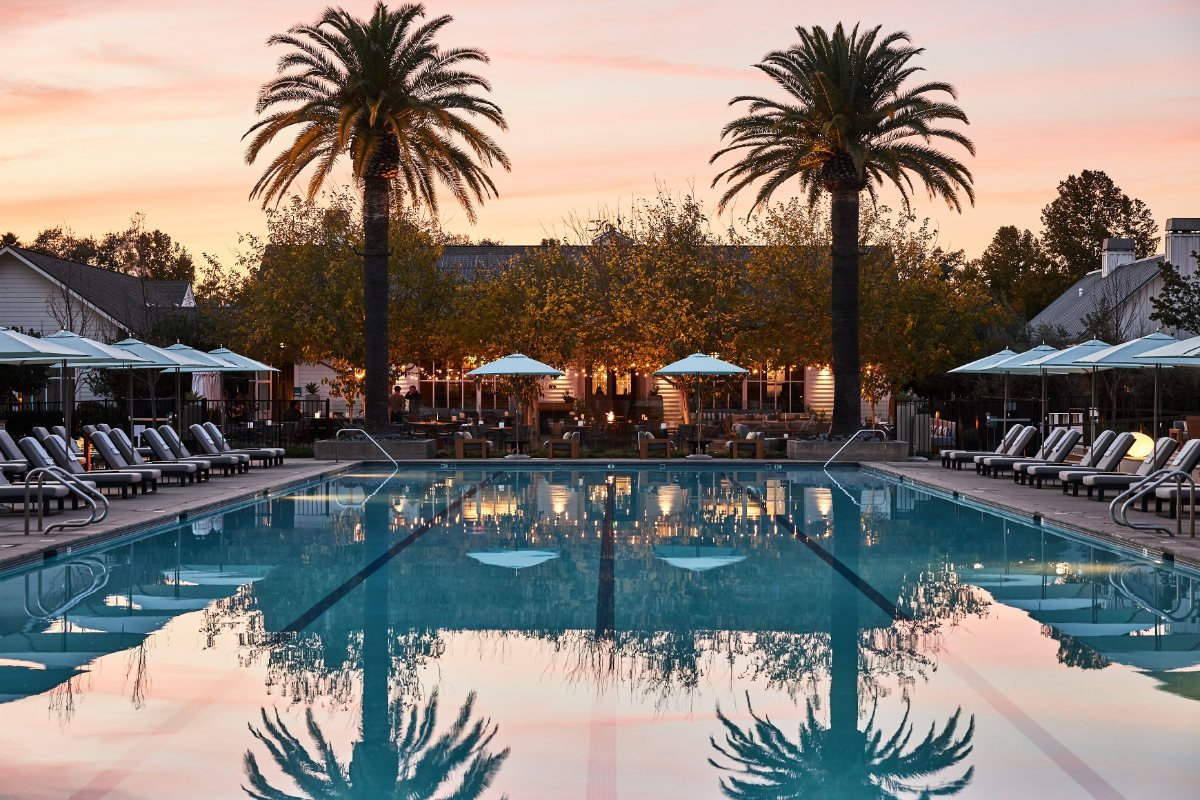
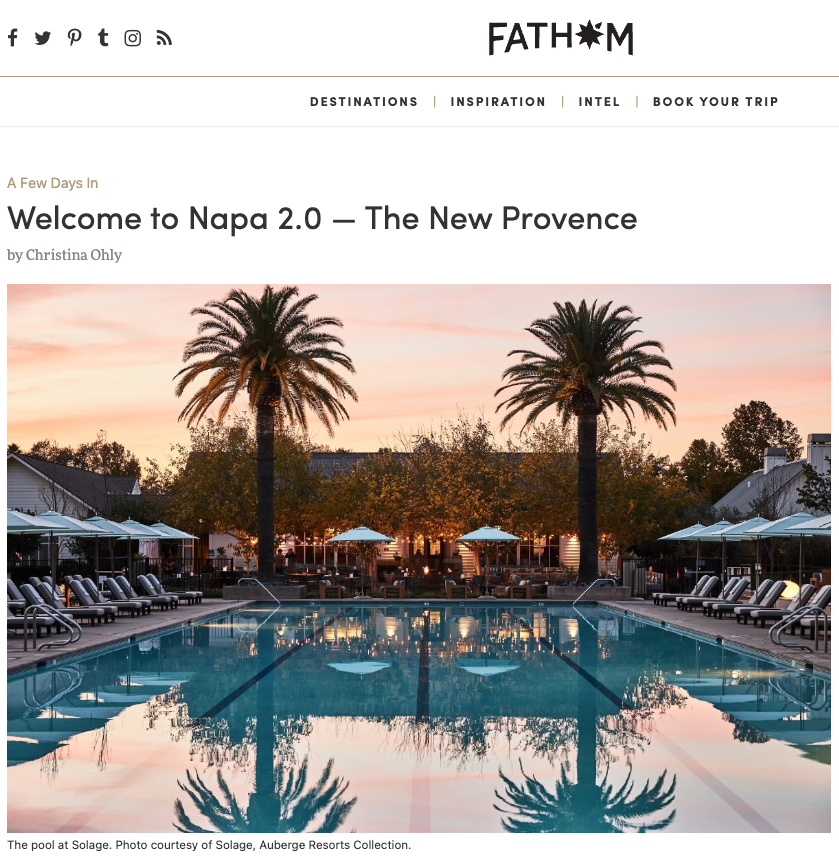
The pool at Solage. Photo courtesy of Solage, Auberge Resorts Collection.
NAPA VALLEY — Napa Valley — long an escape for oenophiles and foodies alike — is coming back from a year like no other. Between pandemic shut-downs and devastating wildfires, the area literally got its ass kicked. But in a triumph of human resilience as well as natural regrowth, this part of California’s wine country has come back, and it’s better than ever.
I hadn’t traveled at all during the pandemic and decided that this part of the country — with its easy access from San Francisco International Airport — was perfect for my first foray back into a world outside my Northeast comfort zone. What I found was an area marred (in places) by the Glass Fire, but one that has bounced back to set visitors at ease, provide delicious meals and spa experiences, and access to some of the finest vineyards in the world. Add to that sumptuous new hotel rooms, farm-fresh cuisine, and scenic hikes and biking, and the 30-mile stretch that is Napa Valley is looking like a fail-safe bet for summer.
For many, the allure of the Med will remain irresistible, but for others still anxious about travel, a comparable experience in Napa Valley — with zero hassle! — will more than make up for the missed aperitivo. And take heart! Competitive bocce abounds here as well.
All things considered, we're calling Napa the New Provence.
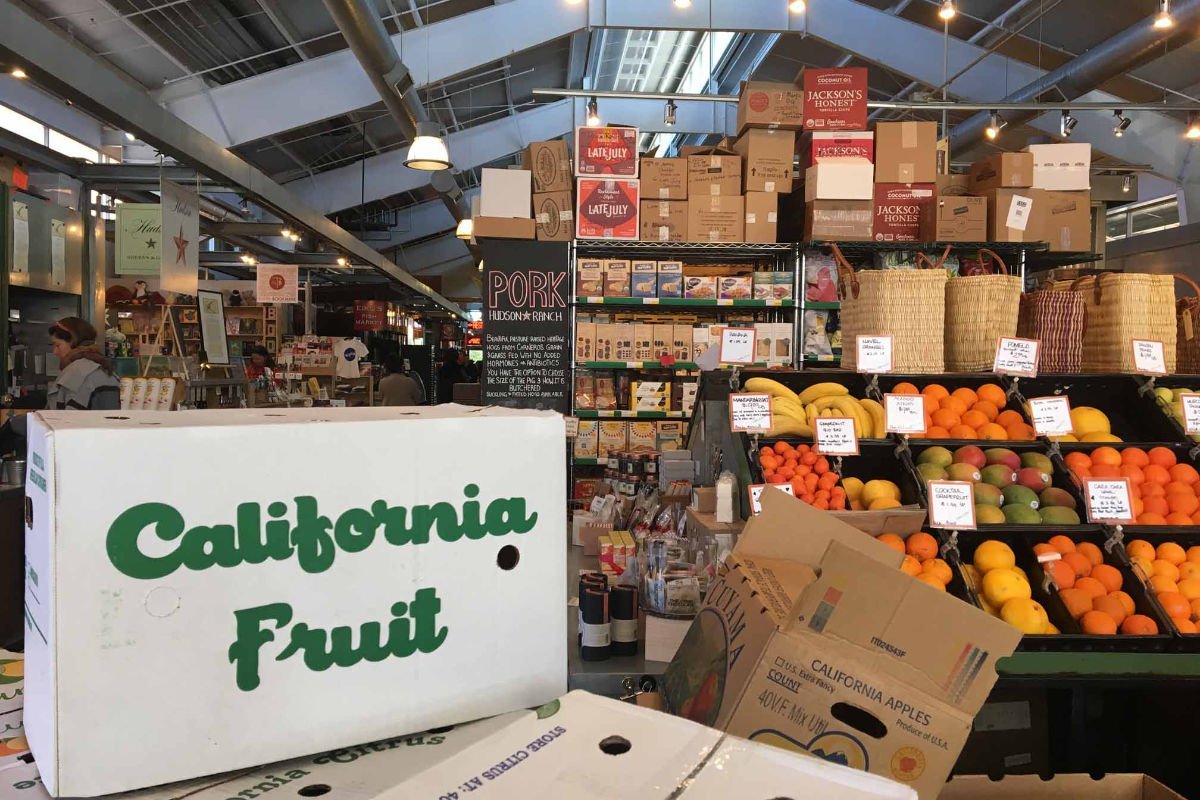
Oxbow Public Market. Photo by Pavia Rosati.
First Stop: Napa
The “city” of Napa doesn’t typically get a lot of love, as people tend to bypass it for the quainter towns of Calistoga, St. Helena, and Yountville. But it’s absolutely worth stopping for at least a day. Oxbow Public Market, brimming with everything from wood-fired pizzas to local cheeses, ice cream, and olive oil, to spices from around the globe, is a gastronome’s true north.
Next door to Oxbow is CIA at Copia, the Culinary Institute of America’s newest campus, which offers hands-on cooking classes, boot camps, and private lessons, many in partnership with America’s Test Kitchen. If you’d rather let the pros cook, have a meal at The Grove at Copia, where the meal is locally inspired (of course). For a truly highbrow meal, Le Petit Chef is a 3D dining experience inspired by Marco Polo’s travels along the Silk Road. Another must for curious foodies is The Chuck Williams Culinary Arts Museum on the top floor, which displays the mind-blowingly extensive collection of more than 4,000 kitchen tools, accessories, and serving ware pieces amassed by the Williams-Sonoma founder. (Le Petit Chef and the museum are currently closed, but will reopen.)
A terrific addition to the lodging scene in downtown Napa is R-INN, a converted historic building reimagined as a sleek boutique hotel. I recommend one of the independently-owned property’s five spacious loft suites, complete with 20’ ceilings, poured concrete floors, and vibrant artwork. This being northern California, the WiFi, enormous flatscreen TVs, Bluetooth speaker system — and even the coffee maker — are all state of the art, and the setting is perfect for those dwindling work from home days.

Auberge du Soleil at twilight. Photo courtesy of Auberge du Soleil, Auberge Resorts Collection.

The spa at Auberge du Soleil. Photo courtesy of Auberge du Soleil, Auberge Resorts Collection.
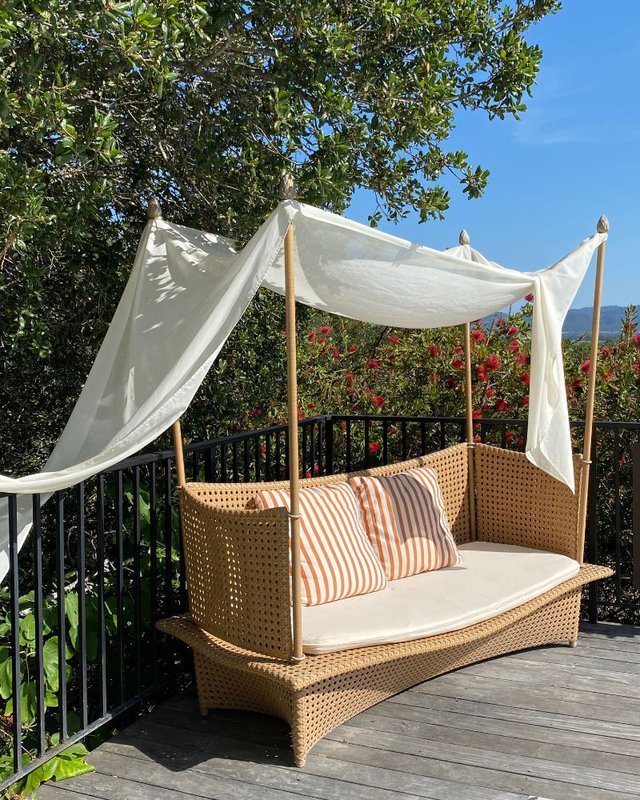
Chilling at Auberge du Soleil. Photo by Christina Ohly.
Heading North: Yountville & Rutherford
Long considered the culinary capital of Napa Valley, the town hangs onto the title with its many Michelin starred establishments — World’s Best chart-topper French Laundry, Mustards Grill, and Bistro Jeanty among them — but it was Ad Hoc that stole my heart during my brief visit. The casual branch of chef Thomas Keller’s empire, Ad Hoc serves killer (yet elevated, of course) mac ‘n’ cheese and buckets of fried chicken — with wine pairings — that make for a perfect picnic in the gorgeous surroundings.
Moving northward, Auberge du Soleil in Rutherford still reigns as the grande dame of the hotel scene out here. This was my first post-vaccination hotel stay, and it proved a completely luxurious, restorative escape. Our airy, 1,200-square-foot Valley View suite, with its sprawling terrace overlooking olive groves and the Myacamas Mountains beyond, was perfect for my teenage daughter and I to spread out and work/online school. The 50 rooms and suites have been recently refreshed and a neutral palette pervades, with crisp linens and thick, fluffy robes. (Oh, how I've missed such lovely hotel amenities.) Fully stocked refrigerators, a next-level team of estheticians at the tranquil spa, and a perfectly prepared cheeseburger served poolside were among the highlights of our stay.
Also of note is the gym, which features indoor and outdoor equipment to maximize valley views. After a 30-minute workout followed by iced tea at the redesigned pool area (think Il Pelicano meets St. Barths, with flowy canvas and stripy chaise lounges), I felt as though I’d been to Provence for two days. What enhanced my stay were the excellent team of concierges who arranged for our use of Auberge’s fleet of Mercedes — SUVs and Cali-perfect convertibles — and pointed us in the direction of restaurants like Press in nearby St. Helena and the iconic Oakville Grocery for prosciutto and brie sandwiches for the road. The loaner vehicles also enabled us to discover Carter and Co, my favorite new retail gem that specializes in artisan-produced everything in St. Helena. Come here to meet owner/artist Richard Carter and see his exquisite ceramics, along with a carefully curated selection of housewares, sustainably made deerskin jackets, local honeys, olive oil, and more.
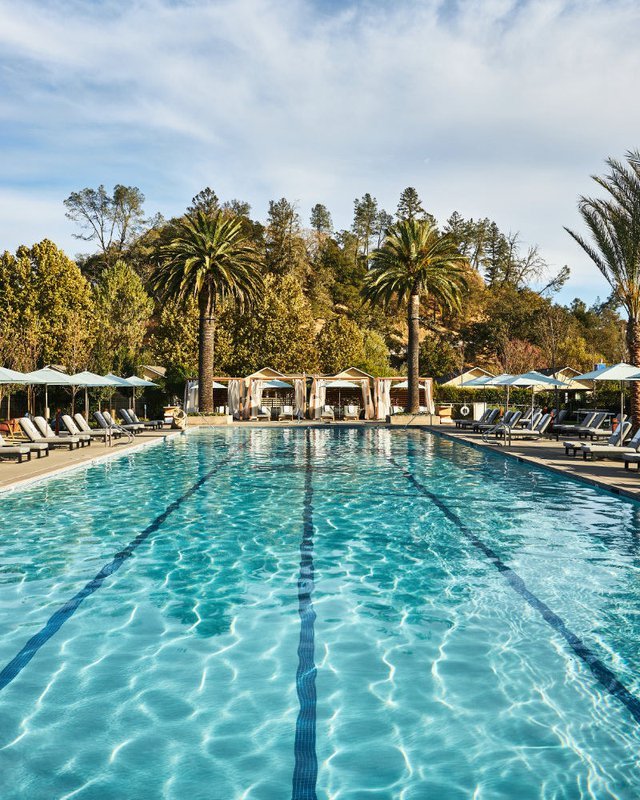
The pool at Solage. Photo courtesy of Solage, Auberge Resorts Collection.

A guest room at Solage. Photo courtesy of Solage, Auberge Resorts Collection.
Next Up: Calistoga
I have to admit, I didn’t want to leave Auberge at all, but the blow was softened by moving on to Auberge Resorts’ sister property Solage in nearby Calistoga. The hotel isn’t brand new, but everything (suites and studios included) has been refreshed over the past six months — the Covid safety protocols, the patio dining at Solbar (loved the twinkling lights), and the retro bicycles outside every room which made exploring downtown Calistoga a breeze. Any day now, Solage’s latest culinary offering, Picobar, will offer modern Mexican fare with atmospheric firepits and live music.
The feeling at Solage is sleek and contemporary (white pervades and rooms are minimalist chic), and it’s all just a bit more casual than at Auberge. I was there mid-week and there were no kids, but I can imagine the hotel’s enormous central pool (with swimming lessons) is a big draw for families at weekends. The team has, however, figured it out so that you never have to see anyone. Quiet places abound throughout the Bathhouse spa and geothermal soaking pools area. Overall, I felt as though I’d been transported to a Zen place with just the right amount of activity. In addition to the plunge pools (ranging from icily invigorating to seriously hot), I highly recommend a three-part, detoxifying mud bath. Calistoga has long been known for these curative slatherings (and I must admit, I wasn’t a buyer at first) and Solage’s “mud bar” was fantastic: I could feel the toxins from the last fifteen months leaving my body. (I won’t miss them!) Next time, I am going back for The Starlight spa experience where you soak and sip outside under the stars, after everyone else has gone.

The pool (and the view) at Indian Springs. Photo courtesy of Indian Springs Resort and Spa.

The entrance to the spa at Indian Springs. Photo by Christina Ohly.
Also of note is Indian Springs Resort and Spa just around the corner from Solage. A historic resort with a jaw-dropping Olympic-sized pool, Indian Springs is something a cult classic, with its Mission Revival main building (Fun fact: It was originally intended as the site of Stanford University) and sweet bungalows and cottages that attract families and couples alike. The mud bath here is especially low-fi and effective. Funky and fabulous (it has a Buddha Pond!), this is one for spa-goers looking for a slightly kitschy touch — and a meal at the buzzy-chic Sam’s Social Club, where breakfasts include a salad of maitake mushrooms, kale, poached egg, and farro in a shallot vinaigrette. This is, after all, NorCal.
In other Calistoga news, the Four Seasons Resort and Residences Napa Valley, located literally across the road from Solage, is set for a late summer opening. Its 85 spacious guest rooms will bring more farmhouse chic to an area already in very high demand.
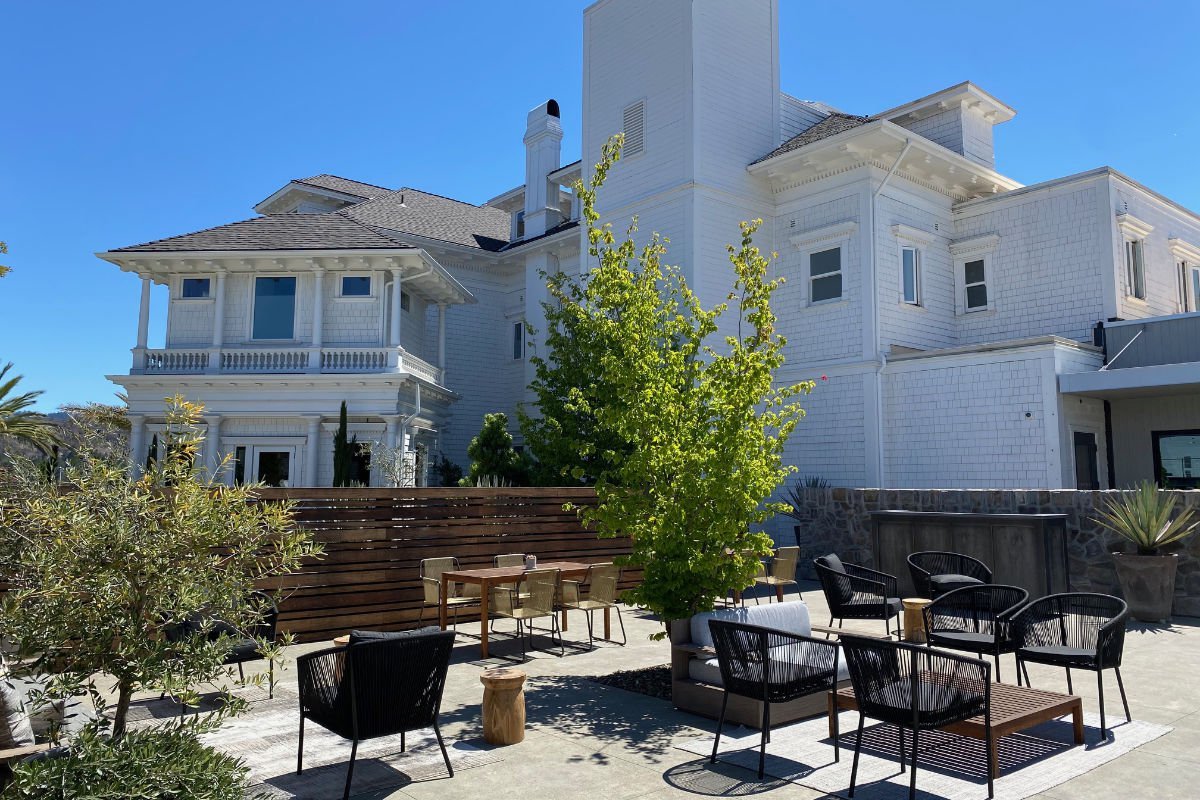
Alila Napa Valley. Photo by Christina Ohly.

The best meal of the trip at Acacia House. Photos by Christina Ohly.
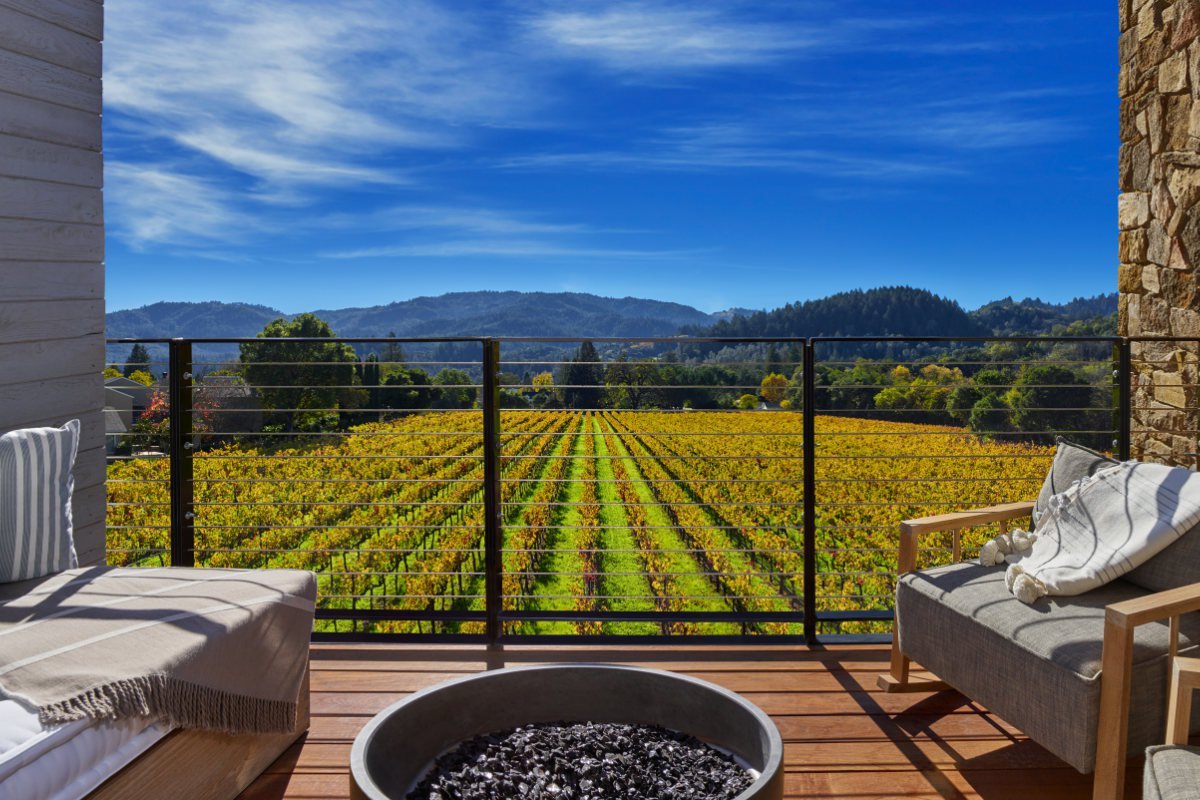
The vineyard views from the room at Alila Napa Valley. Photo courtesy of Alila Napa Valley
More Spectacular Settings
One of the best area openings/re-launches is the Alila Napa Valley in St. Helena, which originally opened in 2017 as Las Alcobas, the sister hotel to the fantastic boutique hotel of the same name in Mexico City. The re-imagined property with 68 guest rooms and seven suites offers the ultimate mix of historic and contemporary luxury. The original Acacia House built in 1905 now has six guest room and a restaurant by noted chef San Francisco Chris Consentino. The single most memorable meal I ate during this trip was at Acacia House: a “simple” chicken salad and a club sandwich with fries, the best we’d ever tasted. Anywhere. The rooms, by noted hotel design firm Yabu Pushelberg, retain a sleek vibe, with lots of glass, metal and stone finishes, and sweeping views of the vineyard in the backyard. The new Alila Spa is set in a light-filled barn, and daily yoga classes and TRX fitness equipment are all part of the package.
Slightly further afield — and technically in Sonoma County but so worth a detour — is the stunning new Montage Healdsburg, with 130 Bungalow rooms and 34 spacious suites. The basic room category starts at 600 square feet, with a three-bedroom Guest House stretching to 4,600 square feet, complete with three bedrooms, a fully stocked kitchen, and a hot tub.

Dining outdoors at Montage Healdsburg. Photo by Christian Horan / courtesy of Montage Healdsburg.

Hazel Hill restaurant. Photo by Christian Horan / courtesy of Montage Healdsburg.

A guest house at Montage Healdsburg. Photo by Christian Horan / courtesy of Montage Healdsburg.
You get the feeling that no expense has been spared. Warm wood and natural stone finishes are found throughout, as are fire features and a stunning, infinity-edge, adults-only pool. Of special note is the expansive spa with views of the Alexander Valley, Yoga Among the Vines classes, and special treatments like a Harvest Honey Ginger Infusion Ritual (for moisturizing and immunity boosting) and a California Wildflower Ritual that includes healing poultices and vibrational technology. The next-level fitness center full of TechnoGym equipment and Peloton bikes is ideal for peaceful workout, so between the spa and gym, plan to spend a full day here if you are a remotely sporty fitness type.
And the food! Montage Healdsburg options include Hazel Hill, which serves a fusion of French and Northern California cuisines and a seasonal vegan menu. The wine list is world-class, with many bottles from Aperture Cellars, the renown winery next door. Convivial Scout Bar at the heart of the resort is the spot for casual drinks and a menu that ranges from caviar to double-patty burgers. An on-site grab-and-go market, the Healdsburg Country Store, offers frothy cappuccinos, wraps, and chocolate fudge brownies. Just one more reason to never leave this gorgeous landscape.
Looking Ahead to Autumn
One of the fall’s most anticipated openings is Stanly Ranch, a 712-year-old historic property poised to open in November ten minutes from the town of Napa, with 135 cottage suites and its own vineyard. Like the other neighboring Auberge Resorts Collection properties, Stanly Ranch will focus on a world-class spa and farm-to-fork cuisine led by chef Perfecte Rocher, with much of the produce coming from the surrounding land. A grand pool with an adjacent Basin Bar will be the place for evening snacks and wine tastings, while The Larder will be the breakfast, lunch, and dinner hub.
For hefty doses of lavender and a practically Provençal experience, you’ll want to book now. The only downside to visiting Napa Valley (that I can see) is that rooms are becoming increasingly hard to come by. Which may not be surprising, as this hardly undiscovered special, vibrant part of California only gets more special and vibrant with time.

Essentialist, The Bahamas, Island Idylls
Why go now? For a completely relaxing vacation with no big brand hotels, golf courses or spas, look no further than this part of the Bahamas….
Why go now? For a completely relaxing vacation with no big brand hotels, golf courses or spas, look no further than this part of the Bahamas...

Located just 60 miles from Nassau and 200 miles off the coast of Florida, Harbour Island is a magical three-mile long escape full of pastel Colonial cottages and perfectly pristine, pink coral sand beaches. With a handful of stylish, bijoux hotels and restaurants offering Bahamian specialties ranging from fresh conch to grouper to the local sweet lobster, Harbour Island is the perfect place for those in search of quiet, beach-filled days and starry, laid-back nights.
Where The Bahamas
Quick Quote $900 per day
Best Season winter and spring
Thinking of…romance, relaxation, style


WHERE TO STAY
Set on the island’s 3-mile stretch of fine pink sand, The Dunmore features one-bedroom cottages and suites—each adjoining so that they work well for families. The rooms—with cheery names like Pink North and South—are beachy-chic with lots of rattan and the signature Dunmore color palette of white and orange. Standout amenities include a pool and sweet pavilion that look like something out of a Slim Aarons photograph circa 1960.
“Harbour Island is just small enough, just low key enough and ever so slightly hard to get to which means that the people you’ll encounter understand just how special the place is. Nothing is fancy, yet everything has a casual chic vibe - it’s an aesthete’s paradise!”
The Ocean View Club is a 12-room, midcentury-influenced enclave set on the pink sand beach. Each of the rooms features a slate plaque outside the door bearing the occupant’s name, and the feeling here is one of an intimate house party. The Landing, a 12-room boutique hotel set on a property that dates back to 1800, has a slightly Balinese/Colonial vibe with a destination-worthy restaurant. The pink sand beach is just a 5-minute walk away and the hotel has a lovely pool. The elegant rooms were designed by India Hicks. The Rock House is a white-washed, 10-room hotel with a hidden pool and cabanas that are suitable for guests 18 years and older. Each room is individually decorated and many have private adjacent cabana’s and some have private decks.
WHERE TO EAT
The Dunmore restaurant is the best bet for a leisurely lunch on the see-and-be-seen patio. Choose from farro and kale salads, grilled fish of the day, fish tacos and new twists on the classic Cobb salad.Queen Conch is an authentic, cheap spot for “cracked” fried conch as well as ceviche and conch chowder by the harbor front on Bay Street. Ask to sit by the back pool at The Rock House Restaurant and you're transported to Marrakech, complete with glass lanterns and little hidden nooks. Standouts include the seafood, conch, and the signature “hokey pokey” mochi ice cream dessert. Not for kids under 12. Davine wine store has long been the go-to for fine vintages, but this year has seen the addition of a delicious sushi restaurant by night. Choose from freshly caught tuna sashimi, black miso cod, and starters that are perfect for sharing.
WHAT TO DO
Explore the island by golf cart; Snorkeling, diving, and deep sea fishing excursions are among the more popular offerings. An Expedition to the Glass Window, aka the nexus of the Caribbean Sea and Atlantic Ocean where there's a small hole that allows some of the wash to pass through to the soft side especially at high tide also a magical nearby cave that forms a geyser whenever a particularly powerful wave crashes in. Shop at The Blue Rooster, a quaint blue and white island cottage dating from 1840, which is the place for fabulous caftans, jewelry, sandals and woven straw hats and purses and The Sugar Mill, India Hicks' emporium full of dresses, beachy beads, house presents, etc. is a study in muted chic colors.
DETOUR TO KAMALAME CAY
Just off Andros’ mainland, this 96-acre sanctuary has been owned by the Hew family for the past 23 years and is one of the best places on earth to truly relax and fully check out. This magical oasis is all about good food, a welcoming, inclusive vibe, and casual beach living—you need only pack a bathing suit and a sarong for leisurely lunches or tiki torch-lit nighttime celebrations. The 27 villas spread across the The Kamalame Cay Hotel are high-ceilinged and spacious, and all feature canopy beds with a West Indies vibe. These rooms are designed for rest and rejuvenation, so there are no televisions, but stereos, Nespresso machines, and golf carts are all complimentary amenities. Helpful staff will organize any outings from snorkeling and diving to fly fishing and sailing.


Christina Ohly Evans is a New York-based journalist and the US Correspondent for the Financial Times magazine, How to spend it where she covers travel, architecture, design and fashion. She is also a Contributor to Condé Nast Traveler and serves as Editor at Large for travel and design magazine, SURFACE. Christina has lived between the UK and the US for the past 25 years, and currently resides with her husband and two teenagers on Manhattan’s Upper West Side.

La Scelta di Goethe’s sumptuous Roman suites
The German poet’s home has been gloriously restored, and has views to match
The German poet’s home has been gloriously restored, and has views to match
Recently, for a one-night layover in Rome, rather than book a touristy hotel by the Spanish Steps, I took the recommendation of a friend who is something of an Italy connoisseur. She suggested La Scelta de Goethe, adding that I shouldn’t be put off by the website, which doesn’t do justice to the restored former home of the German poet, writer and statesman. I briskly booked online and was intrigued when we pitched up outside the unassuming front door on Via del Corso. After being buzzed in and warmly greeted by one of the staff, our party of five piled into a tiny lift.
Spilling out on the fourth floor, we were escorted through the doors of this former pied-à-terre, now “an elegant attic” with some 260sq m of exquisitely furnished rooms, as well as balconies and terraces that afford 360-degree views of the city’s historical centre.

La Scelta di Goethe is actually comprised of two separate apartments – the Villa Medici Suite (€2,200; sleeps four), with its sprawling, high-ceilinged sitting room (first picture), and the slightly smaller, duplex Trinità dei Monti Suite (€1,600; sleeps two), with additional terraces, an outdoor hot tub and views toward Villa Borghese, Villa Medici and Trinità dei Monti. When the two suites are combined (for a total cost of €3,800 per night), as was the case during our stay, the effect is a magical space enlivened by 19th-century furnishings in gorgeous Florentine fabrics, elegant fireplaces and mosaic-tiled bathrooms (with state-of-the-art showers and Santa Maria Novella amenities; I do love a stay that includes luxe toothpaste). There is also a well-stocked library and a private dining room (second picture).
A butler is on hand 24/7, and ours was prepared to go the extra mile – literally – as he offered to suit up and accompany me on my 7am run, so that I wouldn’t get lost in the surrounding labyrinthine streets.
After one of the best – and, surprisingly, quietest – sleeps I’ve had in a long time, I woke to La Scelta de Goethe’s pièce de resistance the next morning: Continental breakfast taken on the impressive terrace. The stacks of pancakes, cereals and yogurts, choice of meat, cheese, fruit, cakes and pastries, not to mention excellent coffee, added up to one of the finest spreads I’ve seen; any and all eggs can be made to order as well. What made this meal particularly unforgettable was a chance to meet the owner Mario Angelini, who is often at his other property in Tuscany, San Buono, but just happened to pop by that morning, taking a genuine delight in educating us about the property and all its sumptuous finishes.
A truly chic and memorable, if fleeting, stay.

Alan Faena’s Miami Beach
The Argentine developer and hotelier has enlisted Pritzker Prize-winning architects Norman Foster and Rem Koolhaas to design his new cultural and residential Faena Miami Beach
The Argentine developer and hotelier has enlisted Pritzker Prize-winning architects Norman Foster and Rem Koolhaas to design his new cultural and residential Faena Miami Beach

lan Faena on Miami Beach | Image: Jeffery Salter
I love spending weekends in Miami Beach because I find the mix of South American and Caribbean cultures so energising. I wake very early on Saturday mornings and start the day by saying a little prayer overlooking the ocean. This is followed by some quiet meditation, a cup of maté – the typical Argentinian tea – and playing with my son, Noa. I enjoy a light breakfast accompanied by the music that is a big part of my life. I have an extensive collection of rare albums that includes everything from tango to cumbia – Colombian music with European and African influences. I enjoy making playlists that set the tone of everything I do.
Later I go to the Equinox gym on nearby Collins Avenue. Or if I am in a quieter mood, I might take a yoga lesson at Green Monkey in Sunset Harbor, where classes are built around the core values of positivity, balance and community.
I don’t like to plan things too far ahead; I prefer to feel the vibe of the day and embrace it. If the weather is beautiful – and it almost always is – I’ll take a long walk on the beach before lunch. I like the area near our new development at Collins Avenue and 32nd Street, which has one of the widest stretches of white sand in Miami Beach.
I often take a small boat from our marina to Garcia’s for a lunch of fresh seafood – ceviche and grilled lobster – served at outdoor tables along the Miami River. Then I like to explore this dynamic city by just walking and absorbing the eclectic architecture. Afternoons are often spent at Vizcaya, an incredible villa with elaborate gardens, or museums and galleries such as the Wolfsonian in the Art Deco District. Another favourite is the Wynwood Arts District, an area full of restaurants and shops; it has a massive open-air art installation and the annual Red Dot Art Fair, an enormous tented space where I always find sculpture and photography by emerging artists.
Afterwards I’ll return home to catch up on the news or read a good book – often Tolstoy’s A Calendar of Wisdom, which I find inspiring – with a nice glass of wine from the Ribera del Duero region of Spain. In the evening, I like to join friends at Casa Tua for Italian food served in a magical garden with Moroccan lanterns. It is just like being in a private home and the tagliatelle with black truffles is always excellent. For fresh fish and mezes, I’ll head to Mandolin, an Aegean bistro in the Design District that feels authentically Greek. After a delicious meal and some good conversation, I’m typically home by midnight.
Sunday starts at JugoFresh with a Vamos Green juice – a smoothie packed with apple, cucumber and kale – followed by croque-monsieurs and croissants at French-owned La Sandwicherie. If I feel like brunch, I’ll go to Michael’s – a vibrant bistro in the Design District with excellent frittatas and people-watching.
Afternoons are often spent shopping – mostly for books or records along Lincoln Road – or visiting the Bass Museum of Art. If I am looking for unique clothes I’ll visit The Webster, a three-storey art-deco boutique that has a great café. I also like Taschen for books on art and design and I always find curious objects and new music at Base, a quirky store full of limited-edition finds.
In the evening I’ll invite people over and prepare an enormous barbecue with all kinds of meat and vegetables, best enjoyed watching the sunset with a good Malbec. And after an exciting weekend of art, food and friends, a bath with essential oils leaves me refreshed for the busy week ahead.
BASE, 939 Lincoln Road (+1305-531 4982; www.baseworld.com). Bass Museum of Art, 2100 Collins Avenue (+1305-673 7530; www.bassmuseum.org). Casa Tua, 1700 James Avenue (+1305-673 1010; www.casatualifestyle.com/miami). Equinox, 520 Collins Avenue (+1305-673 1172; www.equinox.com). Garcia’s, 398 NW North River Drive (+1305-375 0765; www.garciasmiami.com). Green Monkey, 1827 Purdy Avenue (+1305-397 8566; www.greenmonkey.com). Jugofresh, Suite 102, 1935 West Avenue (+1786-472 2552; www.jugofresh.com). La Sandwicherie, 229 14th Street (+1305-532 8934; www.lasandwicherie.com). Mandolin, 4312 NE 2nd Avenue (+1305-749 9140; www.mandolinmiami.com). Michael’s Genuine Food & Drink, 130 NE 40th Street (+1305-573 5550; www.michaelsgenuine.com). Red Dot Art Fair, 3011 NE 1st Avenue at the corner of NE 31st Street (+1917-273 8621; www.reddotfair.com). Taschen, 1111 Lincoln Road (+1305-538 6185; www.taschen.com). Vizcaya Museum & Gardens, 3251 S Miami Avenue (+1305-250 9133; www.vizcaya.org). The Webster, 1220 Collins Avenue (+1305-674 7899; www.thewebstermiami.com). Wolfsonian-FIU, 1001 Washington Avenue (+1305-531 1001; www.wolfsonian.org). Wynwood Arts District, 167 NW 25th Street (+1305-695 1600; www.wynwoodmiami.com).

Posada Puerto Bemberg: jungle chic in Argentina
A remote hideaway from which to explore lesser-known waterfalls and literally switch off
A remote hideaway from which to explore lesser-known waterfalls and literally switch off

Off the beaten track – quite literally – in the jungle near the famed waterfalls of Iguazú in Argentina, you’ll find the 14-room-and-suite property Posada Puerto Bemberg. Situated in the remote Province of Misiones at the confluence of the Paraná and Iguazú rivers, the Posada offers a rewarding spot from which to explore the area’s lesser-known waterfalls – particularly the stunning Saltos del Moconá, oft overlooked in favour of the Devil’s Throat gorge in nearby Iguazú National Park.
Originally built in the 1940s as a stopping point en route for the dramatic falls that could only be accessed via the Paraná River below, Posada Puerto Bemberg (first and second pictures) has been reborn as a rustic-chic guesthouse with plenty of local colour. The original feel has been preserved – and this starts with the approach down a stone path.

No sooner had I walked over the threshold than a knowledgeable conservationist appeared by my side and began talking through the day’s myriad options: guided hikes along the property’s thickly forested trails, bike riding, visits to neighbouring yerba-mate and tea plantations and bird watching were only the initial few. I decided to ease into the subtropical experience with a swim in the hotel’s secluded sandstone pool (third picture), surrounded by atmospheric monkey puzzle trees and wild toucans.
The rooms in this colonial-style villa are on the sparse side but feature high ceilings, locally carved furnishings and spacious beds with brightly coloured llama quilts. Air conditioning made my room a sanctuary during my sweltering stay, and no television and minibar, and spotty WiFi and mobile coverage meant that my room was an excellent place for switching off, while the deep tub was a glorious way to unwind at day’s end.

One of the real highlights here are the meals (lucky, as there is nowhere else to venture to, the hotel is so remote), which are served in the great living room that is the hub of the hotel. Guests – there were about 10 during my recent visit – come here to check email, sip a cocktail, play games (Pictionary was popular during my stay) and read one of the library’s 2,500 titles, many of which are focused on the local flora and fauna. Our group enjoyed leisurely feasts of excellent Argentine steak with papas fritas and salads made with vegetables from the surrounding organic gardens. The extensive cave includes over 1,600 bottles of wine, including local Argentinean Malbecs that pair well with chef Ruperto Ocampo’s daily changing, meaty menus.
After leaving the Posada Puerto Bemberg’s 1,000 acres to explore other highlights of the area, I felt as if I’d had it all right there on the property: dramatic falls for swimming, butterflies in vibrant shades of purple and gold, hummingbirds and delicious cuisine. There is even a picturesque chapel – circa 1930 – on the premises that affords dramatic views of the river and Paraguay in the distance. It’s a marvel of a jungle microcosm that I wouldn’t have missed for the world.
Fundadores Bemberg, N3370 Puerto Libertad, Misiones Province, Argentina (+54375-749 6500; www.puertobemberg.com).

Sorting the Wheatleigh from the chaff
A grand country-house hotel in the heart of Massachusetts
A grand country-house hotel in the heart of Massachusetts

There are times when New York City life becomes a bit too frantic and an escape to a quieter, more bucolic setting is called for. When these occasions arise, I can think of no better place to unwind than at Wheatleigh, a 19th-century Florentine-style palazzo located in the heart of the Berkshire mountains of Massachusetts. I was introduced to it over 25 years ago by my stylish grandmother who, like this impressive mansion and its grounds, has something of Edith Wharton about her.

Together she and I would visit this statuesque property – a “summer cottage” given as a wedding present to the daughter of the wealthy industrialist Henry H Cook and now surrounded by 22 pristine acres – to enjoy a delicious meal in either of the boutique inn’s sumptuous restaurants. Summer lunches were enjoyed en plein air – either on the patio or in Adirondack chairs overlooking the Taconic mountains – while wintery visits afforded the chance to sit by roaring fireplaces and catch up.
Fast forward quarter of a century and I’ve recently returned to Wheatleigh, which has seen a thorough overhaul courtesy of the architecture and design team of Calvin Tsao and Zack McKown. Known for their neoclassical, restrained work, the duo has made this already-wonderful spot simply spectacular. The great hall entrance has been transformed with the addition of plush, crushed-velvet sofas in muted hues, and a neutral ambient palette in washes of sage through to cypress. The hotel’s 19 minimalist rooms have also been refurbished; flourishes include Parisian lights from Galerie des Lampes and antique Chinese leather boxes. White fire-clay baths from England, exquisite limestone floors and sumptuous linens are now standard, and the overall effect is calm and blessedly low-tech.

What does remain, thankfully, is the stellar cuisine. Guests are spoilt for choice in both the formal dining room (fourth picture) – with its soaring glass windows and Palladian columns, described as “part Philip Johnson’s Glass House, part Marie Antoinette’s Petit Trianon at Versailles” – and the convivial library cafe. The former’s food is sophisticated but not at all pretentious, with an emphasis on locally sourced ingredients – Jamison Farm’s lamb, the hotel’s own heirloom tomatoes – offered in four-course menus ($125). My favourite spot, however, remains the library – a laid-back setting with lunches of house-made pasta, a perfectly crispy croque monsieur or classic fish and chips.

One of the best parts of Wheatleigh, in my opinion, is that it dazzles throughout the seasons. Its lush, rolling hills glint in summer, the leaves turn brilliant hues of red and orange in autumn and the winter scene is full of untracked, pristine snow fields.
Superior rooms, $885; terrace suite (second picture), $1,875; The Aviary suite, $2,100. Hawthorne Road, Lenox, Massachusetts 01240 (+1413-637 0610; www.wheatleigh.com).

LA confidential
An under-the-radar sky-high haunt in the City of Angels
An under-the-radar sky-high haunt in the City of Angels

When I travel to Los Angeles, I love to get hefty doses of old-school Hollywood glamour and delicious SoCal cuisine. I recently found both of these in spades at the quietly chic Terrace restaurant at Sunset Tower (second picture), a deco-gem of a hotel on bustling Sunset Boulevard. The historic hotel – formerly The Argyle, whose residents included Marilyn Monroe and Frank Sinatra – sits amid the music clubs, sex shops and omnipresent Coffee Bean & Tea Leaf emporiums of this slightly run-down neighbourhood, but it is an oasis of calm offering dazzling views of the LA skyline. And its shaded terrace and pool (first picture) catches the breeze as it skims the city.

I tend not to venture far from the seashore when I am on the West Coast (and those of you who understand the traffic issues that plague LA will understand my reluctance to navigate the 405 Freeway), but I made an exception during my recent visit and met a friend at The Terrace for lunch.
The place is a destination spot (let’s just say there isn’t a lot of foot traffic in this area) and something of a well-kept secret among entertainment-industry insiders, who value its muted tones and Hôtel du Cap vibe. And the food, too, is a pleasure – simple, hearty, imaginative and full of the freshest ingredients. Hotelier Jeff Klein conceived every part of this operation – from the elegant chaises longues by the pool to the signature ciabatta club sandwich ($16) with a filling of grilled chicken, crispy bacon, roasted tomatoes, rocket and onions.
I could have ordered most things on the menu – a selection of classic comfort food, including that most Californian of dishes, the Lobster Cobb salad ($28), as well as Le Hot Dog ($14), a kosher frankfurter with grilled onions and sauerkraut, and The Tower Burger ($22), complete with “secret sauce” on a brioche bun. However, the rather more reserved Grilled Shrimp & Quinoa salad ($24) and Ahi Niçoise salad ($26) with truffle vinaigrette were my choice for a light lunch.
I enjoyed a glass of rosé – Côtes de Provence Les Domaniers 2011 ($55 a bottle) – though a bit of me was tempted by one of the Terrace’s chocolate milkshakes ($12).
8358 West Sunset Boulevard, Los Angeles, CA 90069 +1323-654 7100; www.sunsettowerhotel.com