Architect Omar Gandhi’s guide to Nova Scotia
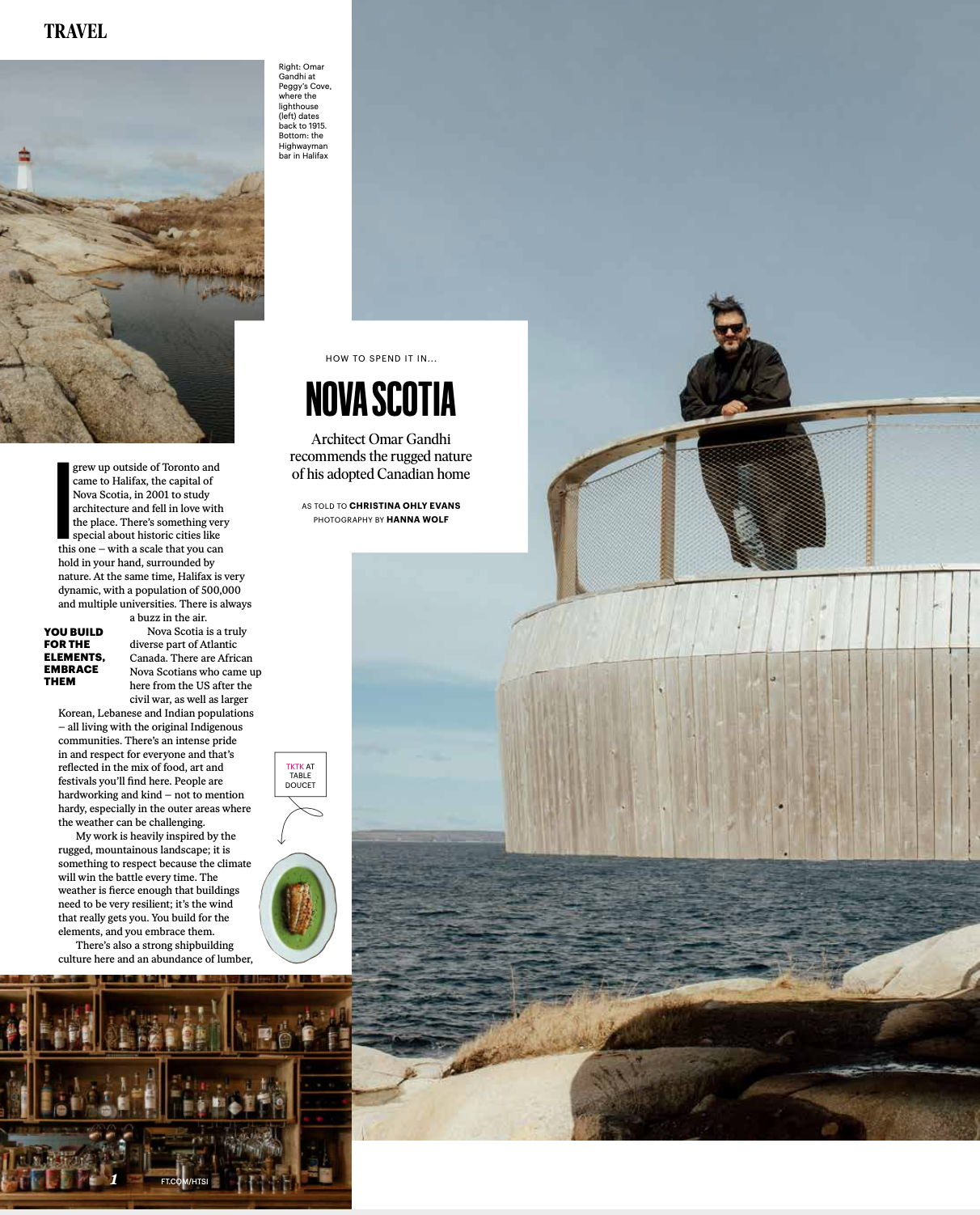
Why the Toronto native made wild, windy Halifax his home
I grew up outside of Toronto and came to Halifax, the capital of Nova Scotia, in 2001 to study architecture – and fell in love with the place. There’s something very special about historic cities like this one, with a scale that you can hold in your hand, surrounded by nature. At the same time, Halifax is very dynamic, with a population of 500,000 and multiple universities. There is always a buzz in the air.
Nova Scotia is a truly diverse part of Atlantic Canada. There are African Nova Scotians who came up here from the US after the civil war, as well as larger Korean, Lebanese and Indian populations – all living with the original Indigenous communities. There’s an intense pride in and respect for everyone and that’s reflected in the mix of food, art and festivals you’ll find here. People are hardworking and kind – not to mention hardy, especially in the outer areas where the weather can be challenging.
My work is heavily inspired by the rugged, mountainous landscape; it is something to respect because the climate will win the battle every time. The weather is fierce enough that buildings need to be very resilient; it’s the wind that really gets you. You build for the elements, and you embrace them. There’s also a strong shipbuilding culture here and an abundance of lumber, so we use a lot of locally sourced white cedar, pine, spruce and red oak. The houses are still primarily clad in wood, even in downtown Halifax, and many are painted in vibrant colours: a tradition that goes back to when sailors and fishermen used them to help navigate.
In the centre of Halifax you’ll find one of the nicest hotels in the country, Muir, which is right on the waterfront. For something more laidback – and very small – I recommend Brewery Park Hotel in the North End of the city, where I live; it has a great energy. There’s a culture of rentable architecture throughout Nova Scotia so definitely check out places such as Shobac, a collection of modern cottages and historic buildings by architect Brian MacKay-Lyons. The campus is set just south of Halifax, near the coastal town of Lunenburg, a picturesque Unesco World Heritage Site. We are very food-focused – maybe not quite as much as in Montreal, but there’s no shortage of interesting cafés and restaurants. It’s all about farm-to-table food served in intimate spaces with local wines. For great coffee and baked goods, Suda Table is owned by a Korean family and hand-makes outstanding dumplings and French pastries; everything is beautifully presented. And there is a pair of restaurants less than a minute away from each other in North End that are both very cool. Magnolia does great cocktails and Highwayman serves Spanish-inspired seafood and tapas.
Bar Kismet has been one of the most awarded restaurants in Canada for the past 10 years, with spectacular small dishes such as fresh raw scallops and tuna tartare. Another place that’s very special – but a bit of a drive – is Table Doucet in coastal Chéticamp. It’s very French-Acadian: everything on its tasting menus has been locally foraged, including the seafood. In the 1970s, this part of Canada drew in lots of artists, many of whom taught at the Nova Scotia College of Art and Design. Richard Serra lived here, and Philip Glass and later Ethan Hawke found refuge here too. Architecture and design have flourished. One standout architect is Keith Graham, a masterful modernist who designed the most beautiful public projects in Halifax, including the Nova Scotia Archives, the Halifax police station and the North End Library.
The Museum of Natural History is also wonderful, as is the Halifax Central Library, which is like the living room of the city. Libraries are magical places where people go to hang out: old people, young kids – it’s comfortable for all ages. The Art Gallery of Nova Scotia on the waterfront has objects from all over the country including Indigenous art, as well as a large collection of Annie Leibovitz photographs. And for Titanic enthusiasts there’s the Maritime Museum of the Atlantic, which has a vast collection of the ship’s memorabilia because Halifax was the closest major port to where the ship sank in 1912.
For an adventure, I recommend driving the scenic Cabot Trail to Inverness in Cape Breton, where you’ll find Cabot Links, one of the best links-style golf courses in the world (at Cabot Cape Breton resort). It’s not just gorgeous, it’s intense; there’s wind, so it’s tricky – just like being in the Scottish Highlands. Or head south of Halifax to Chester, a fun sailing centre where you can rent a boat and spend a day on the water. Be sure to visit Peggy’s Cove, a quaint fishing village and lighthouse that’s set on a granite outcrop on St Margaret’s Bay. It’s an iconic spot for kayaking and eating lobster rolls with rocky coastal views.
I have lived here more than half my life at this point, and I’m also raising my son here. I feel deeply ingrained in the place and wouldn’t want to live anywhere else. Halifax isn’t trying to become a big city, so I hope it just continues to embrace its historic fabric. Moving here changed my life, so I share it with everyone I can.
BARS, CAFÉS & RESTAURANTS Bar Kismet barkismet.com Highwayman highwaymanhfx.com Magnolia magnoliahfx.com Suda Table sudatable.com Table Doucet tabledoucet.com
THINGS TO DO Art Gallery of Nova Scotia agns.ca Cabot Cape Breton cabot.com Chester Yacht Club chesteryachtclub.ca Halifax Central Library halifaxcentrallibrary.ca Maritime Museum of the Atlantic maritimemuseum.novascotia.ca Museum of Natural History naturalhistory.novascotia.ca Neil Depew Gallery neildepew.com
WHERE TO STAY
Brewery Park Hotel brewerypark.ca
Muir muirhotel.com
Shobacplaces2b.ca/shobac